Yazılar

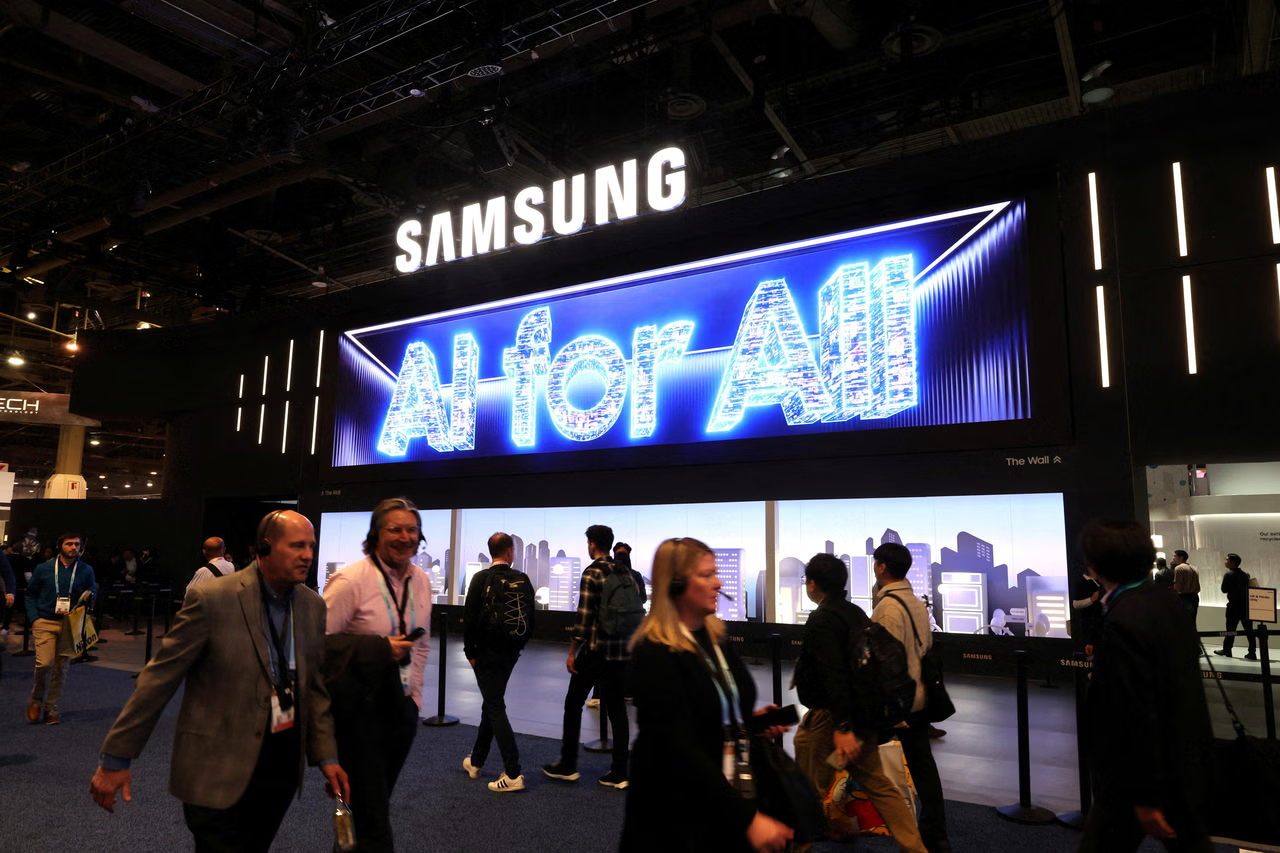
Samsung Reports Disappointing Q3 Profit Guidance Amid AI Chip Challenges

Samsung Electronics, the world’s largest memory chip producer, reported lower-than-expected third-quarter profits on Tuesday, despite a year-on-year surge. The South Korean tech giant estimated operating profits of around 9.10 trillion won (approximately $6.7 billion) for the quarter ending in September. While this figure represents a massive 274% increase from the same period last year, it fell short of the 11.456 trillion won ($7.7 billion) forecast by analysts polled by LSEG.

Samsung’s projected revenue for the quarter stood at 81.96 trillion won ($61 billion), also missing expectations. The disappointing guidance comes amid the company’s struggles to manage its memory chip business and delays in shipments of its advanced high-bandwidth memory (HBM3E) chips.

In an unusual move, Jun Young-hyun, Samsung’s Vice Chairman and new head of the Device Solutions Division, issued a public apology following the release, acknowledging the company’s challenges. The performance of Samsung’s memory business has been negatively affected by “one-time costs and negative effects,” including inventory adjustments by mobile customers and increased competition from Chinese memory producers.

The company also noted that delays in shipments of its cutting-edge HBM3E chips to major clients added to its difficulties. These high-performance chips are critical for artificial intelligence applications, a growing sector where Samsung is trying to gain ground.

Despite being the dominant player in memory chips used in devices such as laptops, servers, and PCs, Samsung has seen weakened demand for legacy chips in these sectors. This trend, coupled with a less aggressive market share strategy, has hurt the company. “Samsung is not taking that market share as aggressively as we have seen in the past,” remarked Daniel Yoo, head of global asset allocation at Yuanta Securities Korea.

Macquarie Equity Research analysts warned that the fall in demand for conventional DRAM (dynamic random access memory) chips could have a more significant impact on Samsung than on its smaller rivals. DRAM chips are essential for PCs and workstations, and Samsung has traditionally relied on their steady demand.

In response to the market challenges, Samsung has reportedly instructed its subsidiaries to reduce staff by up to 30% in certain divisions, according to sources cited by Reuters. The company’s shares, which are down 22% year-to-date, fell by another 0.98% after the release of the third-quarter profit guidance. Samsung is expected to release more detailed financial results later this month.
 

Eli Lilly’s Q2 Earnings Surpass Expectations, Raises Full-Year Outlook

Eli Lilly reported stellar second-quarter earnings, significantly exceeding market expectations, driven by robust sales of its diabetes drug Mounjaro and weight loss injection Zepbound. The pharmaceutical giant raised its full-year revenue forecast by $3 billion, now expecting between $45.4 billion and $46.6 billion, while also increasing its adjusted earnings guidance to a range of $16.10 to $16.60 per share.

The company’s performance was primarily bolstered by the increased demand for Mounjaro and Zepbound, which together have seen sales soar as supply constraints begin to ease. Despite previous shortages, Eli Lilly’s recent expansion in production capacity has improved the availability of these drugs in the U.S., contributing to the positive financial results. Zepbound, in its second full quarter on the U.S. market, generated $1.24 billion in sales, outperforming analyst expectations. Similarly, Mounjaro brought in $3.09 billion, more than triple the revenue from the same period last year.

CEO David Ricks noted that the company has ramped up its manufacturing efforts, including building six new plants and hiring thousands of workers to meet the growing demand. He also mentioned that Eli Lilly is working on developing more convenient weight loss pills to complement its existing injectable treatments.

Eli Lilly’s shares rose by more than 7% following the earnings announcement, continuing a strong upward trend that has seen the stock gain over 30% this year. The company’s market cap now exceeds $730 billion, making it the largest pharmaceutical firm based in the U.S. This success contrasts with competitor Novo Nordisk, which recently reported weaker-than-expected sales for its similar drugs due to pricing pressures.


Meta Shares Surge 6% on Strong Q2 Earnings and Positive Revenue Forecast

Meta shares jumped 6% on Thursday after the company reported second-quarter earnings that exceeded Wall Street’s expectations and provided an optimistic revenue forecast.

Key Figures:

Revenue: $39.07 billion (up 22% from $32 billion a year earlier; analysts expected $38.31 billion)
Net Income: $13.47 billion, or $5.16 per share (up 73% from $7.79 billion, or $2.98 per share; analysts expected $4.73 per share)

Meta expects third-quarter revenue between $38.5 billion and $41 billion, surpassing the average analyst estimate of $39.1 billion.

CEO Mark Zuckerberg and CFO Susan Li highlighted the benefits of Meta’s investments in artificial intelligence (AI), noting improvements in content recommendations and advertising effectiveness. Analysts at Baird and Bank of America emphasized Meta’s strong AI-related performance and growth potential in ad conversions, digital assistants, and multimodal content creation.

Meta’s capital expenditures for the year are projected to be between $37 billion and $40 billion, up from the previous low-end estimate of $35 billion. Analysts at Barclays praised Meta’s execution pace in digital advertising and anticipated new AI-driven products.