


Blue Origin, the space company founded by Jeff Bezos, postponed the inaugural launch of its New Glenn rocket on Monday due to “a few anomalies” identified during the countdown. The launch, initially scheduled for 1:00 am ET (0600 GMT), was delayed as the team worked to resolve the issues. Despite the rocket being prepared on the launchpad at Cape Canaveral Space Force Station, the liftoff time was pushed back repeatedly as the team reviewed the situation.
Blue Origin confirmed that the issues were related to a vehicle subsystem, leading to the postponement of the mission, which is now expected to take place at least 24 hours later, though further delays are possible. The New Glenn rocket, which stands 30 stories tall, is designed to compete with SpaceX in the satellite launch market and includes a high-stakes attempt to land its booster on a sea-faring barge in the Atlantic Ocean 10 minutes after takeoff.
The first stage of the rocket would separate and land on the barge while the second stage continues its journey to orbit. Bezos admitted that the company was especially cautious about the booster landing, acknowledging the high risk of potential anomalies during the first flight. The mission also carries the Blue Ring spacecraft prototype, which Blue Origin plans to offer to the Pentagon and commercial clients for satellite servicing and national security tasks.
Despite the delay, the mission remains a significant milestone for Blue Origin, with numerous customer launch contracts lined up for the future. The development of New Glenn has faced multiple delays, but the rocket’s massive potential, with more than double the power of SpaceX’s Falcon 9, places Blue Origin in a competitive position in the space industry.
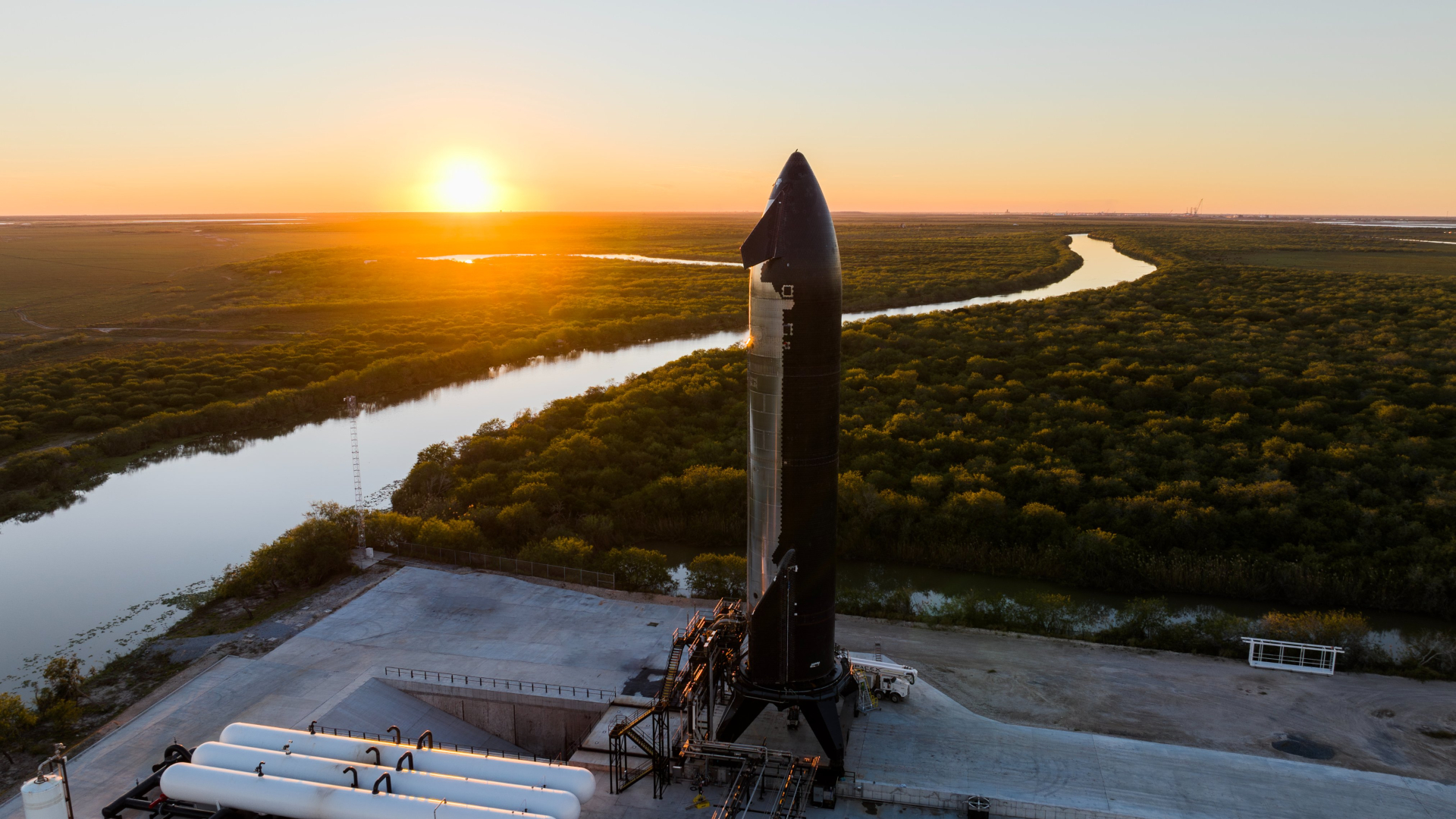
The Federal Aviation Administration (FAA) has officially granted SpaceX the launch license required for the Starship Flight 7 test, marking a crucial milestone for the development of the world’s most powerful rocket. Announced on December 17, this approval permits SpaceX to advance preparations at its Starbase facility in Boca Chica, Texas. The license follows an exhaustive series of engine tests on both the Starship spacecraft and its Super Heavy booster to validate their readiness for launch. Although SpaceX has not specified an exact date, industry insiders speculate that the test could take place in early to mid-January 2025.
Flight 7 will follow a trajectory similar to earlier tests, involving the launch of the fully stacked Starship and Super Heavy rocket, an attempted booster catch at the launch tower, and a controlled ocean landing of the Starship in the Indian Ocean near Australia. According to the FAA, stringent safety protocols are being enforced, with SpaceX working closely with regulatory bodies to ensure full compliance with operational standards. These measures underscore the agency’s commitment to balancing innovation with public and environmental safety.
The primary objectives of Flight 7 include demonstrating booster recovery and validating Starship’s capability to perform safe ocean landings. A prior test in November showcased a successful Starship splashdown in the Indian Ocean but encountered issues with the booster recovery system due to sensor malfunctions. Flight 7 seeks to refine and retest these systems, incorporating adjustments derived from previous data to enhance reliability and performance.
As SpaceX prepares for this next milestone, the Flight 7 test represents a pivotal step in the Starship program’s long-term goals. These include supporting lunar missions for NASA’s Artemis program and enabling human exploration of Mars. The FAA’s licensing decision, combined with SpaceX’s engineering refinements, brings the company closer to achieving these ambitious objectives, making the Starship project a cornerstone of future space exploration.