Yazılar

Nvidia CEO Jensen Huang Reports Surging Demand for Blackwell Chips

Nvidia CEO Jensen Huang said on Saturday that demand for the company’s cutting-edge Blackwell AI chips is “very strong,” as the semiconductor giant deepens its partnership with Taiwan Semiconductor Manufacturing Co (TSMC) to meet soaring global demand.

Speaking at an event hosted by TSMC in Hsinchu, Taiwan, Huang said Nvidia’s Blackwell platform — which integrates GPUs, CPUs, networking, and switching systems — requires an extensive supply of wafers and components. “We build the GPU, but we also build the CPU, the networking, the switches… there are a lot of chips associated with Blackwell,” he explained.

TSMC CEO C.C. Wei confirmed that Huang had “asked for wafers,” but declined to disclose quantities. “TSMC is doing a very good job supporting us,” Huang said, emphasizing that Nvidia’s record-breaking success “would not be possible without TSMC.”

In October, Nvidia became the first company to surpass a $5 trillion market value, prompting Wei to call Huang a “five-trillion-dollar man.”

When asked about supply challenges, Huang acknowledged there would be “shortages of different things,” though memory makers SK Hynix, Samsung, and Micron have expanded capacity to meet demand. Nvidia has already received next-generation memory samples from all three suppliers.

SK Hynix recently said it had sold out all production for 2026, forecasting a long-lasting chip “super cycle” driven by AI growth. Samsung is also in “close discussion” to supply HBM4 memory to Nvidia.

Huang reiterated that Nvidia has no active discussions to sell Blackwell chips to China, as U.S. restrictions remain in place.

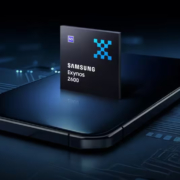
Samsung Galaxy S26 Ultra Camera and Charging Details Leak; Exynos 2600 Chipset Specs Also Surface

Samsung appears to be refining its flagship smartphone strategy with the Galaxy S26 Ultra rather than reinventing it, as per new leaks. Despite the highly anticipated debut of the Exynos 2600 chipset — which reportedly brings significant leaps in imaging and AI capabilities — the Galaxy S26 Ultra’s camera hardware may remain largely unchanged from its predecessor. This aligns with Samsung’s recent focus on optimizing performance, processing, and software-driven image quality rather than introducing entirely new camera sensors each year.

Samsung Galaxy S26 Ultra Camera Setup (Expected)

According to a post on X (formerly Twitter) by tipster @chunvn8888, the upcoming Galaxy S26 Ultra will retain the same 200-megapixel ISOCELL HP2 primary sensor, alongside a 50-megapixel ultrawide ISOCELL JN3 sensor and a 50-megapixel periscope telephoto lens featuring a Sony IMX854 sensor. The biggest reported change is in the 3x telephoto lens, which may get a small upgrade to a 12-megapixel Samsung S5K3LD sensor. For selfies, the phone is expected to sport a 12-megapixel Sony IMX874 front camera.

Exynos 2600 to Power Smarter Imaging

The Exynos 2600 chipset — expected to debut with the Galaxy S26 and S26+ — is said to feature a next-generation NPU (neural processing unit) designed for AI-enhanced photography and real-time scene optimization. It could handle more complex image segmentation and low-light processing with reduced power consumption. However, with the Galaxy S26 Ultra likely using a Snapdragon 8 Gen 4 chip globally, the Exynos-based AI enhancements may not directly benefit Ultra users, at least outside select regions.

Samsung’s Subtle Approach to Flagship Upgrades

This leak reinforces the idea that Samsung is focusing on refinement rather than reinvention for 2026. While rival brands like Xiaomi and Vivo continue to push boundaries with massive sensor upgrades and custom optics, Samsung seems intent on leveraging AI and computational photography to elevate image quality. If accurate, the Galaxy S26 Ultra may rely on its improved processing, enhanced HDR capabilities, and optimized algorithms to deliver more realistic, detail-rich images — even without a drastic hardware overhaul.

Qualcomm’s Strong Forecast Overshadowed by Expected Samsung Loss

Qualcomm projected stronger-than-expected quarterly sales and profit on Wednesday, buoyed by a rebound in premium smartphone demand, but its stock slipped in after-hours trading amid concerns over a potential loss of business from Samsung next year.

For the quarter ending in December, the chip designer forecast revenue and adjusted earnings at midpoints of $12.2 billion and $3.40 per share, beating analyst expectations of $11.62 billion and $3.31, according to LSEG data.

However, CEO Cristiano Amon said the company expects to supply about 75% of the modem chips for Samsung’s upcoming Galaxy S26 lineup — down from 100% for the current Galaxy S25 models. The announcement sent Qualcomm shares down 2.7% in extended trading after a 4% rise earlier in the day.

Despite the setback, Amon emphasized that Qualcomm is diversifying beyond smartphones into automotive, laptop, and data center chips, as longtime client Apple moves toward producing its own modems.

He also revealed that Qualcomm is in discussions with a “large hyperscaler” — an AI-focused computing company — following its recent deal with Humain, an AI firm backed by Saudi Arabia’s sovereign wealth fund.

The company’s fiscal fourth-quarter results also outperformed expectations, with $11.27 billion in sales and $3 per share in adjusted profit, compared to estimates of $10.79 billion and $2.88.

Amon said the forecast reflects a surge in demand for high-end smartphones capable of running AI applications, especially in markets like China and India, where consumers are “upgrading from mid-range to premium.”