Yazılar

Global space investment hits record $3.5 billion as funding widens beyond SpaceX and OneWeb

Global space investment soared to a record $3.5 billion in the third quarter, almost doubling last year’s figure, as money flowed into a broader range of startups and defense-related projects, according to a new report from Seraphim Space.

The data marks a shift in the fast-growing industry, with capital now spread across multiple players instead of being dominated by giants such as SpaceX and OneWeb. “We’re seeing a far more diverse set of investable companies, signaling that space has evolved into a broader, more mature market,” said Lucas Bishop, investment associate at Seraphim.

The surge was led by U.S. defense and aerospace firms like Hadrian, Apex, and Hermeus, which raised large rounds focused on advanced manufacturing and hypersonic technologies. In China, Galactic Energy took the top spot with a $336 million raise in September.

Governments are fueling the boom as they expand domestic space and defense initiatives, with the U.S., China, and Europe all channeling funds into satellite networks and orbital infrastructure. The report said this momentum would likely continue into 2026, supported by dual-use technologies bridging civilian and military applications, such as SpaceX’s Starshield and OneWeb’s network expansion.

Publicly traded space firms have also surged. Rocket Lab and Planet Labs have more than doubled their market value in recent months, while AST SpaceMobile has tripled after demonstrating satellite-to-phone broadband connectivity — a milestone for direct-to-device communication.

Solar Sail Satellites May Revolutionize Space Weather Forecasting and Early Alerts

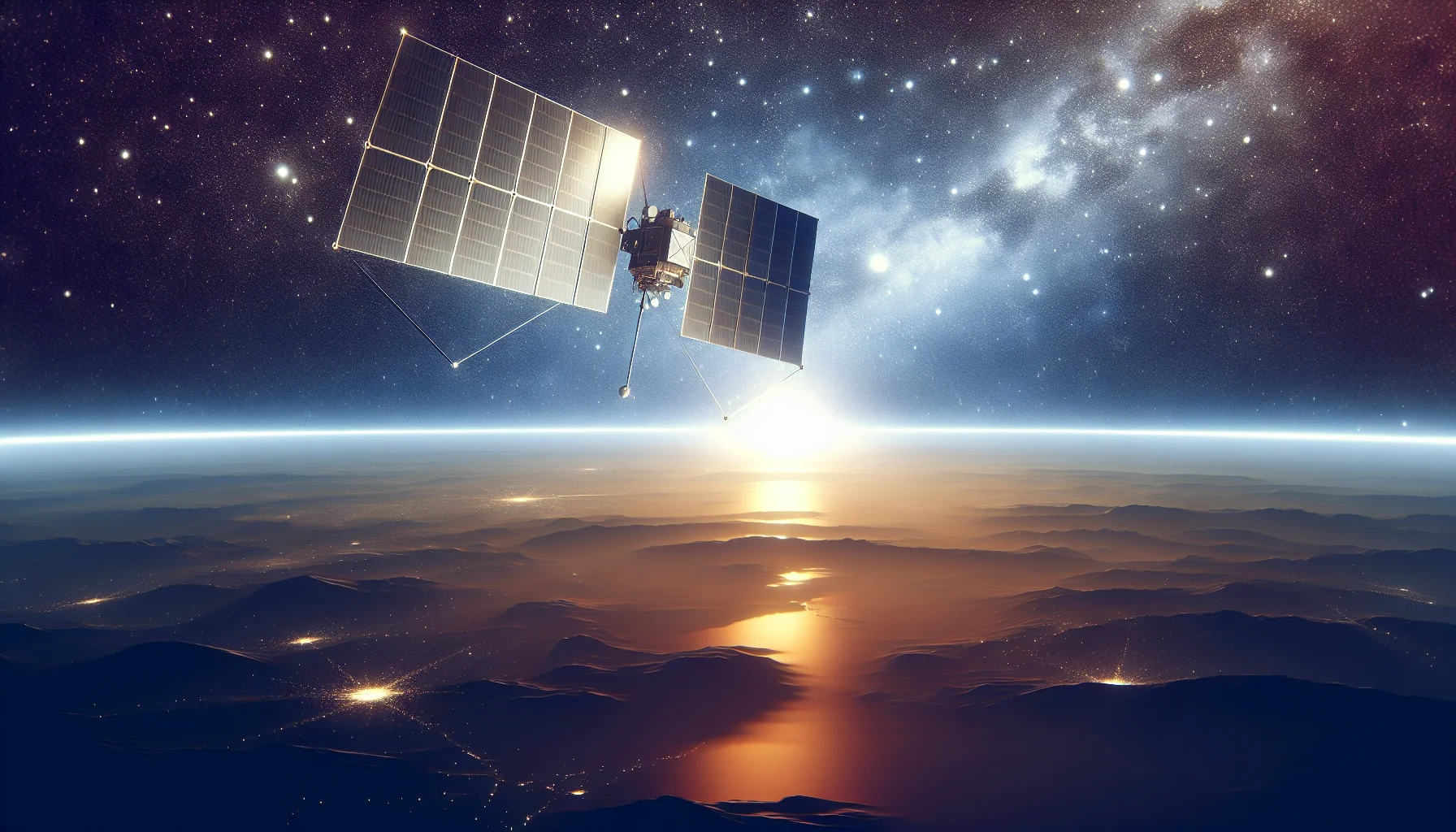
Satellites equipped with solar sails could significantly improve space weather forecasting, offering early warnings for events like geomagnetic storms that can damage critical infrastructure on Earth. Solar sails, which use sunlight for propulsion, are being explored as a more cost-effective and efficient alternative to traditional propulsion systems. Researchers believe that these sails could enhance the monitoring of solar activity, providing quicker and more accurate alerts for space weather events that affect power grids, satellite operations, GPS systems, and even air traffic. Unlike current space weather forecasting systems, which rely on fixed observation points, solar sail technology could offer more flexible positioning for improved data collection.

The potential for solar sail-equipped satellites to revolutionize space weather forecasting lies in their ability to travel beyond traditional locations in space. As reported by Space.com, solar sails could allow spacecraft to venture past the Earth-sun Lagrange Point One (L1), a stable region approximately 1.5 million kilometers from Earth where most solar observation satellites are currently stationed. The National Oceanic and Atmospheric Administration’s (NOAA) Office of Space Weather Observations, which manages these satellite systems, recognizes the advantages of solar sail technology in expanding the range and flexibility of space weather monitoring.

Irfan Azeem, Division Chief at NOAA’s Research to Operations and Project Planning Division, highlighted the key benefit of solar sails in improving space weather forecasts. Solar sails can enable satellites to travel upstream of L1, allowing them to gather data more efficiently than traditional chemical propulsion systems. This improvement in satellite movement would result in faster retrieval of data and the potential to increase the lead time for geomagnetic storm alerts by up to 50 percent, giving industries and agencies more time to prepare for potential disruptions.

As space weather events become an increasing concern due to their potential impact on modern technology, the development of solar sail technology for satellites represents a significant leap forward in our ability to predict and respond to these phenomena. By providing more precise and timely alerts, solar sail-powered satellites could help mitigate risks and safeguard Earth’s technological infrastructure from the damaging effects of space weather.

NASA’s Disaster Program Leverages Artificial Intelligence to Enhance Aid Response Efforts

NASA’s integration of artificial intelligence (AI) and open science has made significant strides in improving disaster preparedness, response, and recovery efforts. Through its Disasters Program, NASA has been developing advanced tools and datasets aimed at enhancing the management of natural disasters such as hurricanes. By providing communities and emergency responders with accurate and timely data, the program has proven to be a crucial resource in helping decision-makers act swiftly and efficiently during critical moments. This innovative approach was notably demonstrated during Hurricane Ida in 2021, highlighting the agency’s role in disaster management.

Hurricane Ida, which struck Louisiana in August 2021, became one of the most destructive hurricanes in U.S. history. As emergency teams coordinated efforts on the ground, NASA’s Disasters Program played a vital role in offering remote support through its satellite-based technologies. These tools helped gather and analyze key data related to the hurricane’s impact, such as soil moisture, precipitation, vegetation changes, and power outages. By processing this information, NASA provided valuable insights that helped prioritize relief actions and allocate resources effectively.

The data collected and shared by NASA through its Disasters Mapping Portal became essential for various organizations working to assess the storm’s damage. This platform allowed users to access critical real-time information, enabling them to track the storm’s progress and its aftermath. The use of AI and satellite models not only helped responders understand the immediate effects of Hurricane Ida but also contributed to longer-term recovery planning by mapping out areas most in need of assistance.

By leveraging AI and satellite-based data, NASA’s Disasters Program demonstrates the transformative power of technology in disaster management. The agency’s commitment to open science ensures that this invaluable information is accessible to organizations worldwide, fostering collaboration and improving the efficiency of global disaster response efforts. As climate-related disasters become more frequent and intense, NASA’s innovations offer a promising model for integrating advanced technology into future relief operations.