Yazılar

NASA’s Curiosity Rover Faces Wheel Damage but Continues to Thrive on Mars

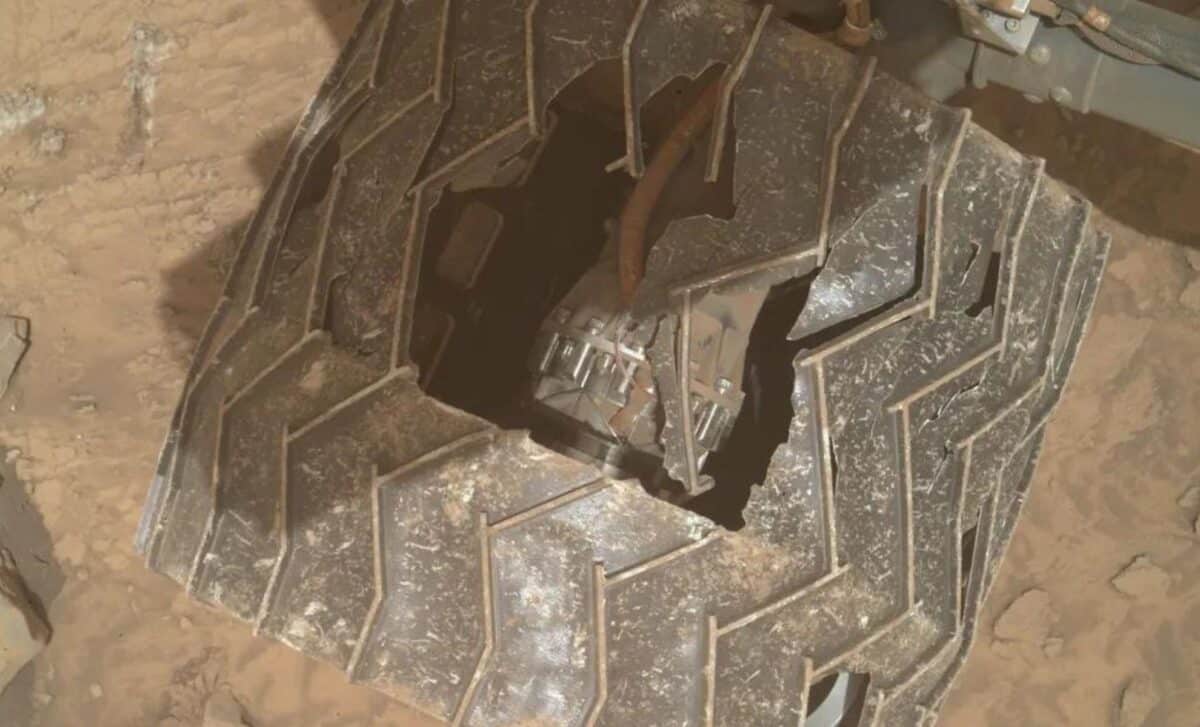
After over a decade of exploring the Martian surface, NASA’s Curiosity rover is beginning to exhibit signs of wear and tear on its wheels. Since its landing in Gale Crater in 2012, the rover has traveled approximately 20 miles (32 kilometers) across challenging and rugged terrain, leading to visible deterioration of its six wheels. Recent images captured by the rover’s Mars Hand Lens Imager (MAHLI) on September 22, 2024, showcase various forms of damage, ranging from minor dents to more severe gashes, illustrating the tough conditions Curiosity has endured on Mars.

Despite the extensive wear, Ashley Stroupe, a Mission Operations Engineer at NASA’s Jet Propulsion Laboratory (JPL), has reassured the public that the wheels remain operational. The rover’s wheel deterioration has been an ongoing issue, with signs of wear first detected as early as 2013. Given the nature of the Martian landscape, which is often filled with sharp rocks and uneven surfaces, some degree of damage was anticipated. In response to this, the Curiosity team has instituted regular inspections to monitor the wheels’ condition closely, ensuring the rover can continue its mission effectively.

To extend the lifespan of the wheels, the mission team has implemented several strategies. On occasion, they have redirected Curiosity away from particularly treacherous terrains that could exacerbate the damage. Moreover, in 2017, JPL engineers uploaded new software that allows the rover to adjust the speed of each individual wheel. This software enables Curiosity to minimize the pressure exerted on its wheels while traversing rocky landscapes, helping to mitigate further wear and tear.

The resilience of Curiosity’s wheels is a testament to both the engineering that went into the rover’s design and the proactive measures taken by the mission team. As Curiosity continues to explore the Martian surface, the insights gained from its performance and the wear on its wheels will contribute valuable knowledge to future missions. The ongoing success of Curiosity serves as a reminder of human ingenuity and the drive to understand our neighboring planet, despite the challenges presented by its environment.

Earth on Alert: Powerful X-Class Solar Flare Erupts from the Sun

The sun unleashed a colossal solar flare, registering as an X9.05 eruption. This remarkable event marks the most powerful flare recorded in the current solar cycle, illuminating the sunlit side of the Earth at its peak around 8:10 a.m. EDT (1210 GMT). The impact of this intense solar activity was felt across Europe and Africa, where significant shortwave radio blackouts occurred. High-frequency communication services experienced noticeable disruptions, affecting everything from aviation to maritime communications, highlighting the sun’s potential to influence technology on Earth.

The source of this powerful solar flare was sunspot group AR3842, which has a well-documented history of vigorous activity. Just days before the X9.05 eruption, this same sunspot group had released an X7.1 flare and generated a coronal mass ejection (CME). The CME, as reported by space weather forecaster Sara Housseal, is currently on a trajectory toward Earth, with an anticipated impact window between October 3 and October 5. This event is particularly exciting for aurora enthusiasts, as CMEs are known to trigger geomagnetic storms that can enhance auroral displays, turning the night sky into a vibrant tapestry of colors.

Understanding the effects of solar activity is crucial for predicting how such events impact our planet. Solar flares and CMEs release streams of electrically charged particles that interact with Earth’s magnetosphere. When these particles collide with atmospheric gases, they can create the stunning light displays we know as the aurora borealis in the Northern Hemisphere and the aurora australis in the Southern Hemisphere. The dynamic interplay between solar activity and Earth’s atmosphere serves as a reminder of our sun’s powerful influence.

The recent X-class flare underscores the need for ongoing monitoring of solar activity, as it can have significant implications for satellite operations, power grids, and communication systems on Earth. With the sun entering a more active phase, scientists and space weather forecasters are closely observing these developments to provide timely updates and warnings. As we brace for the potential effects of the incoming CME, the interplay of solar phenomena and Earth’s magnetosphere continues to be a captivating area of study, offering insights into the broader workings of our solar system.

Revolutionary Bionic Limbs: Harnessing Brain Signals for Enhanced Mobility in Amputees

Revolutionizing Bionic Limb Integration: Advances in Amputee Mobility

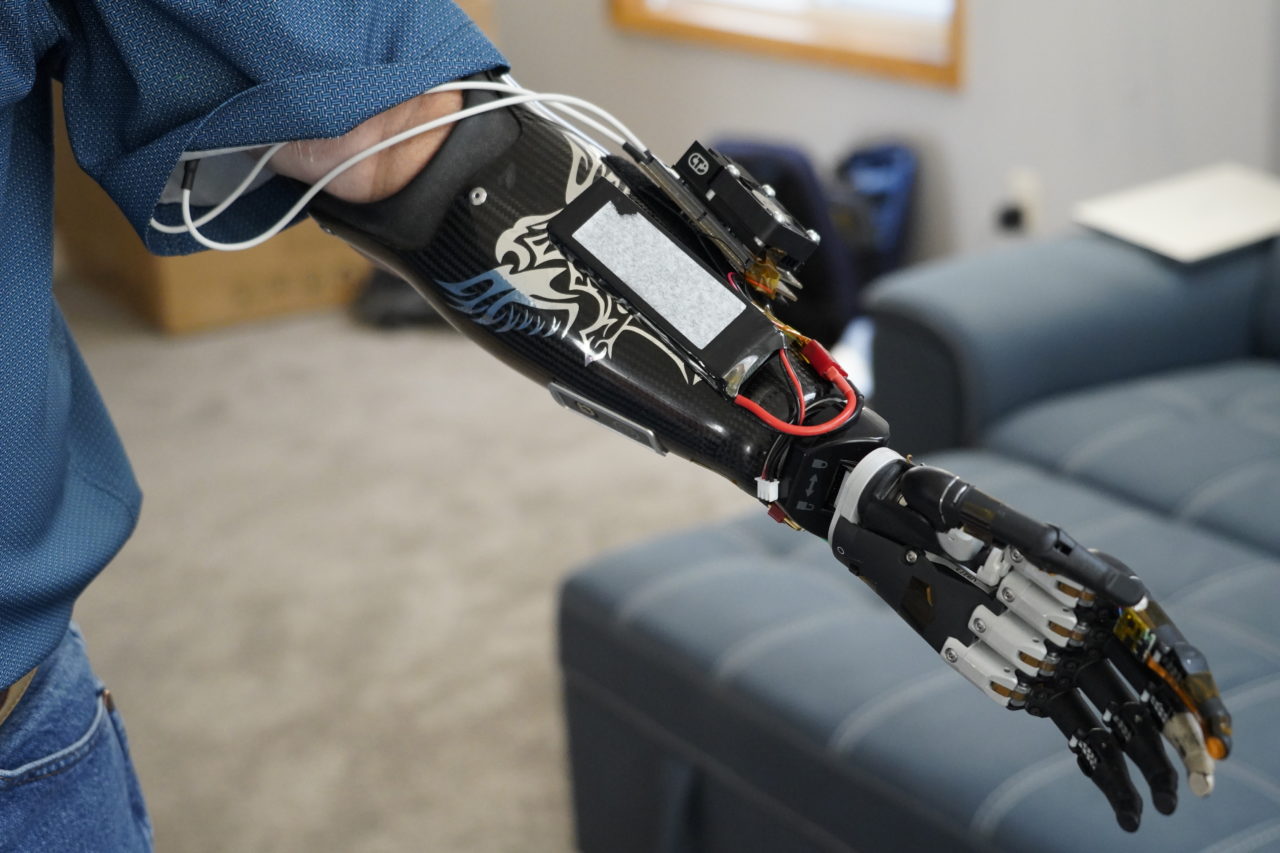
Recent advancements in bionic limb technology are transforming the lives of amputees, bringing us closer to a future where artificial limbs function seamlessly with the human body. A groundbreaking clinical trial has showcased a pioneering method that enhances the integration of bionic prostheses by surgically reconstructing muscle pairs. This innovative approach allows amputees to control robotic limbs through brain signals, significantly improving their ability to navigate obstacles and tackle stairs with greater ease and confidence.

The Anatomics Approach

Unlike traditional prosthetic designs, which often treat the human body as a limiting factor, bioengineer Tyler Clites advocates for an “anatomics” approach. This method seeks to harmonize the body with machinery by reconfiguring muscles, bones, and nerves to establish a more natural communication pathway between the bionic limb and the nervous system. By leveraging biological components, the prostheses can replicate natural movements and enhance proprioception—the body’s ability to sense its position and movement in space. This shift in perspective emphasizes the importance of creating a synergy between human anatomy and technology, fostering a more intuitive user experience.

Agonist-Antagonist Myoneural Interface (AMI)

At the heart of this integration is the agonist-antagonist myoneural interface (AMI) technique. By reconstructing muscle pairs, this innovative method allows users to perceive movements in their prosthetic limb as if they were part of their own body. In a recent trial involving AMI surgery, participants experienced a remarkable 40% increase in walking speed, bringing them closer to the pace of non-amputees. This improvement not only enhances mobility but also boosts the psychological well-being of users, as they can engage more freely in daily activities without the limitations often associated with conventional prosthetics.

Implications for the Future of Prosthetics

The success of the AMI technique and the anatomics approach marks a significant milestone in the field of prosthetics. As researchers continue to refine these methods, the potential for creating bionic limbs that feel and function like natural limbs is becoming a tangible reality. This progress opens the door to further innovations in rehabilitation, making it easier for amputees to adapt to their new prosthetics and regain independence. The implications extend beyond mobility; they challenge societal perceptions of disability, empowering individuals to reclaim their active roles in their communities.

A New Era for Amputees

As bionic limb technology continues to evolve, the focus on integrating these devices with the human body signifies a paradigm shift in prosthetic design. The advancements made through the AMI technique and the anatomics approach underscore the potential for a future where amputees can experience enhanced mobility and a higher quality of life. By bridging the gap between biology and technology, researchers are not only improving physical capabilities but also fostering a renewed sense of hope and possibility for individuals living with limb loss. The journey towards seamless integration is just beginning, but the path ahead is filled with promise and potential.