Yazılar

Breaking the Rules: Scientists Predict Exotic Paraparticles Outside Known Classifications

Physicists have introduced a groundbreaking concept in particle physics: a new category of particles known as “paraparticles.” These theoretical entities defy the conventional classifications of matter into fermions and bosons, offering an entirely fresh perspective on the fundamental building blocks of the universe. Unlike fermions, which obey the Pauli exclusion principle, and bosons, which tend to exist in shared states, paraparticles follow unique exclusion rules. Their predicted behaviors could lead to revolutionary advancements in quantum mechanics and open up new avenues in quantum computing.

The mathematical framework for paraparticles, as described in a study published in Nature, was developed by Zhiyuan Wang of the Max Planck Institute for Quantum Optics and Kaden Hazzard of Rice University. Their research demonstrates that paraparticles can theoretically exist in any number of dimensions, significantly expanding the potential scope for their application. This innovative framework paves the way for the possibility of experimental realization, with researchers emphasizing the importance of advanced quantum computing technologies in recreating such particles.

Wang revealed that the concept of paraparticles emerged unexpectedly during his Ph.D. research in 2021. Despite the theoretical foundation being well-established, reproducing these particles in a controlled environment remains a significant challenge. Experts in the field are optimistic that the rapid advancements in quantum computing technology will soon provide the tools necessary to test these predictions. If realized, paraparticles could have profound implications, including reducing error rates in quantum computational systems and enhancing their overall efficiency.

The discovery also raises intriguing possibilities about the natural world. Paraparticles may exist in forms that have yet to be observed, potentially hinting at hidden layers of the universe’s structure. This work serves as a reminder of how theoretical physics can push the boundaries of what we understand about reality, challenging established paradigms and sparking innovation across multiple disciplines.

Exploring the Science Behind Traditional Thai Herbal Compresses

The soothing aroma of lemongrass, ginger, tamarind, and camphor fills the air as a hot herbal compress is applied to the body—an age-old therapy that has been cherished for centuries in Thailand and Southeast Asia. This traditional treatment, which involves steaming a mix of herbs wrapped in cotton cloth and applying it to the skin, is widely used for relieving muscle aches, joint pain, and inflammation.

Though herbal compresses have long been a staple of wellness practices, their precise health benefits remain unclear. A 2015 review suggested that many of the advantages of this therapy may be attributed to heat, which helps improve blood circulation and alleviate pain, rather than the herbs themselves.

The use of herbal remedies is a massive global industry, but cultural differences and limited regulation have made it difficult to standardize or scientifically validate these practices. The World Health Organization (WHO) reported in 2018 that many countries still lack national policies or regulations on traditional medicines, making research and effective oversight challenging.

To bridge this gap, Thailand’s Thammasat University, through its Center of Excellence in Applied Thai Traditional Medicine Research (CEATMR), is working to scientifically explore and standardize the properties of herbs used in Thai herbal compresses. According to Arunporn Itharat, director of CEATMR, while herbal medicine is widely used in Thailand, especially in rural areas, much of the traditional knowledge remains unverified by scientific research.

One major challenge in herbal medicine, as Itharat explains, is the variability in the properties of herbs, which can change depending on factors like the herb’s variety or where it’s grown. Moreover, the misidentification of herbs is another pressing issue. In 2020, Itharat’s research published in Science & Technology Asia identified specific components in herbs that contribute to the anti-inflammatory effects of herbal compresses, a crucial step in validating the efficacy of these treatments.

In their efforts to make the remedies more accessible and effective, CEATMR researchers have also explored how traditional harvesting methods impact the quality of extracts. For instance, when harvesting zingiber montanum (commonly known as plai ginger), elders recommend collecting the roots during the winter when active compounds are more concentrated—a piece of knowledge yet to be scientifically tested.

In addition to validating traditional practices, the center is developing modern applications of herbal remedies, such as emulsion-gels and creams that incorporate herbal extracts. Itharat is also investigating innovative delivery methods like cooling hydrogel patches and electric herbal compresses. The latter, a collaboration with Thailand’s National Science and Technology Development Agency, allows for extended, controlled application of herbal extracts using a battery-powered compress. This approach offers a more precise and consistent dosage than traditional methods.

Thailand has also committed to furthering traditional medicine research and education. In 2021, Thammasat University launched Thailand’s first Master of Thai Traditional Medicine Clinic Program, combining both traditional and modern medical practices. The global interest in such therapies is growing, with countries like China and India leading research into traditional medicine systems. For example, databases for Traditional Chinese Medicine (TCM) have been developed to catalog herbs and their uses, helping to standardize and study herbal knowledge.

Despite progress, there is still much to be done. The WHO estimates that more than 50,000 plant species are used globally for medicinal purposes, but the lack of standardized plant names and limited cross-border collaboration remains a significant obstacle. Itharat hopes that by validating traditional knowledge, such therapies can be integrated into modern medicine as complementary treatments that may help patients recover more quickly and naturally.

“The connection between nature and human health is undeniable,” says Itharat. “Our challenge is to preserve this traditional knowledge for future generations while making it accessible to a global audience.”


Telescope with World’s Largest Digital Camera Set to Transform Astronomy

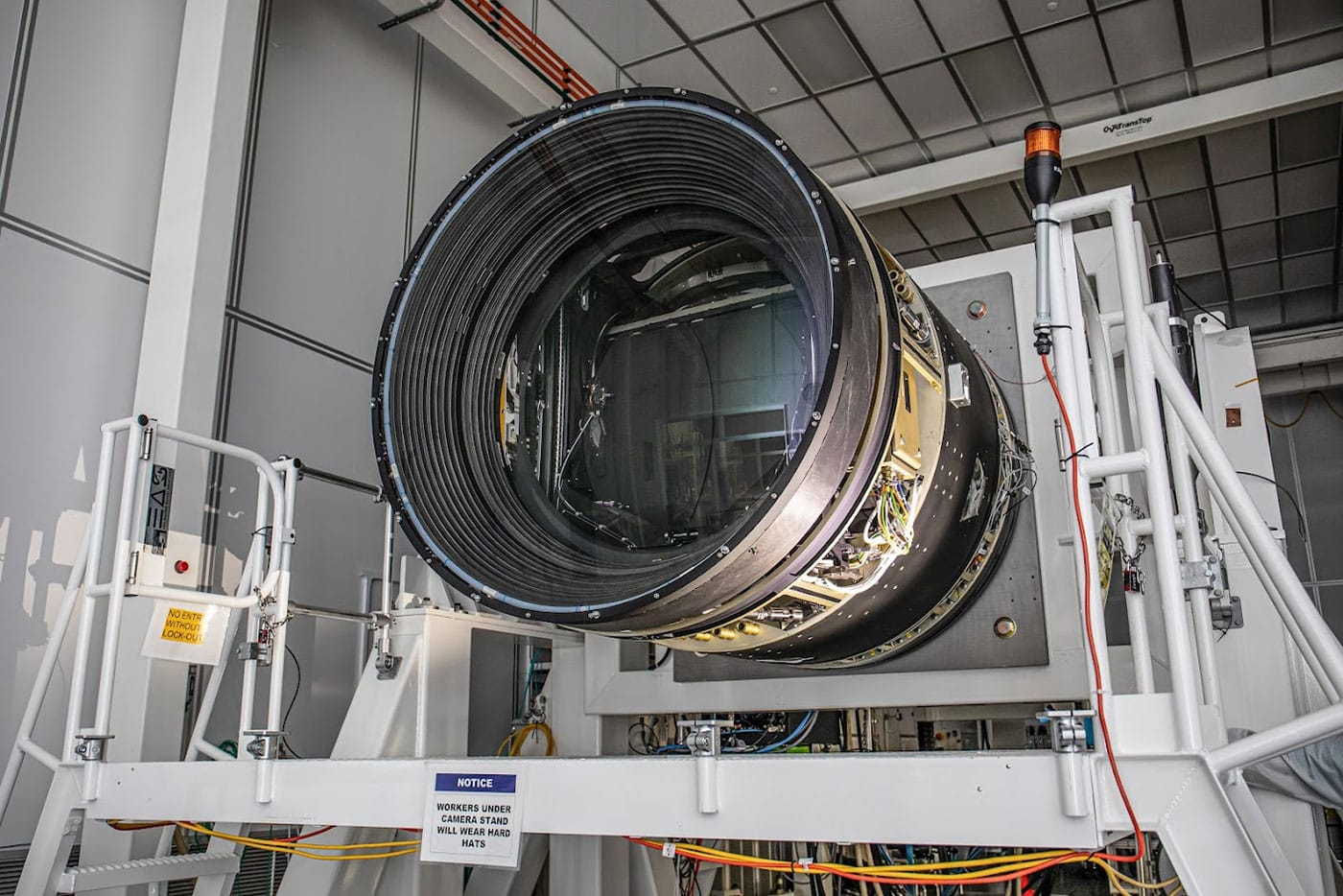
On a mountaintop in northern Chile, the world’s largest digital camera is gearing up for an ambitious mission: to photograph the entire night sky in unprecedented detail, unlocking some of the universe’s most profound secrets. This monumental project, housed within the Vera C. Rubin Observatory, is poised to revolutionize our understanding of the cosmos.

Overview of the Vera C. Rubin Observatory

Located on Cerro Pachón, a mountain standing 2,682 meters (8,800 feet) tall, the observatory features a groundbreaking camera with a resolution of 3,200 megapixels—equivalent to about 300 smartphones. Each image captured will encompass a sky area as large as 40 full moons.

The telescope aims to conduct a complete survey of the visible sky every three nights, generating thousands of images that will reveal celestial movements and brightness changes. Over its ten-year mission, the Vera Rubin Observatory expects to identify approximately 17 billion stars and 20 billion galaxies previously unseen.

“There’s so much that Rubin will do,” explains Clare Higgs, the observatory’s astronomy outreach specialist. “We’re exploring the sky in a way that we haven’t before, giving us the ability to answer questions we haven’t even thought to ask.”

Construction and Purpose

Under construction since 2015, the observatory is named after Vera Rubin, a pioneering American astronomer who confirmed the existence of dark matter before her passing in 2016. Initially funded through private donations from notable figures like Bill Gates and Charles Simonyi, the project later received support from the U.S. Department of Energy and the National Science Foundation.

The observatory’s location in the Chilean Andes is ideal for optical astronomy, with its high altitude, dry climate, and minimal light pollution enhancing the sensitivity of the instruments. Higgs notes, “You want a very still and well-understood atmosphere, and the quality of the night sky in Chile is exceptional.”

Expected to begin operations in 2025, the observatory is currently in its final construction stages. The team is working diligently to assemble and align all components, with plans to commence initial observations by late 2025, contingent on successful testing.

The Legacy Survey of Space and Time (LSST)

The primary mission of the Vera Rubin Observatory is the Legacy Survey of Space and Time (LSST). This ten-year project aims to capture the southern sky every night and repeat that every three nights, essentially creating a “movie” of the southern sky.

The camera can take an image every 30 seconds, generating an astonishing 20 terabytes of data daily. By the end of the survey, it is anticipated that more than 60 million gigabytes of raw data will be collected. Images will be transferred to California for analysis using AI and algorithms, resulting in about 10 million alerts per night for any observable changes in the sky.

Research Areas and Potential Discoveries

The data collected will cover four main research areas:

  1. Inventory of the Solar System: Including the search for Planet Nine.
  2. Mapping the Milky Way: Understanding our galaxy’s structure.
  3. Exploring Transients: Observing objects that change position or brightness over time.
  4. Understanding Dark Matter: Investigating the nature of this elusive substance.

Higgs notes, “We’ll go from a couple of observed events to statistically large samples, and the science impact of what that can do is huge.”

Excitement in the Astronomical Community

The astronomical community is abuzz with anticipation for the Vera Rubin Observatory. According to David Kaiser, a physics professor at MIT, the telescope will enable unprecedented mapping of dark matter through gravitational lensing, allowing for better understanding of how dark matter interacts with visible matter.

Professor Konstantin Batygin from Caltech adds that the observatory could provide critical insights into the Planet Nine hypothesis, helping astronomers to better understand the dynamics of the outer solar system.

Dr. Kate Pattle from University College London highlights that the observatory will make significant strides in studying astronomical transients, tracking supernova remnants, and monitoring high-energy gamma-ray bursts.

Conclusion

As the Vera C. Rubin Observatory prepares for its groundbreaking mission, astronomers are poised to gain insights that may redefine our understanding of the universe. With its advanced technology and ambitious goals, the observatory is not just a project; it is a potential game-changer for the field of astronomy.