Yazılar

AMD Warns of $1.5 Billion Revenue Hit from U.S. China Chip Export Curbs, But AI Demand Remains Strong

Advanced Micro Devices (AMD) warned on Tuesday that new U.S. restrictions on AI chip exports to China will cost the company $1.5 billion in revenue for 2025, as Washington intensifies efforts to limit China’s access to advanced technology. Despite the projected hit, AMD’s second-quarter revenue forecast surpassed Wall Street expectations, buoyed by early chip purchases from customers bracing for trade disruptions.

The Biden and Trump administrations have both ramped up controls on exports of high-performance chips to China, citing national security risks related to AI capabilities. These measures now require chipmakers like AMD and Nvidia to obtain export licenses, effectively slowing or blocking shipments of advanced processors.

CEO Lisa Su said most of the export-related impact will be felt in Q2 and Q3, but expressed confidence in broader business strength. “It’s certainly a headwind, but one which we think is well contained,” Su said, noting that AI chip revenue in AMD’s data center segment is expected to grow by “strong double digits” this year.

China represents about 25% of AMD’s total revenue, and the export curbs are expected to shave nearly 5% off 2025 revenue projections, which currently sit at $31.03 billion, per LSEG data.

In Q1, AMD reported:

  • Total revenue of $7.44 billion, up 36% year-over-year, beating the estimate of $7.25 billion

  • Adjusted earnings of 96 cents per share, 2 cents above consensus

  • Data center revenue surged 57% to $3.7 billion, above the $3.62 billion estimate

For Q2, AMD expects revenue of $7.4 billion ± $300 million, also ahead of forecasts. However, the company is still absorbing an $800 million charge due to April’s newly enacted tariffs.

CFO Jean Hu confirmed the $1.5 billion forecasted revenue loss is tied directly to the latest April export controls. Analysts suggest the current surge in orders reflects pre-buying behavior” from large cloud clients like Microsoft and Meta, who are stockpiling chips ahead of licensing uncertainty.

Once those safety-stock closets are full, Q3 could feel like the morning after a Red Bull binge,”
warned Michael Schulman, CIO at Running Point Capital.

Meanwhile, rivals Marvell Technology and Super Micro both disappointed investors, citing economic uncertainty and reduced AI-related optimism. Their shares fell 4.5% and 5%, respectively, in after-hours trading.

AMD’s solid results highlight its growing role in powering AI infrastructure for hyperscalers, even as trade tensions and tariffs loom over the semiconductor industry.
SK Hynix Reports Early Orders Ahead of Potential US Tariffs

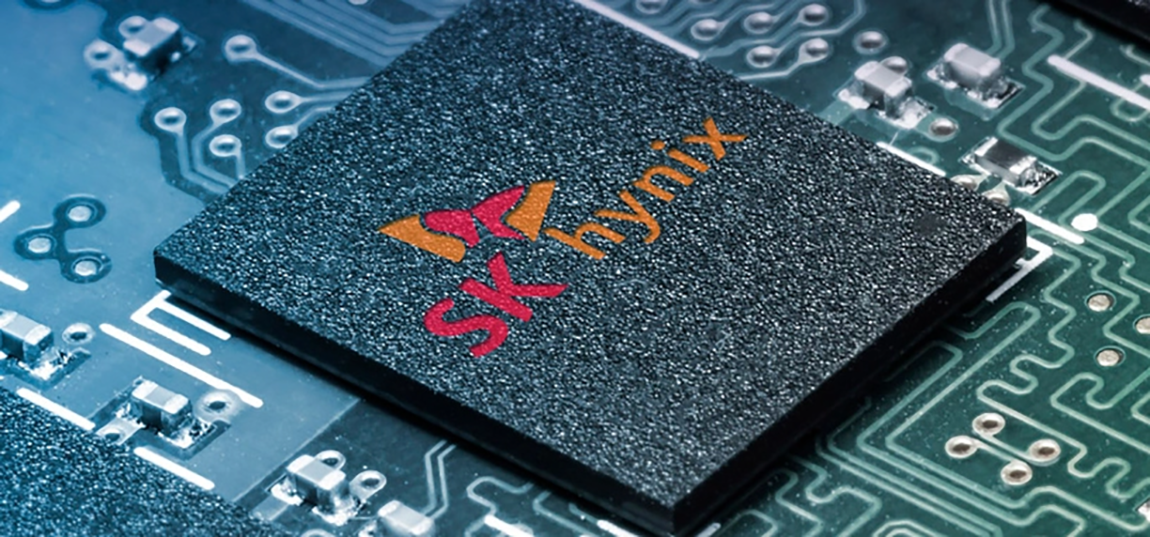
South Korean memory chipmaker SK Hynix announced on Thursday that some customers have accelerated their orders in anticipation of potential US tariffs on semiconductors. Speaking at the company’s annual shareholder meeting, Lee Sang-rak, Head of Global Sales and Marketing, attributed recent favorable market conditions to this “pull-in” effect and reduced customer inventory levels. However, he cautioned that it remains uncertain whether this trend will continue.

In January, SK Hynix projected a 10%-20% drop in DRAM and NAND flash memory shipments for Q1 2024. However, demand from the AI sector has contributed to price increases by competitors such as Micron, SanDisk, and China’s YMTC. Reports suggest that fears of impending US semiconductor tariffs, potentially reaching 25%, have led to increased inventory transfers to the US.

Despite concerns about AI hardware spending, SK Hynix remains optimistic about explosive growth in high bandwidth memory (HBM) chip demand, especially as a key supplier to Nvidia. CEO Kwak Noh-Jung confirmed that HBM sales for 2025 have already been fully booked, with negotiations for 2026 volume expected to conclude in the first half of this year.

Biden Administration Launches Probe into Chinese Legacy Chips, Prepares to Transition to Trump

In its final weeks, the Biden administration has initiated a trade investigation targeting older Chinese-made semiconductors, known as “legacy” chips, which are widely used in everyday products such as automobiles, home appliances, and telecommunications equipment. The probe, under Section 301 of the Trade Act of 1974, aims to counter China’s state-supported semiconductor expansion, which U.S. officials argue undermines global competition by offering artificially low-priced chips.

The investigation, announced by U.S. Trade Representative Katherine Tai, is designed to protect American semiconductor producers and those in allied nations. The effort will be handed over to the incoming Trump administration, which could use it to impose additional tariffs of up to 60% on Chinese imports, aligning with Trump’s campaign promises to take a tough stance on China.

Outgoing President Joe Biden has already implemented a 50% tariff on Chinese semiconductors, effective January 1, and imposed stricter export controls on advanced chips and chipmaking tools. The Biden administration has also highlighted alarming findings, with Commerce Secretary Gina Raimondo reporting that two-thirds of U.S. products using chips contain Chinese legacy semiconductors. Moreover, half of U.S. companies, including some in defense industries, are unaware of their chips’ origins.

China’s commerce ministry denounced the investigation as “protectionist,” warning of potential disruptions to the global chip supply chain and threatening retaliatory measures. Meanwhile, Tai accused Beijing of seeking global dominance in the semiconductor industry, stating that China’s practices could harm market-oriented competitors.

PUBLIC HEARING AND TIMELINE
The probe will accept public comments starting January 6, with a public hearing scheduled for March 11-12. The investigation is expected to conclude within a year. The framework for this probe mirrors earlier Section 301 investigations that led to the imposition of tariffs on $370 billion worth of Chinese goods during the Trump administration, igniting a protracted trade war.

The Information Technology Industry Council, a U.S. tech trade group, has expressed concerns about the investigation’s potential economic ramifications. The group urged both the Biden and Trump administrations to approach the inquiry collaboratively and objectively, particularly given the complexities of the semiconductor supply chain and the risks associated with unilateral actions during a presidential transition.

IMPACT ON DOWNSTREAM GOODS
The investigation will examine not only the direct impact of imported legacy chips but also their role in downstream components and products critical to industries such as defense, automotive, and medical devices. It will also assess China’s production of silicon carbide substrates and wafers essential for semiconductor manufacturing.

The COVID-19 pandemic highlighted vulnerabilities in global semiconductor supply chains, leading to disruptions in industries like automotive and healthcare. In response, the U.S. has allocated $52.7 billion to bolster domestic semiconductor manufacturing, research, and workforce development.

The Biden administration’s last-minute actions set the stage for the Trump administration to shape the future of U.S.-China trade relations, particularly in the high-stakes semiconductor industry, as Trump has vowed to prioritize American dominance in critical technologies.