Yazılar

Besi Raises Long-Term Financial Targets on Growing AI Chip Demand

BE Semiconductor Industries (Besi) has raised its long-term revenue and operating margin targets ahead of its investor day, citing strong demand from AI chipmakers adopting its advanced hybrid bonding technology. The Dutch company specializes in the world’s most precise hybrid bonding tools, a key technology for stacking multiple chips directly on top of each other to boost performance.

At the event, Besi’s Senior Vice President Technology Chris Scanlan highlighted that major AI chip designers Nvidia and Broadcom are looking to utilize Taiwan Semiconductor Manufacturing Co’s (TSMC) hybrid bonding process, which could increase demand for Besi’s equipment. Additionally, Intel and AMD are expanding their use of hybrid bonding technology.

Besi now projects long-term revenues between €1.5 billion and €1.9 billion ($1.73 billion to $2.19 billion), up from a previous forecast of €1 billion, and expects operating margins of 40% to 55%, an increase from 35% to 50%. Shares rose 8.4% during the trading day, outperforming the Netherlands’ AEX index.

As traditional performance gains from shrinking chip features approach physical limits, the industry is shifting towards advanced packaging methods like hybrid bonding to create faster, more powerful chips. Limits on reticule exposure in ASML’s lithography machines have also pushed chipmakers to combine multiple chips by stitching or stacking. For example, TSMC recently demonstrated a large package containing over 16 chips stitched together.

While Besi and its investors are optimistic about the company’s position as a key supplier to cutting-edge chipmakers, some analysts expressed caution. Degroof Petercam noted that Besi’s raised targets come despite the company not yet reaching its earlier goals. So far this year, Besi shares have declined by 3.2%.
Former Intel CEO Pat Gelsinger Joins Playground Global as General Partner

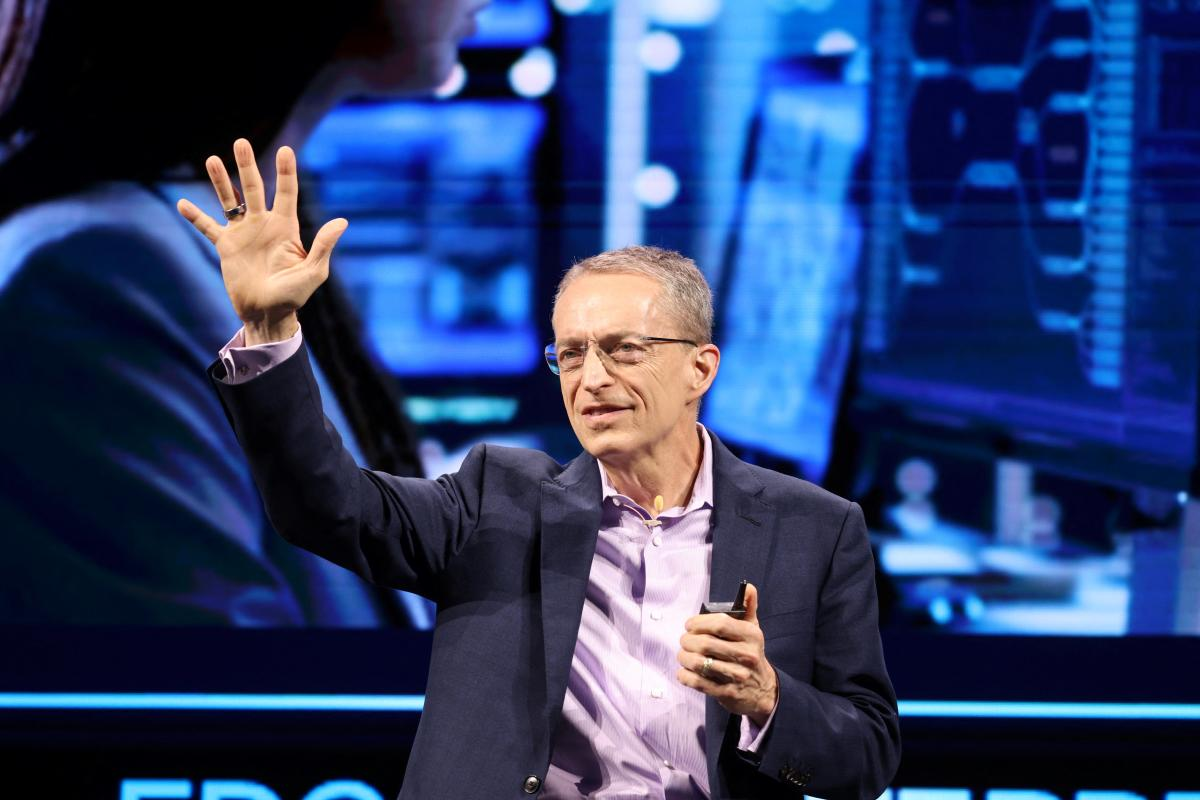
Pat Gelsinger, the former CEO of Intel, has joined venture capital firm Playground Global as a general partner. In addition to his new role, Gelsinger has also joined the board of xLight, a startup focused on developing advanced chip manufacturing technology.

Playground Global and Gelsinger’s Role

Founded in 2015, Playground Global is a Silicon Valley-based venture capital firm with $1.2 billion in assets under management. The firm specializes in deep technology investments, including semiconductors and AI. Playground’s notable investments include MosaicML, an AI firm sold to Databricks in a $1.3 billion stock deal, and PsiQuantum, a quantum computing firm raising funds to build quantum computers in the U.S. and Australia.

Gelsinger, who left Intel after disagreements with its board over his turnaround strategy, will focus on supporting 10 to 20 of Playground’s portfolio companies. His mission is to identify technologies that can deliver breakthroughs, specifically those that can perform at least 10 times better than current solutions.

Focus on Innovation in Semiconductor Technology

One of Gelsinger’s first moves is to join xLight, a Playground portfolio company, as executive chairman. xLight is developing a new type of laser technology to produce extreme ultraviolet (EUV) light for chip manufacturing. This technology aims to use significantly less electricity than current EUV lasers, which are produced by ASML Holding, the industry leader in lithography machines.

Gelsinger believes that this new laser technology could significantly enhance chip production capabilities, making chips smaller and faster—a continuation of the progress first outlined by Moore’s Law, which predicts the doubling of transistors on a chip approximately every two years. He emphasized the importance of advancing these technologies domestically, particularly in the U.S., to ensure continued innovation in the semiconductor industry.

Looking Ahead

Gelsinger’s move to Playground Global signals his commitment to driving innovation in the semiconductor and tech industries. His extensive experience at Intel and deep understanding of chip manufacturing will bring valuable insights as he works to accelerate advancements in cutting-edge technologies that could shape the future of computing.