Yazılar

Philippines to Continue Vessel Deployment in Contested South China Sea Shoal

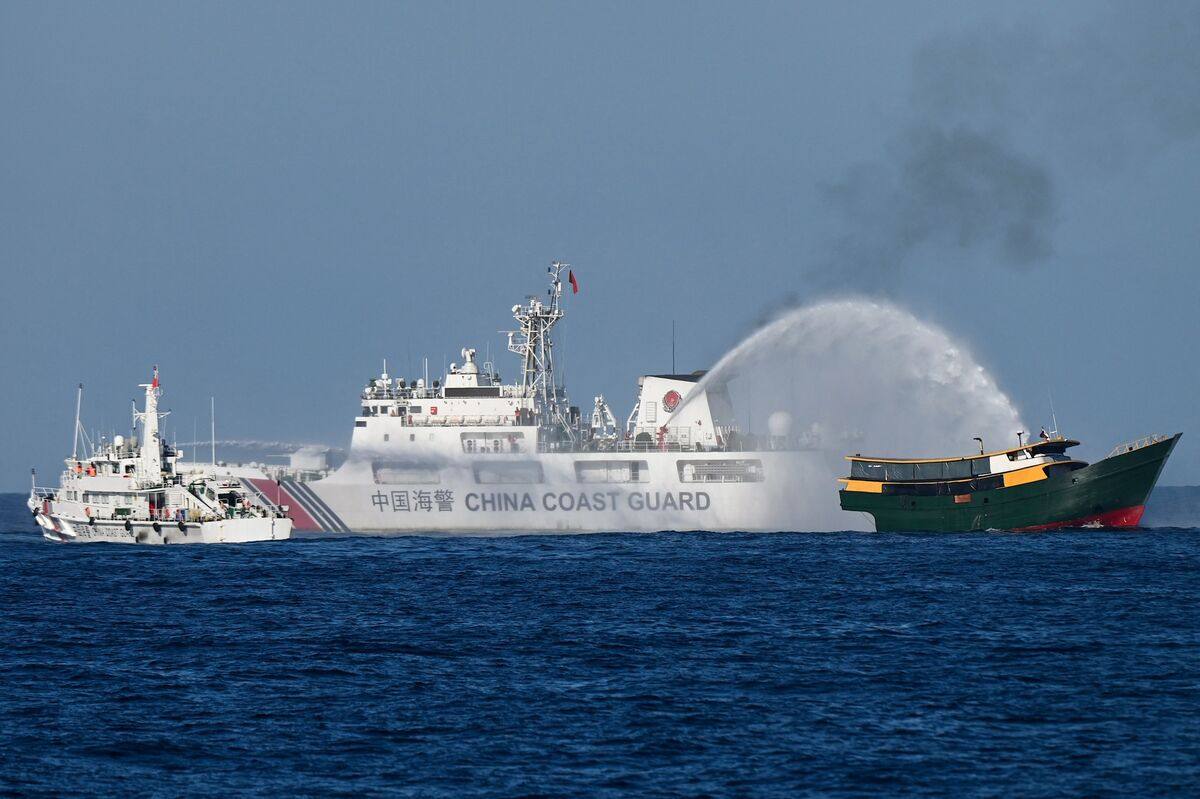
The Philippines will maintain a persistent presence in the contested Sabina Shoal in the South China Sea, according to a statement by its coast guard on Monday. This comes after the Philippine vessel Teresa Magbanua returned to port following a five-month deployment in the area.

Philippine Coast Guard Spokesperson Jay Tarriela emphasized that the country will continue to deploy vessels in these waters, reinforcing the nation’s stance amid concerns over China’s activities. The Teresa Magbanua was initially sent to the shoal in April to monitor what the Philippines suspects are small-scale land reclamation operations by China. The ship’s return on Sunday was due to the need for repairs and to address crew medical needs, and not in response to any demands from China, according to Tarriela.

Sabina Shoal, referred to by China as Xianbin Reef and by the Philippines as Escoda Shoal, is located west of the Philippine province of Palawan, within the country’s exclusive economic zone (EEZ). Despite China’s claims, the Philippines is committed to ensuring a coast guard presence at all times, regardless of the size or number of vessels, Tarriela assured during a press conference.

China’s coast guard responded on Sunday, stating it will continue its law enforcement activities within the waters it claims as its jurisdiction, in line with Beijing’s laws, to protect its territorial sovereignty and maritime interests.

China asserts sovereignty over most of the South China Sea, leading to territorial disputes with several Southeast Asian nations, including Brunei, Indonesia, Malaysia, the Philippines, and Vietnam. However, in 2016, an international arbitration tribunal in The Hague ruled against China’s extensive territorial claims, a decision that Beijing has repeatedly rejected.
 

New Tensions Emerge in the South China Sea

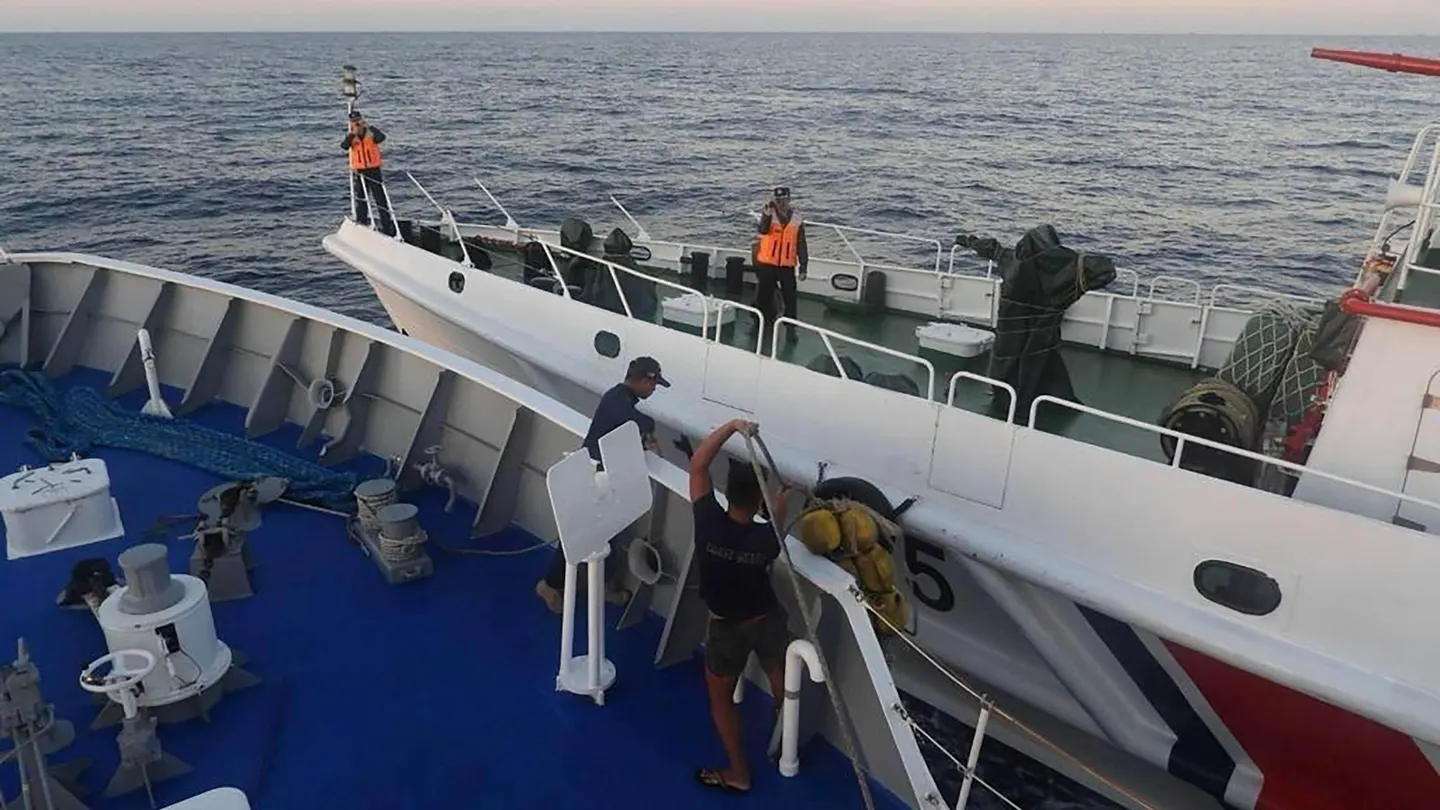
Recent clashes between Chinese and Philippine vessels near Sabina Shoal have escalated tensions in the South China Sea, undermining recent efforts to ease disputes in this strategically crucial region. Sabina Shoal, an uninhabited atoll located 86 miles from the Philippines’ west coast, has become the latest flashpoint in the ongoing maritime conflict between the two nations.

In the past week, multiple confrontations have occurred, including violent collisions and face-offs. The Philippines has accused China of deliberately ramming its ships and using water cannons against Philippine vessels. Conversely, China has blamed the Philippines for these incidents, alleging that its ships refused to comply with Chinese control and engaged in deliberate collisions.

The renewed aggression follows a temporary de-escalation agreement reached earlier this summer after violent confrontations at the Second Thomas Shoal, where Chinese coast guard personnel had aggressively blocked resupply missions to Filipino troops stationed on a grounded World War II-era ship. Despite the truce, tensions have reignited with recent incidents, including collisions involving Philippine coast guard vessels and an extensive deployment of Chinese ships to block Philippine operations.

Analysts view Sabina Shoal as a potential new conflict zone, following previous flashpoints like Second Thomas Shoal and Scarborough Shoal. The Philippine government, led by President Ferdinand Marcos Jr., is under pressure to stand firm against Chinese encroachment, while Beijing continues to assert its claims over nearly the entire South China Sea, despite an international tribunal ruling against these claims.

The situation at Sabina Shoal involves high-stakes maneuvering. The Philippines has deployed its largest coast guard vessel, the BRP Teresa Magbanua, to monitor Chinese activities and counter alleged land reclamation efforts by China. Meanwhile, China has intensified its presence in the area, including deploying one of its largest coast guard ships to assert control.

As both nations navigate these escalating tensions, the role of the United States is crucial. The U.S. has reiterated its commitment to defend the Philippines under a mutual defense treaty and is considering options such as escorting Philippine resupply missions. However, with ongoing global conflicts and domestic political considerations, the U.S. response remains cautious.

The situation at Sabina Shoal highlights the precarious balance in the South China Sea, where any miscalculation could lead to a larger conflict with significant regional and global implications.


Taiwan’s President Lai Warns of Global Challenge Posed by China’s Growing Authoritarianism

Taiwan’s President Lai Ching-te has issued a stark warning about China’s “growing authoritarianism,” stating that it presents not just a regional but a global challenge. Speaking at the annual Ketagalan Forum on Indo-Pacific security issues, Lai emphasized that China’s authoritarianism, which has become increasingly aggressive, extends beyond Taiwan and threatens the broader international community.

Lai’s remarks come as China continues to assert its dominance in the South China Sea and escalate military pressure around Taiwan, conducting patrols in the Taiwan Strait under the pretext of enhancing traffic management and emergency rescue operations. The Taiwanese leader also noted that democratic countries must unite to resist China’s attempts to reshape the international order to its advantage.

His call to action comes at a time of rising tensions in the Indo-Pacific, particularly after Chinese and Philippine vessels collided near the disputed Sabina Shoal, intensifying friction in the Spratly Islands. The incident drew international condemnation, with the U.S. reaffirming its defense commitments to the Philippines.

Lai’s comments underscore Taiwan’s concerns over Beijing’s growing assertiveness, as China refuses to recognize the island’s government and continues to view it as part of its territory. Despite China’s dismissive stance toward Taiwan’s January elections, which brought Lai to power, Taiwan remains firm in its efforts to rally global democracies against authoritarian threats.

With Taiwan’s defense budget on the rise, Lai’s leadership is focused on strengthening alliances with democratic nations to safeguard regional peace and stability in the face of mounting Chinese pressure.