Nvidia’s Jensen Huang Expands South Korea Charm Offensive as AI Ties Deepen
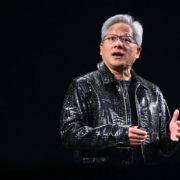
Nvidia CEO Jensen Huang is strengthening the company’s relationship with South Korea through a highly visible public campaign that extends beyond boardrooms and semiconductor factories to television appearances and cultural events, reflecting the country’s growing strategic importance in the global artificial intelligence ecosystem.
During his second visit to South Korea in less than a year, Huang is expected to meet executives from leading technology companies while also appearing on a popular television talk show and throwing the ceremonial first pitch at a professional baseball game. The unusual public engagement underscores Nvidia’s intention to deepen both business partnerships and public recognition in one of its most critical supply-chain markets.
South Korea occupies a central role in Nvidia’s AI strategy. Samsung Electronics and SK Hynix together supply the majority of the advanced memory chips required for Nvidia’s AI accelerators, while the country’s strengths in manufacturing, robotics, and industrial automation make it an attractive partner for the emerging era of physical AI, where artificial intelligence is embedded directly into factories, vehicles, and robots.
The relationship has become even more significant as geopolitical tensions and export restrictions have reshaped global semiconductor supply chains. With advanced chip sales to China facing increasing limitations, South Korea has emerged as an essential production, development, and deployment hub for next-generation AI infrastructure.
Nvidia is also expanding its footprint as a customer within the country, supplying hundreds of thousands of advanced AI processors to government initiatives and major corporations as South Korea pursues an ambitious national strategy to become one of the world’s leading AI powers.
Beyond semiconductors, Huang has highlighted robotics as an important area for future collaboration, suggesting that South Korea’s industrial capabilities and demographic challenges create an ideal environment for AI-powered automation solutions.
The visit demonstrates that Nvidia’s competitive advantage increasingly depends not only on technological leadership but also on cultivating deep strategic alliances across the broader AI value chain, with South Korea emerging as one of its most important global partners.