Yazılar

South Korea Central Bank Governor Open to Won-Based Stablecoins but Cautious on Forex Impact

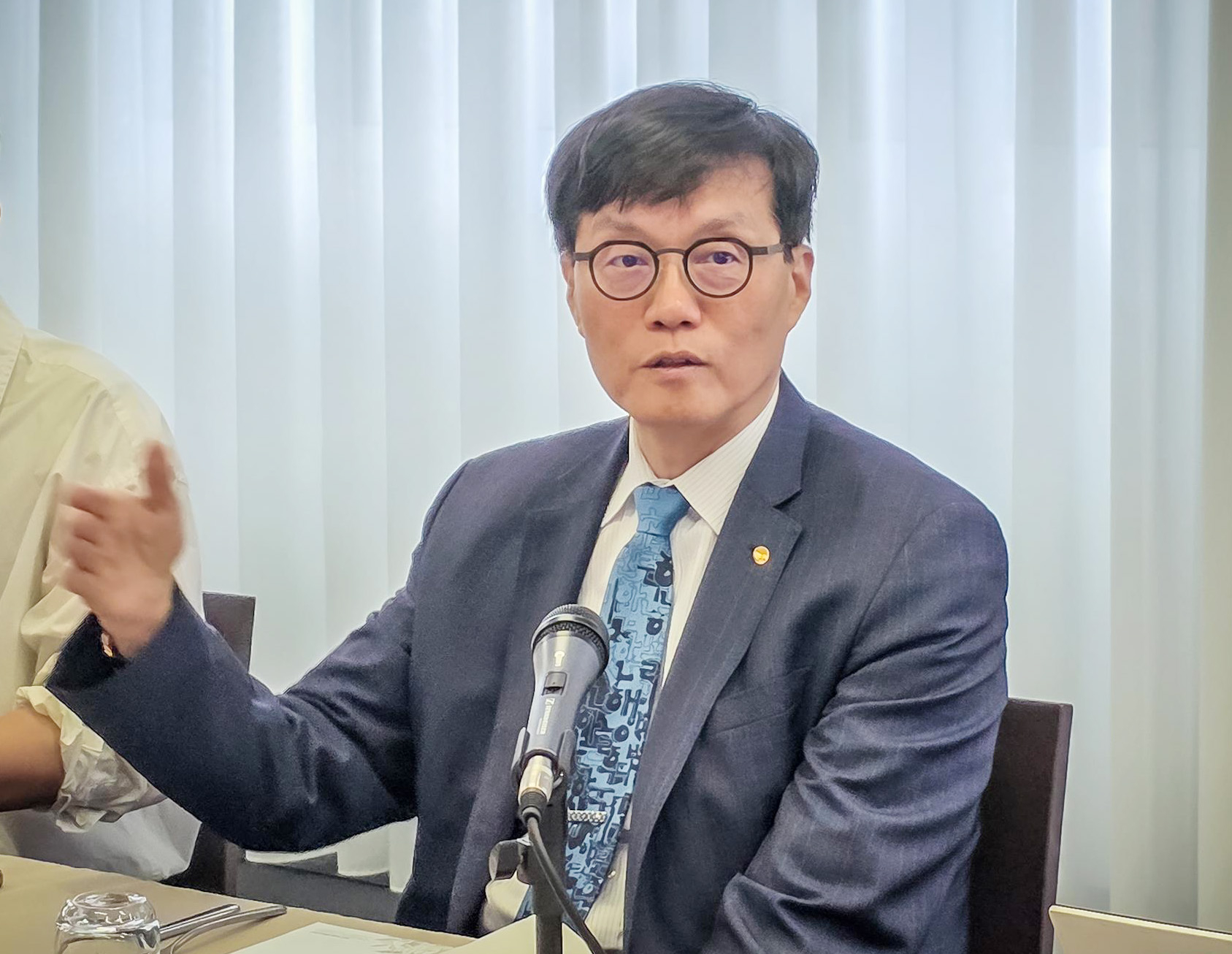
South Korea’s central bank governor, Rhee Chang-yong, expressed openness to the idea of issuing stablecoins denominated in the Korean won but flagged concerns over managing foreign exchange flows. Speaking at a press conference in Seoul, Rhee warned that won-based stablecoins could be easily exchanged for U.S. dollar stablecoins, potentially increasing demand for the dollar-linked tokens and complicating forex management.

Stablecoins are cryptocurrencies pegged to stable assets like the U.S. dollar and are widely used in crypto markets for quick fund transfers. While regulators globally remain wary of cryptocurrencies due to their speculative nature and potential competition with national currencies, South Korea’s government appears poised to embrace won-based stablecoins.

President Lee Jae Myung, who took office recently, is advancing his campaign promise to allow local firms to issue won-backed stablecoins. The ruling Democratic Party introduced the Digital Asset Basic Act this month, aiming to create a regulatory framework for such issuances.

The president also appointed Kim Yong-beom, former crypto firm chief and ex-vice chairman of the Financial Services Commission, as his chief policy officer, signaling stronger government backing for crypto initiatives.

Governor Rhee previously cautioned that letting private companies issue stablecoins could undermine the central bank’s control over monetary policy and capital flows, making regulatory oversight a critical challenge.

South Korea’s President Lee Vows Regulatory Easing and Tariff Talks to Support Trade

South Korean President Lee Jae-myung pledged on Friday that his administration would ease regulations and accelerate working-level tariff negotiations with Washington, as part of a broader effort to support South Korean businesses facing international trade challenges.

Speaking at a meeting with leaders of the country’s top conglomerates, President Lee emphasized that his government would work to minimize the difficulties companies encounter in global competition and help them expand their economic footprint. The gathering included prominent figures such as Samsung Electronics Chairman Jay Y. Lee and Hyundai Motor Group Executive Chair Euisun Chung.

“Our companies are struggling with international competition,” Lee told the business leaders, adding that his administration would adopt a “pragmatic, flexible” trade policy focused on national interests. His spokesperson, Kang Yu-jung, confirmed that Lee intends to expedite discussions on tariffs with Washington.

Since his election on June 3, Lee — a liberal who campaigned on a business-friendly platform — has prioritized economic issues, especially in light of South Korea’s export-driven economy. Key sectors such as semiconductors, automobiles, and shipbuilding are heavily reliant on global trade, making ongoing negotiations with the United States especially critical.

During the meeting, Lee invited executives to provide input on trade challenges. SK Group Chairman Chey Tae-won, who also heads the Korea Chamber of Commerce, voiced concerns about the uncertainty surrounding U.S. tariffs, which complicates corporate decision-making. Samsung’s Lee expressed hope that close cooperation between the government and private sector would help South Korea navigate what he described as a “multi-dimensional crisis.”

The U.S.-South Korea alliance also remains a focal point. On the same day, Seoul’s deputy minister for economic affairs Kim Hee-sang met with Sean O’Neill, a senior U.S. State Department official, to reaffirm bilateral cooperation. O’Neill emphasized opportunities to deepen collaboration in shipbuilding, economic security, and mutual investment.

The tariff negotiations come after President Lee and U.S. President Donald Trump agreed last week to work toward a swift deal during their first phone call since Lee assumed office.

Meanwhile, South Korea’s industry ministry announced plans to evaluate the impact of U.S. tariffs on domestic manufacturers, particularly in the home appliance sector, and to prepare targeted support measures.

South Korea’s Hanwha Sells Entire 5.4% Stake in Eutelsat Amid Strategic Refocus

South Korean aerospace and defense company Hanwha Systems announced on Thursday that it is selling its entire 5.4% stake in the Franco-British satellite operator Eutelsat for €77.6 million ($88.5 million). This move comes as Eutelsat seeks new investors to support its second-generation low Earth orbit (LEO) satellite program and commitments to the European Union’s IRIS² project.

Eutelsat has faced significant financial challenges, accumulating hundreds of millions of euros in losses, largely due to its declining video business and delayed returns from its 2023 acquisition of OneWeb. The acquisition has struggled amid stiff competition and slower-than-expected technology deployment.

Hanwha’s sale price of €3.00 per share represented a 13.9% discount to Eutelsat’s previous closing price of €3.48 and reflects a steep loss of approximately 70.5% compared to Hanwha’s initial $300 million investment in OneWeb in 2021. Eutelsat’s shares reacted with a 14.8% drop on the Paris market following the announcement.

Hanwha emphasized that the sale aligns with a strategic pivot to focus more on its core businesses related to defense satellites and military communications, rather than civilian satellite operations. A Hanwha representative also resigned from Eutelsat’s board in April, signaling a reduced involvement.

Eutelsat is currently undergoing leadership changes and financial restructuring, with Jean-François Fallacher recently appointed as CEO. There are also reports that the French government is considering increasing its stake in Eutelsat, potentially doubling it with a capital injection of €1.5 billion to stabilize the company.

Meanwhile, both Starlink and Eutelsat OneWeb recently received licenses from South Korea’s Science Ministry to operate satellite internet services in the country, with service launches expected soon. Hanwha acts as a distributor for OneWeb in South Korea under a 2023 agreement targeting improved LEO communications for government and underserved areas.