
Yazılar

Exploring the Science Behind Traditional Thai Herbal Compresses

The soothing aroma of lemongrass, ginger, tamarind, and camphor fills the air as a hot herbal compress is applied to the body—an age-old therapy that has been cherished for centuries in Thailand and Southeast Asia. This traditional treatment, which involves steaming a mix of herbs wrapped in cotton cloth and applying it to the skin, is widely used for relieving muscle aches, joint pain, and inflammation.

Though herbal compresses have long been a staple of wellness practices, their precise health benefits remain unclear. A 2015 review suggested that many of the advantages of this therapy may be attributed to heat, which helps improve blood circulation and alleviate pain, rather than the herbs themselves.

The use of herbal remedies is a massive global industry, but cultural differences and limited regulation have made it difficult to standardize or scientifically validate these practices. The World Health Organization (WHO) reported in 2018 that many countries still lack national policies or regulations on traditional medicines, making research and effective oversight challenging.

To bridge this gap, Thailand’s Thammasat University, through its Center of Excellence in Applied Thai Traditional Medicine Research (CEATMR), is working to scientifically explore and standardize the properties of herbs used in Thai herbal compresses. According to Arunporn Itharat, director of CEATMR, while herbal medicine is widely used in Thailand, especially in rural areas, much of the traditional knowledge remains unverified by scientific research.

One major challenge in herbal medicine, as Itharat explains, is the variability in the properties of herbs, which can change depending on factors like the herb’s variety or where it’s grown. Moreover, the misidentification of herbs is another pressing issue. In 2020, Itharat’s research published in Science & Technology Asia identified specific components in herbs that contribute to the anti-inflammatory effects of herbal compresses, a crucial step in validating the efficacy of these treatments.

In their efforts to make the remedies more accessible and effective, CEATMR researchers have also explored how traditional harvesting methods impact the quality of extracts. For instance, when harvesting zingiber montanum (commonly known as plai ginger), elders recommend collecting the roots during the winter when active compounds are more concentrated—a piece of knowledge yet to be scientifically tested.

In addition to validating traditional practices, the center is developing modern applications of herbal remedies, such as emulsion-gels and creams that incorporate herbal extracts. Itharat is also investigating innovative delivery methods like cooling hydrogel patches and electric herbal compresses. The latter, a collaboration with Thailand’s National Science and Technology Development Agency, allows for extended, controlled application of herbal extracts using a battery-powered compress. This approach offers a more precise and consistent dosage than traditional methods.

Thailand has also committed to furthering traditional medicine research and education. In 2021, Thammasat University launched Thailand’s first Master of Thai Traditional Medicine Clinic Program, combining both traditional and modern medical practices. The global interest in such therapies is growing, with countries like China and India leading research into traditional medicine systems. For example, databases for Traditional Chinese Medicine (TCM) have been developed to catalog herbs and their uses, helping to standardize and study herbal knowledge.

Despite progress, there is still much to be done. The WHO estimates that more than 50,000 plant species are used globally for medicinal purposes, but the lack of standardized plant names and limited cross-border collaboration remains a significant obstacle. Itharat hopes that by validating traditional knowledge, such therapies can be integrated into modern medicine as complementary treatments that may help patients recover more quickly and naturally.

“The connection between nature and human health is undeniable,” says Itharat. “Our challenge is to preserve this traditional knowledge for future generations while making it accessible to a global audience.”
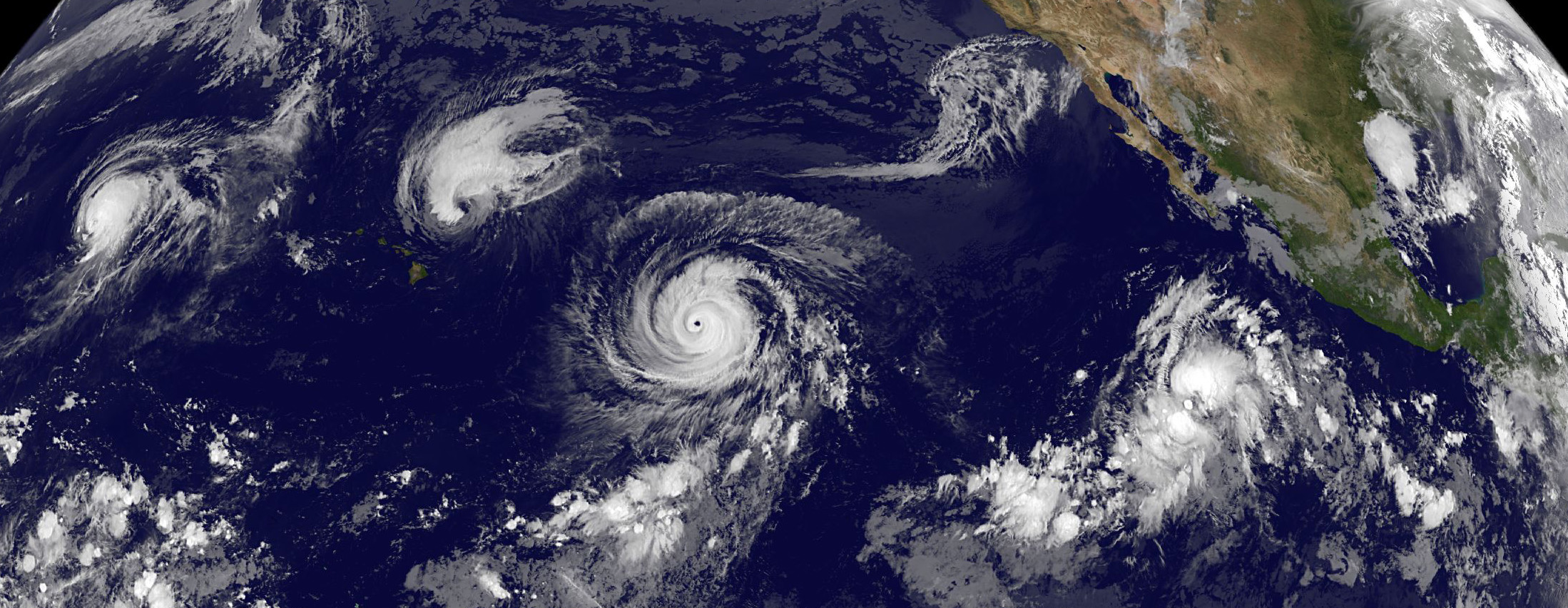

 

Four Storms Swirling in West Pacific Threaten Philippines with More Devastation

The West Pacific is currently contending with a rare phenomenon: four storms active at the same time, a situation last seen in November since record-keeping began in 1951, according to Japan’s Meteorological Agency. These storms—Typhoon Yinxing, Typhoon Toraji, Tropical Storm Usagi, and Tropical Storm Man-Yi—are spread across the vast basin, from Vietnam to Guam, and are raising alarm across Southeast Asia, particularly in the Philippines.

The Philippines, already prone to annual storms, faces even greater hardship as a succession of typhoons in recent weeks has complicated ongoing recovery efforts. Thousands remain in evacuation shelters as communities brace for more potentially destructive weather.

Typhoon Yinxing Impact On Thursday, Typhoon Yinxing swept over the northeastern Philippines with winds equivalent to a Category 4 Atlantic hurricane. While no casualties were reported, the storm brought severe rainfall, storm surges, and landslides, leaving behind damaged homes, schools, and livelihoods. Philippine President Ferdinand Marcos Jr. visited affected communities in Cagayan and Ilocos Norte, distributing food and relief packages. “While we’re truly grateful that no lives were lost, the damage it left behind has affected homes, schools, and livelihoods,” Marcos stated. He emphasized the government’s focus on recovery and preparation for more storms in the coming days.

After exiting the Philippines, Yinxing drifted into the South China Sea, moving towards Vietnam, where it is currently causing heavy rains.

Typhoon Toraji Strikes The day after Yinxing’s impact, Typhoon Toraji struck Luzon’s eastern coast in Aurora province with winds reaching Category 1 hurricane strength, leading to further evacuations. Toraji has since weakened to a tropical storm, but it is anticipated to bring significant rainfall to parts of southeastern China.

Storms Usagi and Man-Yi Approach The Philippines now braces for another imminent threat, with Tropical Storm Usagi, currently around 720 kilometers off its northeastern coast, expected to strengthen into a typhoon. Local weather agencies have issued warnings about strong winds and storm surges within the next 48 hours.

Following Usagi is Tropical Storm Man-Yi, located about 255 kilometers southwest of Guam. Man-Yi is predicted to reach typhoon strength by Friday and may approach the Philippines by Sunday with potential Category 3 hurricane winds. Though it’s uncertain if these storms will make direct landfall, their proximity increases the likelihood of heavy rainfall, high winds, and storm surges.

Cumulative Impact and “Typhoon Fatigue” The Philippines has already endured six named storms this year. In late October, Tropical Storm Trami and Typhoon Kong-Rey triggered severe flooding and landslides in northern Luzon, displacing nearly 300,000 people and affecting over nine million. Amid ongoing relief operations, health officials are warning of “typhoon fatigue,” as residents, relief workers, and volunteers face exhaustion, burnout, and psychological strain from repeated evacuations and continuous disaster response.

Southeast Asia’s vulnerability to extreme weather makes it particularly susceptible to the impacts of climate change. Warmer ocean temperatures—attributed to human-induced climate change—are driving storms to grow stronger and form later in the season. Experts caution that as ocean temperatures continue to rise, Southeast Asia, particularly countries like the Philippines, may face increasingly severe and frequent storms in the years ahead.

As the storms approach, the Philippines braces once again for potential devastation, with hopes that emergency preparedness and support can mitigate the impact on already hard-hit communities.


How I Built a $2 Billion Super App: The Journey of Grab’s Anthony Tan and ’20-Hour’ Workdays

Anthony Tan didn’t need to build a business to become wealthy, having grown up in one of Malaysia’s richest families. But his ambition to make a societal impact led him to co-found Grab, now a dominant super app in Southeast Asia, generating over $2 billion in annual revenue by 2023. From humble beginnings, Grab now offers services ranging from ride-hailing to food delivery, financial services, and beyond, transforming daily life for millions across the region.

From Elite to Entrepreneur

Born into one of Malaysia’s wealthiest families, Anthony Tan’s father, Tan Heng Chew, is the president of Tan Chong Motor, an automotive giant in Malaysia. Despite the easy path laid out for him in the family business, Tan was driven by a different mission. “I was on a mission to create something that could be a force for good,” Tan recalled. That mission would eventually lead to the founding of Grab, a platform that now serves over 35 million customers and provides gig jobs to 13 million workers across eight countries in Southeast Asia.

A Harvard Idea Born from a Problem

The idea for Grab was sparked while Tan was studying at Harvard Business School in 2009, where he met his co-founder Hooi Ling Tan. The two bonded over their shared Malaysian roots and a common frustration with the unsafe taxi system in Malaysia, particularly for women. They saw an opportunity to tackle this issue and began working on a business plan.

In 2011, their business plan won first runner-up at a startup contest, netting them $25,000 in seed money, which they used to launch what would later become Grab, initially called MyTeksi.

Overcoming Resistance

Despite his vision, Tan faced resistance from his family. When he pitched his idea to his father, it was rejected. “My father said, ‘I don’t think it’s going to work out, so please don’t disturb me about this anymore,’” Tan shared. However, with perseverance, he refined his pitch and took it to his mother, who became his first individual investor. Tan also invested all of his savings to officially launch MyTeksi in 2012.

Early Struggles and ’20-Hour’ Workdays

The first few years of running the business were far from glamorous. The company’s first office, located in Kuala Lumpur, lacked basic amenities like air conditioning, ventilation, and WiFi. “We had to tether from our mobile phones,” Tan recalled.

Convincing taxi drivers to join the platform was a significant challenge, especially with limited funds. To get drivers on board, Tan traveled across Southeast Asia, waking up at 4 a.m. to hand out free coffee to taxi drivers in places like Ho Chi Minh City, Vietnam, and spending time with drivers over cheap beer to understand their challenges. This relentless effort resulted in 20-hour workdays, seven days a week, as Tan flew between two or three cities each week, building the business from the ground up.

Grab’s Dominance and Uber’s Exit

In 2018, Grab cemented its dominance in Southeast Asia by acquiring Uber’s Southeast Asia business in exchange for a 27.5% stake in Grab. This deal not only removed Grab’s biggest competitor in the region but also added Uber’s CEO, Dara Khosrowshahi, to Grab’s board of directors.

However, Grab’s rise has not been without controversy. The company has faced antitrust allegations from regulators who claim Grab’s dominance has led to anti-competitive practices. Despite these challenges, Grab has continued to expand its services and influence.

Impact on Southeast Asia

Grab’s impact extends beyond transportation. It has helped build new economic infrastructure in Southeast Asia, empowering individuals with access to micro-financing programs that enable them to purchase smartphones and become Grab drivers. This initiative has been particularly effective in helping those “at the bottom of the pyramid,” providing new job opportunities and income streams.

During a meeting with former Philippine President Ferdinand Marcos, Tan was reminded of Grab’s broader impact: “[Grab] literally changed the unemployment numbers nationally.” Today, the super app continues to reshape how people across Southeast Asia access essential services, from transportation to digital banking.

A Mission of Service

For Tan, Grab’s success lies in its focus on solving real problems for underserved communities. “It’s all about really helping them, serving them as an ecosystem that nobody else can,” he said. This mission has driven Grab’s transformation from a small startup into a $14 billion company, backed by investors like SoftBank.

Tan’s journey exemplifies the power of perseverance, creativity, and a relentless work ethic, proving that even the wealthiest backgrounds can serve as a foundation for building something far greater—a company that changes lives and drives economic progress across an entire region.