Yazılar

Groundbreaking Study Uncovers the Role of Dynamo Reversals in Shaping Mars’ Magnetic History

New Insights into Mars’s Magnetic Field Dynamics
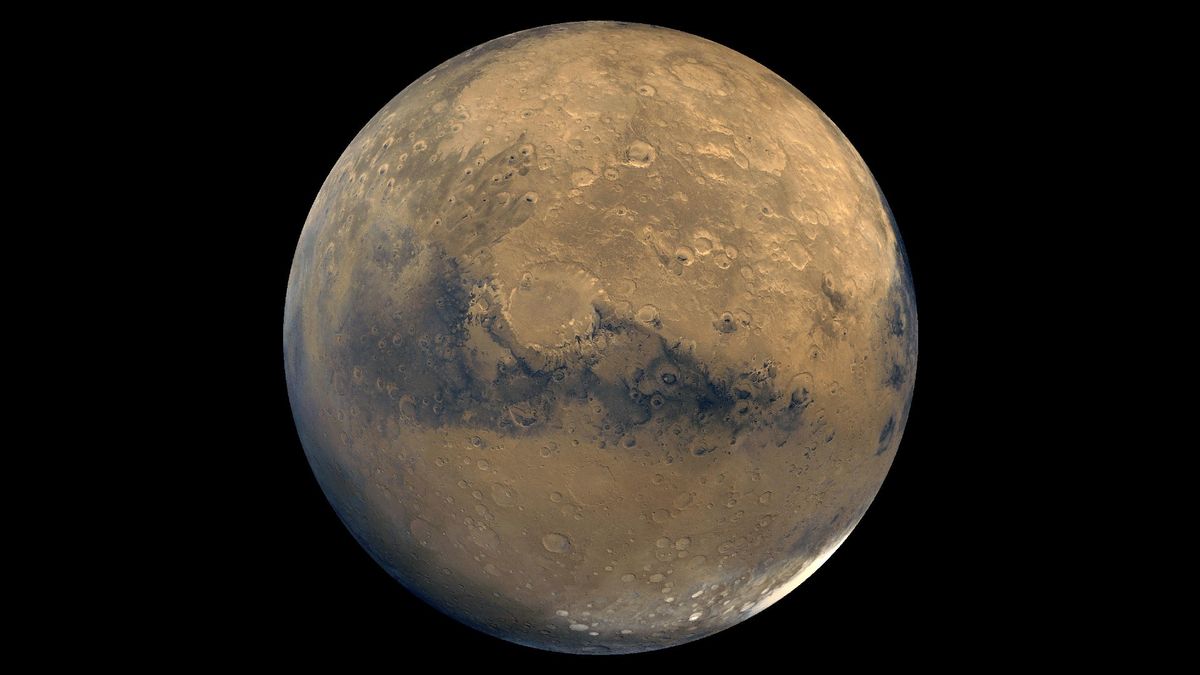
Martian impact basins, previously thought to be demagnetized due to the early cessation of Mars’s planetary dynamo, may instead provide evidence of a reversing magnetic field, according to a new study. Led by Dr. Silpaja Chandrasekar, the research suggests that Mars’s dynamo—the mechanism generating its magnetic field—was active longer than previously believed, with significant implications for our understanding of the planet’s evolution.

Impact Basins and Reversing Fields
Published in Nature Communications, the study delves into the magnetic anomalies in large Martian impact basins, which exhibit weaker magnetism than surrounding regions. Rather than indicating a permanently inactive dynamo, the researchers propose that these weak signals result from prolonged cooling and frequent polarity reversals. By modeling cooling processes within these basins, they demonstrated how these magnetic field reversals diminished the strength of magnetism, creating a demagnetized appearance. This overturns the notion that a dying dynamo alone explains the anomalies.

Extended Dynamo Activity
Traditionally, Mars’s dynamo was assumed to have ceased early in the planet’s history, but recent evidence, including young volcanic rocks and the meteorite Allan Hills 84001, suggests otherwise. The study posits that Mars’s dynamo may have persisted until around 3.7 billion years ago. During this time, the magnetic field experienced regular reversals, forming oppositely magnetized layers in cooling impact basins. This process likely contributed to the weak magnetic signatures detected today.

Implications for Planetary Evolution
These findings reshape our understanding of Mars’s magnetic history and its broader planetary evolution. A prolonged, reversing dynamo could have influenced Mars’s climate stability and surface conditions, offering clues about its transition from a warmer, wetter environment to the arid planet we see today. The study also highlights how magnetic field dynamics play a pivotal role in shaping planetary crusts, offering new perspectives for studying other celestial bodies with similar features.
South Korea’s KASA and NASA Collaborate on Launch of CODEX Solar Coronagraph to ISS

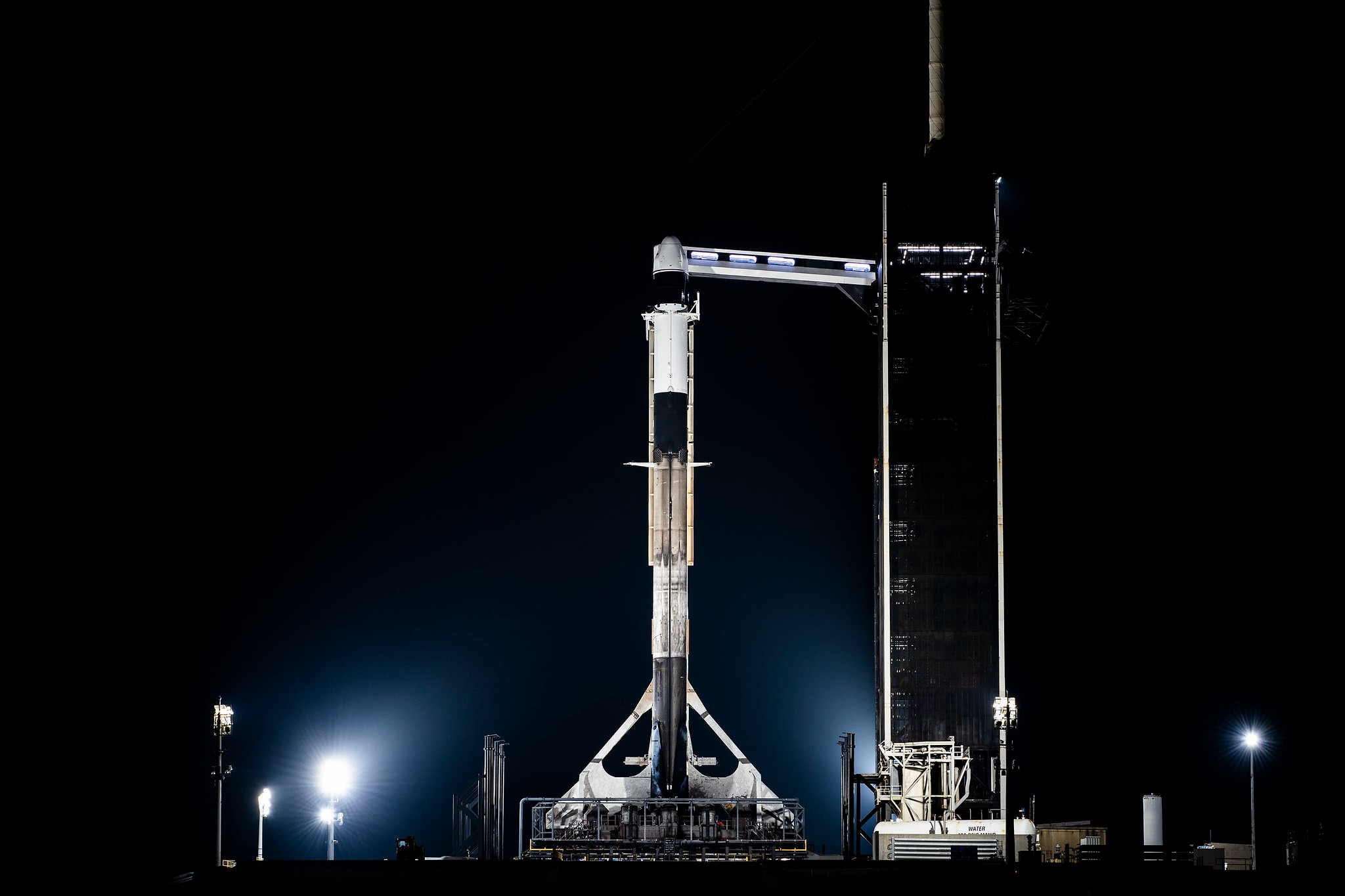
South Korea’s space agency, the Korea Aerospace Research Institute (KASA), has announced a groundbreaking collaboration with NASA to launch a solar coronagraph to the International Space Station (ISS). The instrument, developed as part of the Coronal Diagnostic Experiment (CODEX), is designed to study the Sun’s corona and the solar wind, which consists of charged particles emitted from the Sun’s outer atmosphere. This crucial mission, which aims to expand our understanding of solar phenomena, will be launched aboard SpaceX’s Falcon 9 rocket from Florida’s Kennedy Space Center, scheduled for Monday, according to Yonhap News Agency.

The CODEX project represents a major achievement in space science, as it will be the first coronagraph capable of measuring key solar wind parameters such as temperature, velocity, and density. This groundbreaking technology is expected to provide valuable data about the Sun’s outer atmosphere and the solar wind, which can have significant effects on space weather. Once aboard the ISS, CODEX will be mounted on the station’s express logistics carrier, offering approximately 55 minutes of solar observation during each 90-minute orbit around Earth. The mission’s findings could play a critical role in improving space weather forecasting and enhancing our ability to predict solar storms.

The collaboration between KASA and NASA on CODEX is part of a broader expansion of South Korea’s role in space exploration. This partnership also extends to the Artemis lunar exploration program, with KASA contributing to research on sustainable lunar exploration and future Mars mission preparations. South Korea’s involvement in the Artemis program marks an important milestone, as the country becomes the fifth nation to officially cooperate with NASA on lunar and interplanetary exploration. This strengthened partnership highlights the growing significance of international cooperation in advancing space science and exploration.

Through this mission and the broader space cooperation initiatives, South Korea and NASA aim to make significant strides in understanding space weather, solar dynamics, and the broader challenges of space exploration. As both countries continue to expand their partnership in space, the CODEX project serves as a symbol of their commitment to advancing scientific knowledge and enhancing global space exploration capabilities. The mission not only represents a technological breakthrough but also reinforces the importance of international collaboration in addressing the challenges of space science.

Indian Scientists Unveil Discovery of Giant Exoplanet, Five Times the Size of Earth

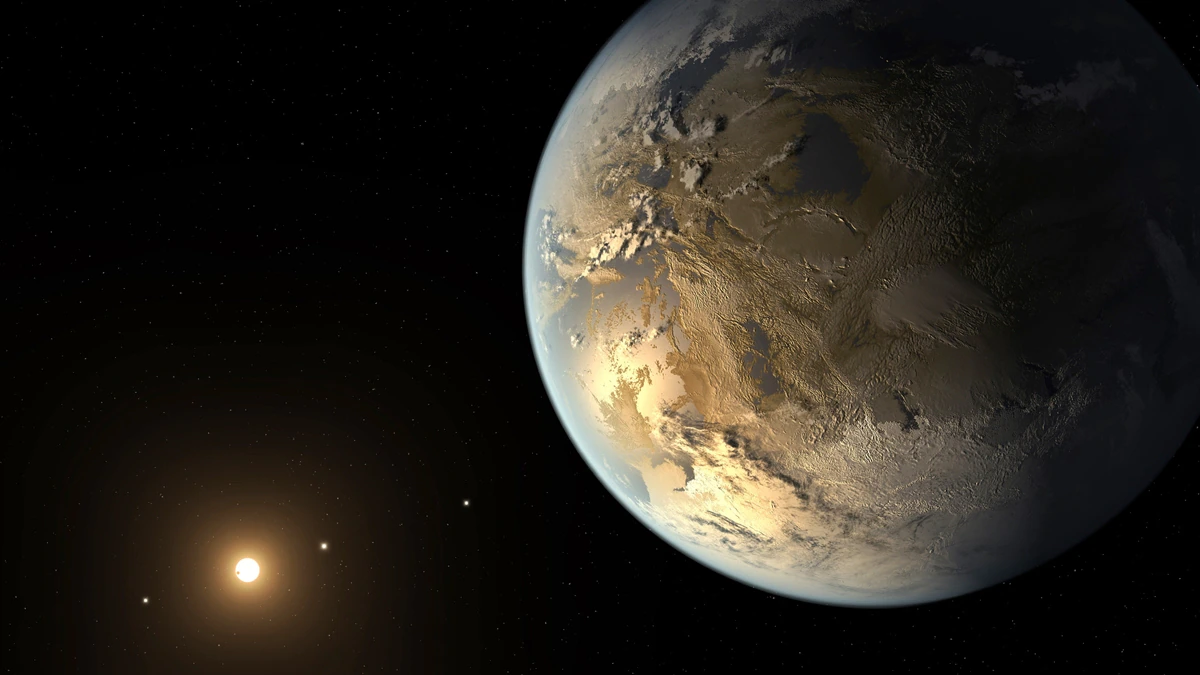
Indian scientists have made a groundbreaking discovery with the identification of an exoplanet named TOI-6651b, which is five times the size of Earth and significantly more massive. Orbiting a Sun-like star, TOI-6651b has a mass roughly 60 times that of Earth and a radius five times larger, making it an exceptional find in the field of exoplanet research. This discovery marks the fourth exoplanet found by India’s Physical Research Laboratory (PRL), highlighting the country’s growing expertise in space exploration and scientific research.

TOI-6651b resides in an area known as the “Neptunian desert,” a region where few planets of such mass are typically found. The planet orbits its host star, TOI-6651, in a remarkably short period—just over five Earth days—making its “year” a mere fraction of an Earth month. Its orbit is slightly elliptical, distinguishing it from other gas giants that typically follow more circular paths. The star it orbits is a G-type sub-giant, slightly larger and warmer than our Sun, with a surface temperature of around 5940 K.

The composition and structure of TOI-6651b offer fascinating insights into planetary formation. Using the advanced PARAS-2 spectrograph, scientists from PRL have determined that the planet is predominantly made of rocky, iron-rich materials, making up about 87% of its mass. The planet’s outer layer consists of lighter elements like hydrogen and helium, and its high density suggests that it might have gone through unique evolutionary processes, such as tidal heating or atmospheric loss. These characteristics make TOI-6651b an important subject of study for understanding how massive, dense exoplanets form and evolve.

This discovery opens new doors for further research into planetary science, especially in studying the formation of large, dense exoplanets. The unusual composition of TOI-6651b provides a unique opportunity for scientists to examine how such planets develop in different environments. As more discoveries like this are made, our understanding of exoplanetary systems and the potential for other worlds will continue to expand, offering exciting possibilities for future space exploration.