Yazılar

Scientists Propose That Black Hole Singularities Might Not Exist

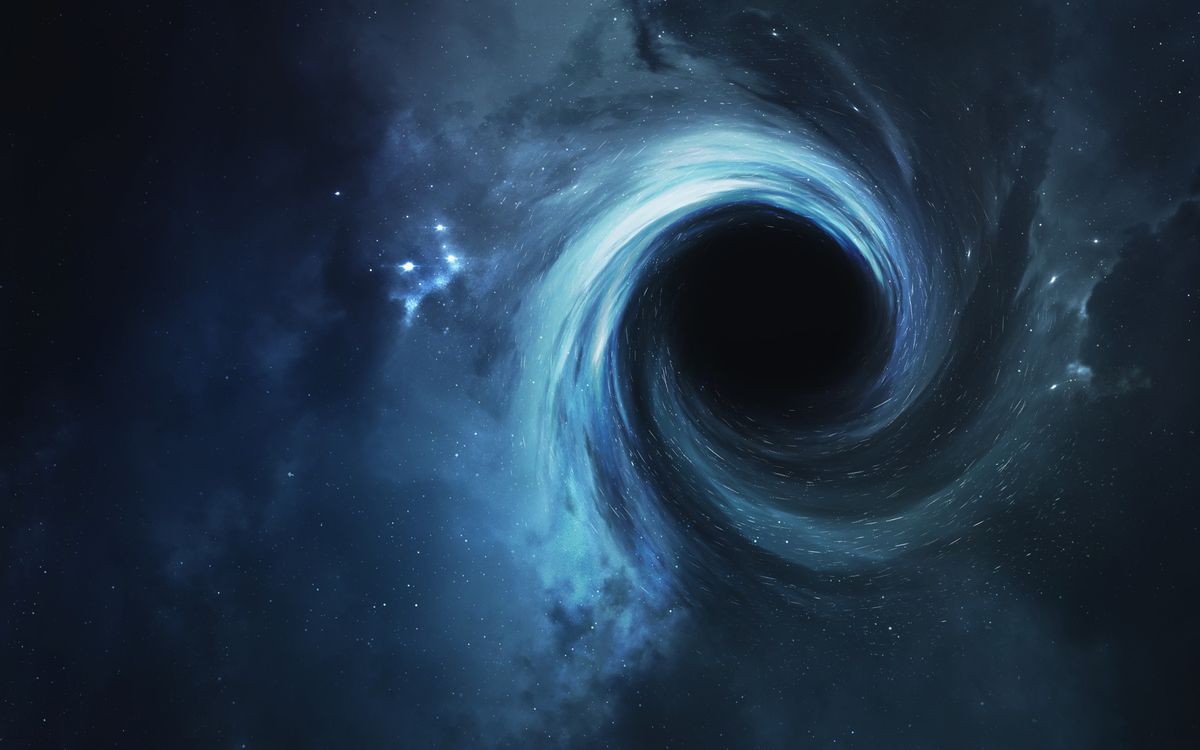
The concept of singularities at the core of black holes has long posed a paradox in physics, as these infinitely dense points challenge the fundamental principles of space, time, and matter. However, new research suggests that singularities may not exist at all. Physicists have proposed modifications to Einstein’s general relativity equations, offering an alternative view of black hole interiors. If these changes are correct, they could resolve one of the biggest inconsistencies between general relativity and quantum mechanics, restoring predictability to physical laws.

A study published in Physics Letters B introduces refinements to general relativity based on principles from quantum gravity. While Einstein’s theory has been remarkably successful in describing cosmic phenomena like black holes and neutron stars, it breaks down under extreme conditions. The incompatibility of singularities with quantum mechanics has long suggested that general relativity is incomplete. The new modifications aim to bridge this gap, potentially eliminating the need for singularities while maintaining the theory’s ability to describe gravitational systems accurately.

Robie Hennigar, a postdoctoral researcher at Durham University, explained in an interview with Live Science that singularities represent a fundamental problem in our understanding of the universe. He described them as regions where space, time, and matter are crushed into a state of nonexistence—something that most physicists see as a sign that a deeper theory is required. By adjusting general relativity with insights from quantum mechanics, researchers hope to develop a more complete framework for understanding black holes.

If singularities are indeed mathematical artifacts rather than physical realities, this could have profound implications for black hole physics and cosmology. Future advancements in observational technology, such as next-generation space telescopes and gravitational wave detectors, may provide further evidence to test these new models. As theoretical and experimental research progresses, the true nature of black hole interiors may soon be better understood, reshaping our understanding of the universe’s most mysterious objects.
Mysterious Fast Radio Bursts Emanate from Ancient Dead Galaxy, Puzzling Scientists

A distant galaxy, which ceased star formation billions of years ago, has been found emitting strange fast radio bursts (FRBs), leaving scientists puzzled and scrambling for answers. These bursts, typically associated with young, active galaxies undergoing star formation, are now being detected in an ancient, dead galaxy—posing a serious challenge to current theories on the origin of FRBs. The phenomenon, which has been observed at the outskirts of this inactive galaxy, suggests that something beyond the usual stellar explosions like supernovae might be at play.

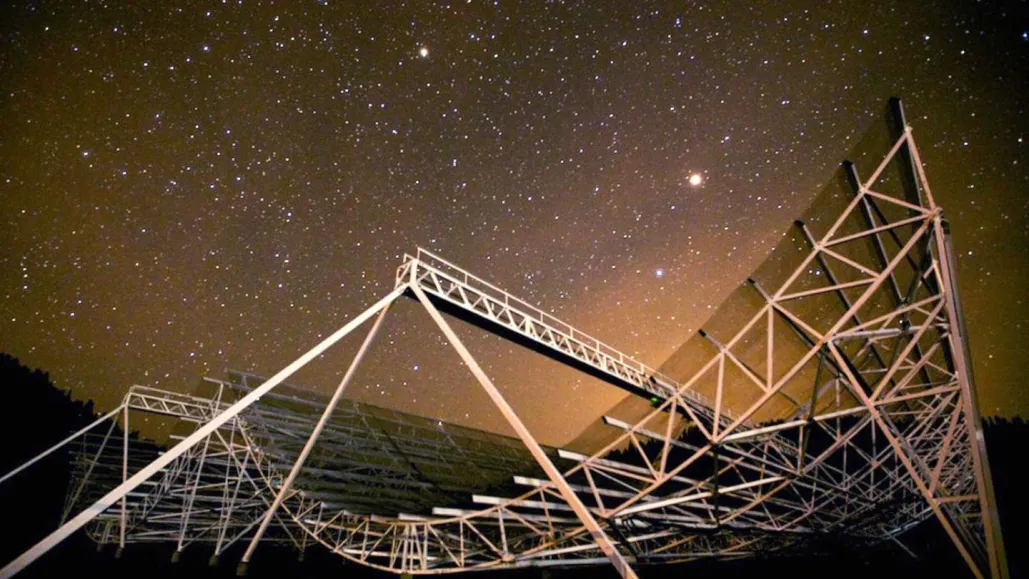
The findings, detailed in two studies published in The Astrophysical Journal Letters on January 21, 2025, reveal that astronomers detected 22 fast radio bursts between February and November 2024 using the Canadian Hydrogen Intensity Mapping Experiment (CHIME) telescope in British Columbia. These bursts were traced back to an 11-billion-year-old galaxy that had long ceased to form new stars. This discovery is especially perplexing, as FRBs are typically linked to galaxies still in the throes of stellar creation, making this ancient galaxy an unlikely source for such energetic signals.

This groundbreaking discovery forces astronomers to reconsider existing theories about FRBs. Traditionally, these bursts are thought to originate from supernovae or other energetic events in star-forming galaxies. However, this new observation raises the possibility of other unknown mechanisms that could be generating these bursts in an otherwise quiet galaxy. This revelation has opened up a new avenue of research into the nature of FRBs and their origins.

Tarraneh Eftekhari, an astronomer at Northwestern University and co-author of the study, explained in an interview with Live Science that only about a hundred FRBs have been definitively linked to their host galaxies, most of which are in regions where active star formation is occurring. The new discovery challenges the idea that FRBs are exclusively tied to such environments, suggesting that we may need to revise our understanding of these mysterious signals and explore other potential sources. This study underscores the complexity of the universe and the many phenomena still waiting to be understood.

Moon’s Deepest Canyons Carved in Minutes by High-Velocity Impact Debris

Scientists have discovered that two enormous lunar canyons, deeper than the Grand Canyon, were formed in a matter of minutes due to the rapid movement of high-speed impact debris. The canyons, known as Vallis Schrödinger and Vallis Planck, stretch for 270 and 280 kilometers, respectively, with depths reaching up to 3.5 kilometers. In comparison, the Grand Canyon on Earth has a maximum depth of about 1.9 kilometers. These lunar formations are located near the Schrödinger impact basin in the moon’s south polar region, an area dominated by rugged mountains and deep craters.

A study published in Nature Communications suggests that these canyons, along with several other valleys, resulted from material ejected during the impact that created the Schrödinger basin. This massive crater, measuring 320 kilometers across, formed approximately 3.81 billion years ago. It lies on the outskirts of the South Pole–Aitken basin, the moon’s largest and oldest known impact structure, which dates back more than 4.2 billion years.

The study also highlights the astonishing energy involved in carving these canyons. Scientists estimate that rock debris from the impact moved at speeds between 3,420 and 4,600 kilometers per hour—far surpassing the velocity of a 9mm bullet, which travels at about 2,200 kilometers per hour. The force generated by this event is believed to have been more than 130 times greater than the combined energy of all nuclear weapons currently in existence on Earth.

These findings provide new insights into the moon’s violent geological history and the powerful processes that shaped its surface. Understanding these rapid transformations could also help scientists refine models of planetary formation and impact dynamics across the solar system.