Yazılar

NASA’s InSight Mars Lander Captured Beneath Dust Layers by Mars Reconnaissance Orbiter

Mars Reconnaissance Orbiter Captures Retired InSight Lander Beneath Dust Layers

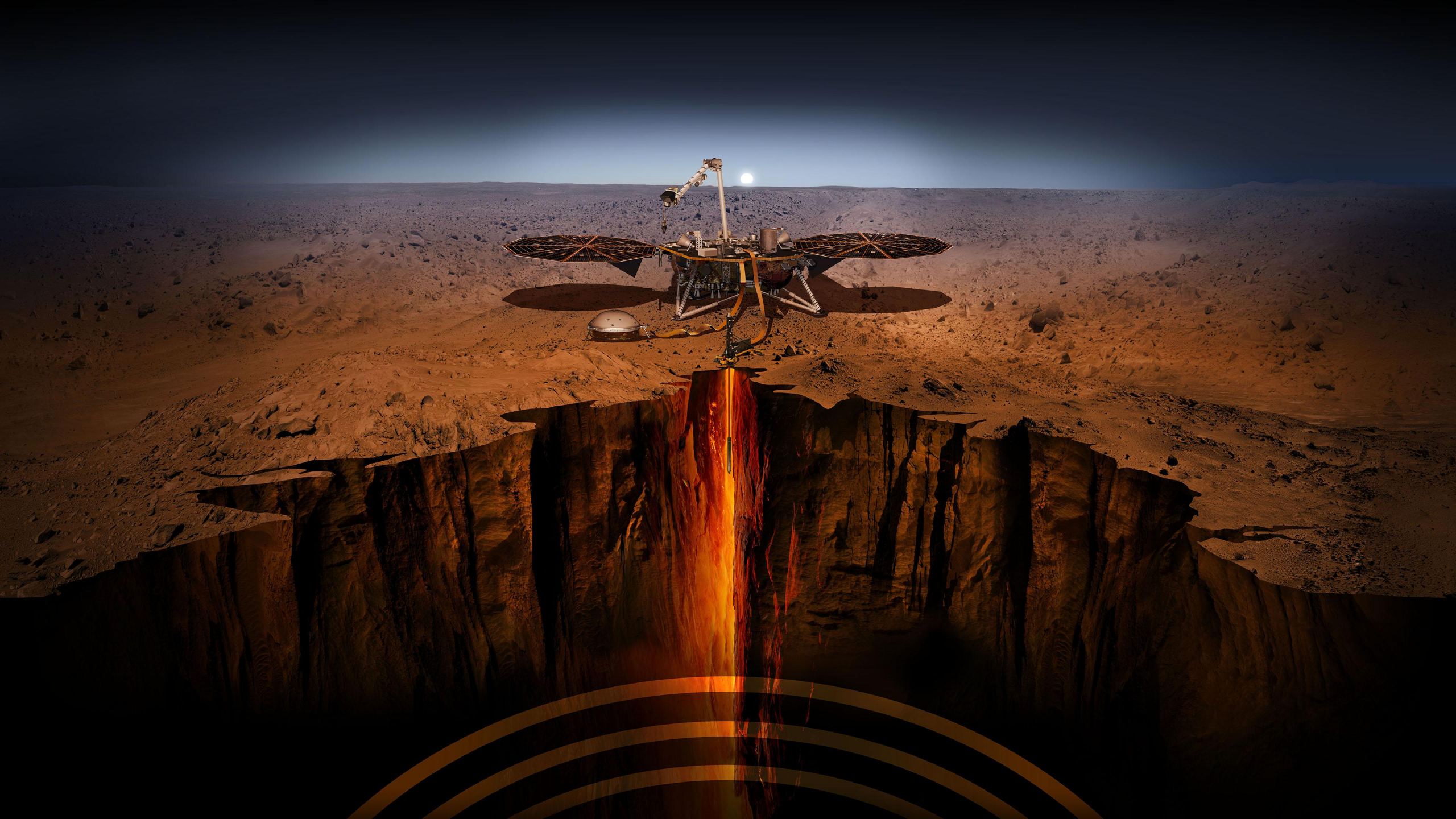
NASA’s retired InSight Mars lander has recently been photographed by the Mars Reconnaissance Orbiter (MRO) in an image taken on October 23, 2024, using its High-Resolution Imaging Science Experiment (HiRISE) camera. The image reveals the lander nearly camouflaged beneath layers of dust that have accumulated on its solar panels, which now match the reddish-brown hue of the Martian surface. This observation continues to provide valuable insights into Mars’ dynamic dust and wind patterns, helping scientists better understand the planet’s environmental processes.

InSight’s Historic Mission and Its Retirement

The InSight lander, which landed on Mars in November 2018, was instrumental in detecting Marsquakes and studying the planet’s crust, mantle, and core. Its primary mission was to monitor seismic activity and gain deeper insights into Mars’ internal structure. However, in December 2022, NASA officially declared the mission over after the lander stopped communicating due to severe dust accumulation on its solar panels. Engineers from NASA’s Jet Propulsion Laboratory (JPL) in California continued to monitor the lander, hoping that Martian winds would clear the dust and restore power. Despite their efforts, no signals were received, and the lander’s listening operations are set to conclude by the end of this year.

Tracking Dust and Wind Dynamics on Mars

The new HiRISE images were captured as part of an ongoing effort to monitor the effects of dust and wind on Mars’ surface. By tracking how dust accumulates and shifts over time, scientists are gaining a better understanding of the planet’s dust cycle and wind dynamics. Ingrid Daubar, a member of the science team at Brown University, emphasized the significance of these observations, stating that they provide crucial data for future missions to Mars. Understanding how dust interacts with the Martian environment is key for planning future landings, as dust accumulation remains a major challenge for solar-powered missions.

Impact on Future Mars Missions

The information gathered from the HiRISE images of InSight’s location will continue to shape how future missions approach the Martian surface. Dust remains one of the most significant obstacles for equipment on Mars, and understanding how it moves and settles will inform strategies to mitigate its effects on upcoming missions. As NASA prepares for future explorations of Mars, including the Artemis missions and potential human landings, the insights gained from monitoring InSight’s dust-covered panels will be critical in developing new technologies to protect spacecraft and rovers.

Is Defending Earth from Asteroids Possible? Here’s What You Should Know

Efforts to protect Earth from potential asteroid impacts have made notable progress in recent years, but substantial challenges remain in developing effective planetary defense systems. In his book How to Kill an Asteroid, Robin George Andrews explores the complexities of safeguarding the planet from these cosmic threats. One of the primary strategies discussed in the book is deflecting asteroids rather than attempting to destroy them, a concept that was put to the test with NASA’s Double Asteroid Redirection Test (DART) mission in 2022. This mission represented a significant milestone in space defense, successfully altering the orbit of the asteroid moonlet Dimorphos, proving that deflection could be a viable option.

NASA’s DART mission, as highlighted by ScienceNews, demonstrated the feasibility of redirecting an asteroid to prevent a potential collision with Earth. The spacecraft’s impact with Dimorphos on September 26, 2022, was the first successful demonstration of this technique. The impact changed the asteroid’s orbit, a critical achievement for planetary defense, as it validated the concept of using kinetic impactors to redirect an asteroid’s path. While the DART mission proved the method’s potential, experts emphasize that this remains the only proven technique, suggesting that further advancements are necessary to address the full range of asteroid threats.

Despite the success of DART, significant gaps in planetary defense systems remain, particularly in the area of detection. Effective asteroid defense relies heavily on early identification of potential threats, but current detection systems are far from comprehensive. The proposed Near-Earth Object Surveyor (NEO Surveyor), designed to improve asteroid tracking capabilities, has faced delays, partly due to budgetary constraints. The loss of important observational infrastructure, such as the Arecibo Observatory, has further hindered efforts to monitor near-Earth objects. These challenges highlight the critical need for continued investment in detection technologies to enhance our ability to track and potentially deflect hazardous asteroids.

Researchers argue that as the number of known near-Earth objects continues to grow, addressing these gaps in detection and defense systems becomes increasingly urgent. While missions like DART offer hope for the future, they also emphasize the need for a more robust and comprehensive planetary defense infrastructure. With the increasing threat of asteroid impacts, experts stress the importance of global cooperation and significant investment in space defense technologies to protect the planet from potentially catastrophic collisions.

NASA Unveils Stunning Images of the Red Spider Nebula, Highlighting Vibrant Colors and Impressive Shockwaves

NASA’s breathtaking images of the Red Spider Nebula showcase vibrant hues and intricate spider-like structures that captivate the imagination. Devamını Oku