Yazılar

Solar Storm Expected to Illuminate US Skies with Northern Lights: What to Expect

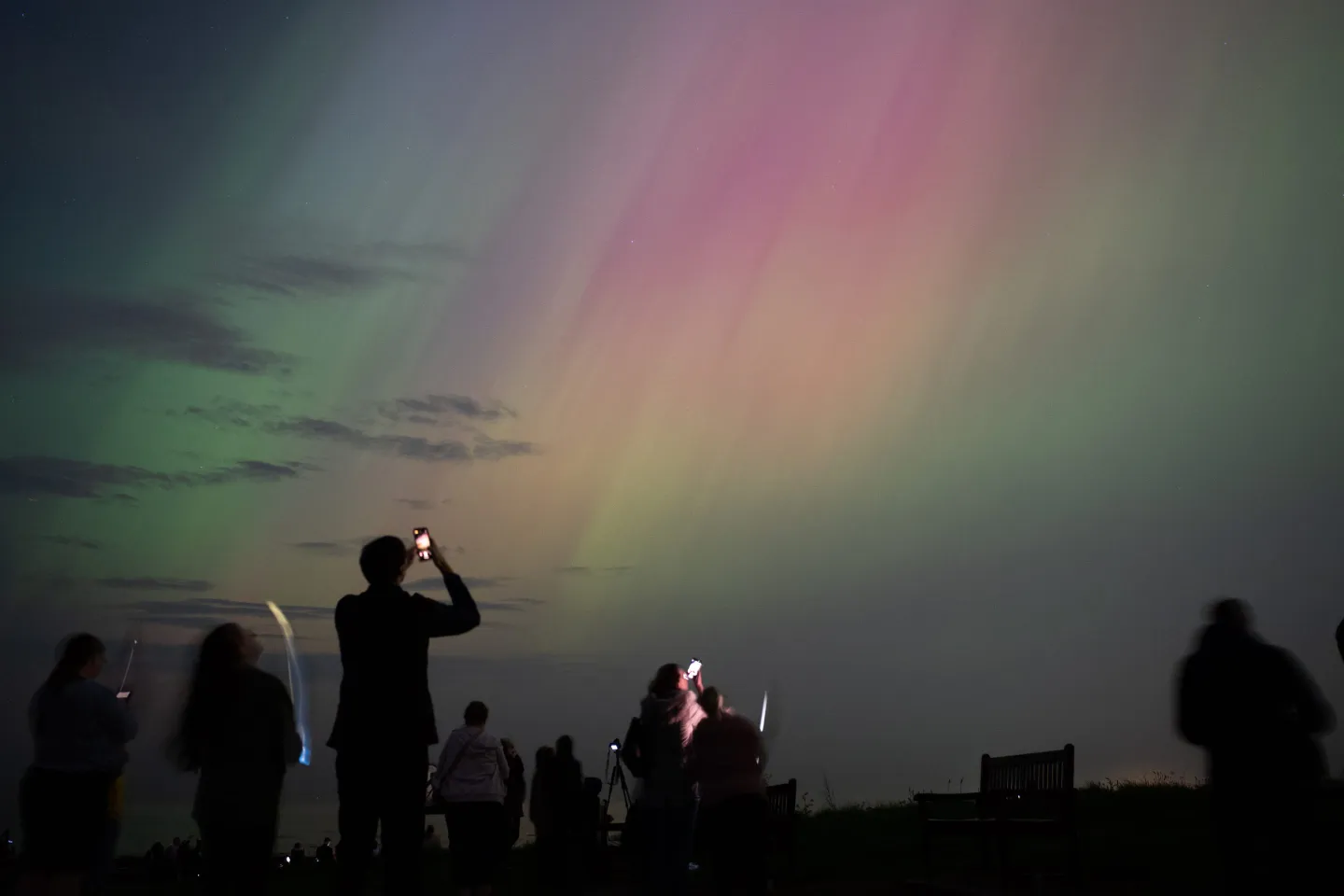
A solar storm is expected to reach Earth tonight, sparking excitement among skywatchers as the northern lights may become visible as far south as New York and Idaho. This event is the result of a coronal mass ejection (CME) that erupted from the Sun on March 1. The Space Weather Prediction Center (SWPC) of the National Oceanic and Atmospheric Administration (NOAA) has classified this storm as a G1-level geomagnetic storm, with the possibility of it escalating to a G2-level storm. As a result, areas with clear skies, especially in mid-latitude regions, could be treated to an impressive aurora borealis display.

The CME is projected to strike Earth’s magnetic field between March 4 and March 5, with the storm’s intensity expected to peak between 7:00 p.m. and 10:00 p.m. EST on March 5. While a G1 storm is generally considered minor, space weather physicist Tamitha Skov has suggested that there is a chance of stronger G2 conditions. If this occurs, the auroral display could be more extensive, allowing even more viewers to catch a glimpse of the northern lights further south than usual.

Geomagnetic storms happen when charged particles from the Sun collide with Earth’s magnetosphere, creating disturbances that can have various effects on technology. Although a G1 storm is typically not a major concern, it can still cause minor disruptions, particularly in satellite communications and GPS systems. The storm’s heightened intensity, if it reaches G2 levels, may also lead to increased interference with power grids and communication systems, particularly in the northern regions of the planet.

Experts warn that individuals relying on radio communications, GPS technology, or drones may experience temporary signal disruptions, especially in the evening when the storm’s effects on Earth’s magnetic field are most pronounced. While the beauty of the aurora borealis is sure to captivate those lucky enough to witness it, it’s important for those in affected areas to be aware of potential impacts on technology and plan accordingly.
Solar Sail Satellites May Revolutionize Space Weather Forecasting and Early Alerts

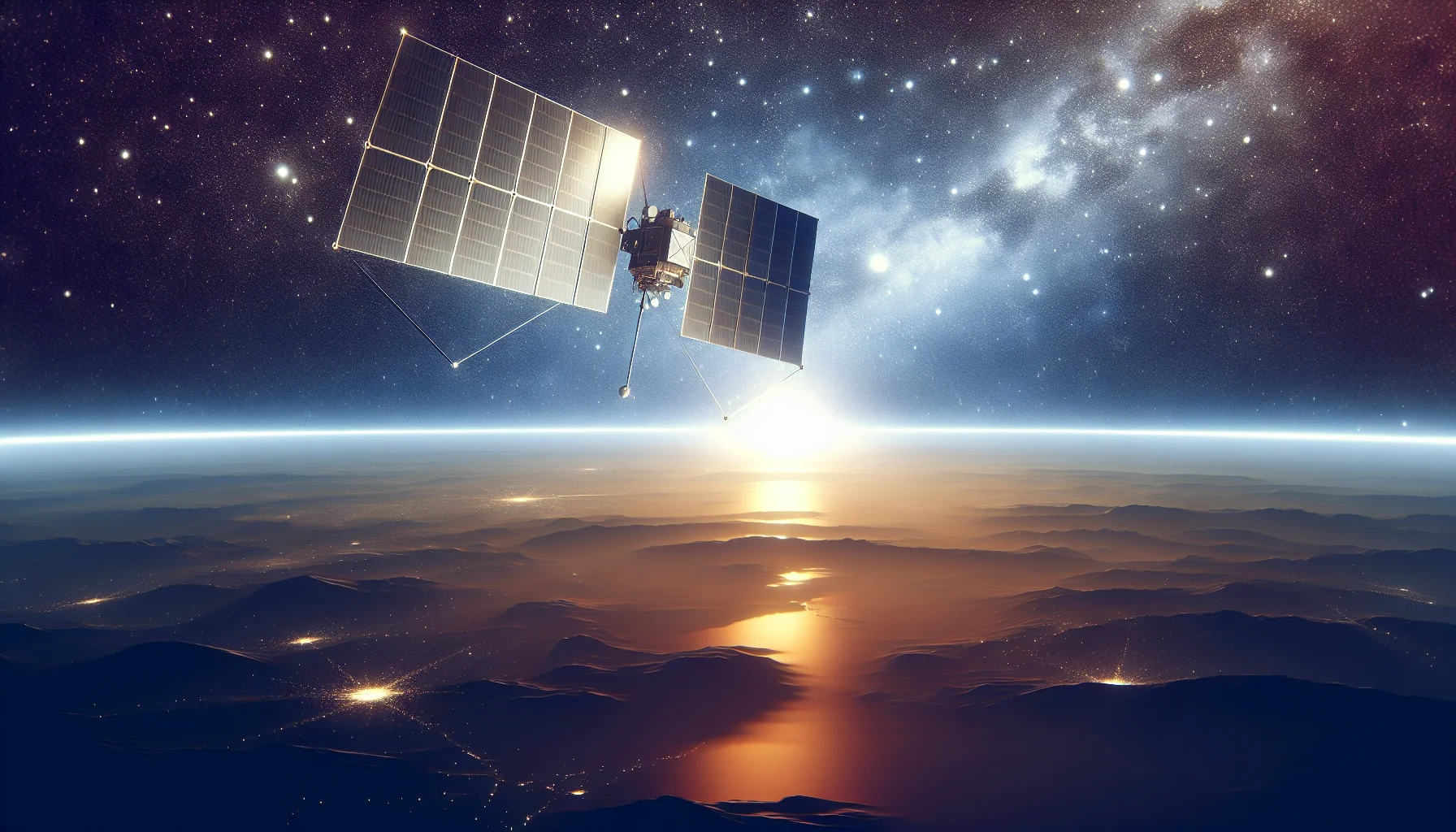
Satellites equipped with solar sails could significantly improve space weather forecasting, offering early warnings for events like geomagnetic storms that can damage critical infrastructure on Earth. Solar sails, which use sunlight for propulsion, are being explored as a more cost-effective and efficient alternative to traditional propulsion systems. Researchers believe that these sails could enhance the monitoring of solar activity, providing quicker and more accurate alerts for space weather events that affect power grids, satellite operations, GPS systems, and even air traffic. Unlike current space weather forecasting systems, which rely on fixed observation points, solar sail technology could offer more flexible positioning for improved data collection.

The potential for solar sail-equipped satellites to revolutionize space weather forecasting lies in their ability to travel beyond traditional locations in space. As reported by Space.com, solar sails could allow spacecraft to venture past the Earth-sun Lagrange Point One (L1), a stable region approximately 1.5 million kilometers from Earth where most solar observation satellites are currently stationed. The National Oceanic and Atmospheric Administration’s (NOAA) Office of Space Weather Observations, which manages these satellite systems, recognizes the advantages of solar sail technology in expanding the range and flexibility of space weather monitoring.

Irfan Azeem, Division Chief at NOAA’s Research to Operations and Project Planning Division, highlighted the key benefit of solar sails in improving space weather forecasts. Solar sails can enable satellites to travel upstream of L1, allowing them to gather data more efficiently than traditional chemical propulsion systems. This improvement in satellite movement would result in faster retrieval of data and the potential to increase the lead time for geomagnetic storm alerts by up to 50 percent, giving industries and agencies more time to prepare for potential disruptions.

As space weather events become an increasing concern due to their potential impact on modern technology, the development of solar sail technology for satellites represents a significant leap forward in our ability to predict and respond to these phenomena. By providing more precise and timely alerts, solar sail-powered satellites could help mitigate risks and safeguard Earth’s technological infrastructure from the damaging effects of space weather.

Scientists Discover Tiny Plasma Jets on the Sun as Major Contributors to Solar Wind

New research has revealed that tiny plasma jets on the Sun play a crucial role in driving both fast and slow solar wind, reshaping our understanding of the Sun’s influence on space weather. These findings, based on high-resolution imaging and direct measurements, provide new insights into the mechanisms behind the solar wind—streams of charged particles that flow outward from the Sun and interact with planetary environments, including Earth’s magnetosphere. The study helps address a long-standing mystery about how energy and mass are transported from the Sun’s surface into space.

Solar Orbiter Captures Key Data

According to a study published in Astronomy & Astrophysics, observations from the European Space Agency’s Solar Orbiter mission have provided compelling evidence linking small-scale plasma jets, known as picoflares, to the solar wind. During its close approach to the Sun in late 2022 and early 2023, the spacecraft captured high-resolution images of these jets emerging from coronal holes—dark patches on the Sun’s surface where magnetic field lines open into space. These holes act as escape routes for solar particles, allowing plasma to stream out and form the solar wind.

A New Perspective on Solar Wind Formation

Lakshmi Pradeep Chitta, a researcher at the Max Planck Institute for Solar System Research, explained in an interview with Space.com that these tiny jets are incredibly powerful despite their small size. A single picoflare jet, lasting just a few seconds to a minute, can release energy comparable to the total annual power consumption of thousands of households. Unlike previous theories that suggested separate processes were responsible for fast and slow solar wind, this new research indicates that both types of solar wind may originate from the same fundamental mechanism.

Implications for Space Weather and Future Research

The discovery of these plasma jets as key drivers of the solar wind has important implications for space weather forecasting. Variations in the solar wind can affect satellite operations, GPS signals, and even power grids on Earth. By understanding how these small-scale jets contribute to solar wind generation, scientists may be able to improve space weather predictions and mitigate potential disruptions caused by solar storms. Future studies, including data from NASA’s Parker Solar Probe, will help refine our understanding of these processes and their broader impact on the heliosphere.