Yazılar

Unveiling Alaska’s Auroras: NASA’s Dual Rocket Mission

NASA’s Dual Rocket Mission to Decode Alaska’s Auroras

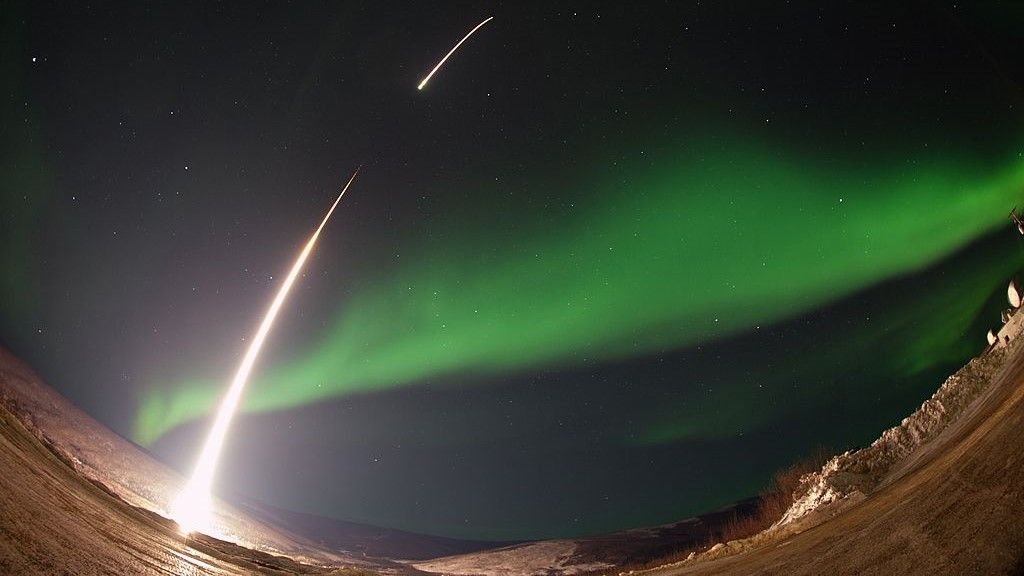
NASA is gearing up for a groundbreaking mission to explore the mysteries of the aurora borealis over Alaska. By launching two rockets through these dazzling light displays, scientists aim to investigate the underlying mechanisms that create the auroras’ flickering patterns and the enigmatic dark patches known as “black auroras.” The launches, set to take place at the Poker Flat Research Range in Fairbanks, form part of a broader effort to understand how solar particles interact with Earth’s magnetic field, shaping these celestial phenomena.

Investigating Auroral Pulsations with GIRAFF

One of the two missions, known as GIRAFF (Ground Imaging to Rocket Investigation of Auroral Fast Features), is led by NASA scientist Robert Michell. This mission will focus on analyzing the rapid pulsations and flickering seen in auroras. Equipped with specialized instruments, the rocket will gather data on the energy, density, and movement of charged particles responsible for these shimmering effects. By studying these variations, researchers hope to unlock new insights into the complex dynamics of auroral formation.

Probing the Mystery of Black Auroras

The second mission, the Black and Diffuse Aurora Science Surveyor, led by Marilia Samara, will turn its attention to a lesser-known phenomenon—black auroras. These unusual dark voids appear as patches of missing light amid the vibrant auroral display. Scientists suspect that they may result from electrons being deflected or reversed before reaching the atmosphere. By capturing high-resolution data during the rocket’s flight, the mission aims to confirm whether these reversed electron flows are responsible for the phenomenon.

Advancing Our Understanding of Space Weather

Together, these two missions represent a major step forward in auroral research, shedding light on the intricate processes that drive space weather. Understanding how charged particles behave in Earth’s upper atmosphere has broader implications, particularly for satellite operations and communication systems affected by geomagnetic activity. As NASA continues to push the boundaries of space science, these auroral investigations will provide critical knowledge about the interactions between our planet and the Sun’s energetic emissions.
Scientists Explore Earth’s Mysterious ‘Ignorosphere’ for Clues About Auroras

Unlocking the Secrets of Earth’s ‘Ignorosphere’: New Research Sheds Light on Auroras and Climate

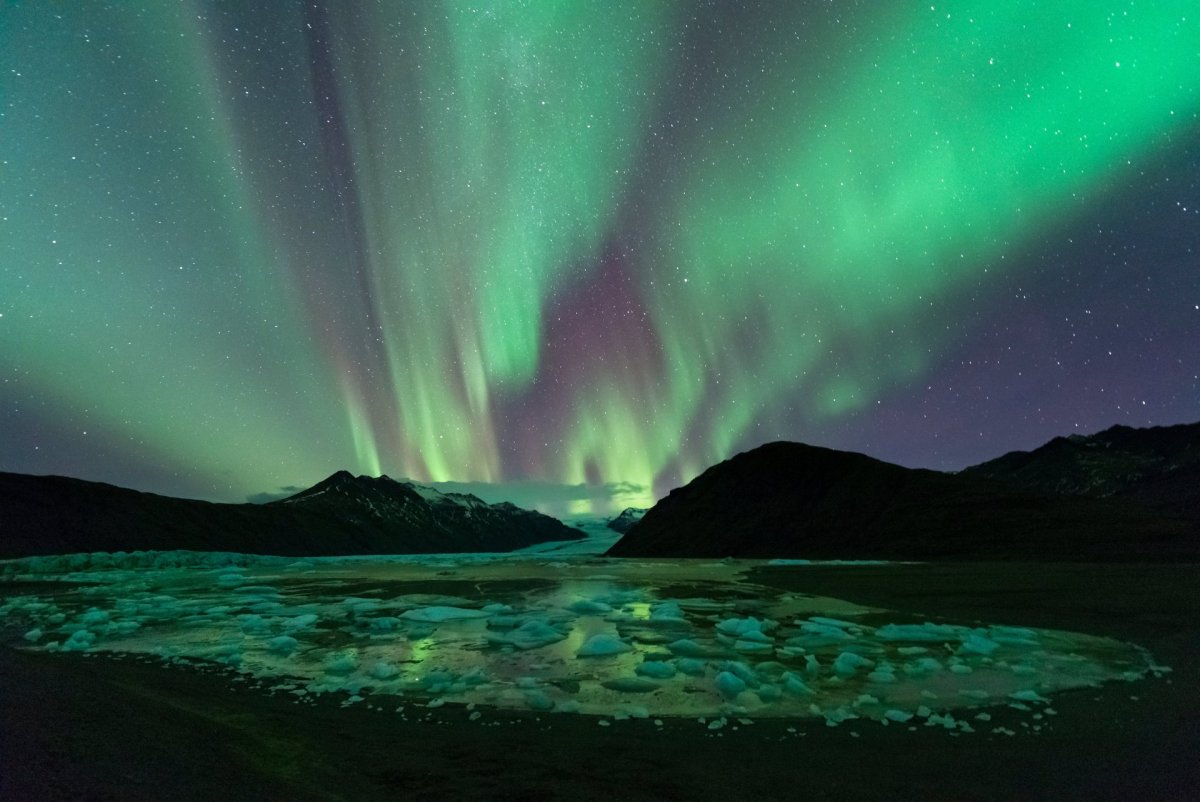
The upper layers of Earth’s atmosphere remain a scientific frontier, largely unexplored compared to the well-studied lower layers. Among these is the mesosphere, situated between the stratosphere and outer space, often referred to as the “ignorosphere” due to the scarcity of reliable data. Its inaccessibility has hindered a comprehensive understanding of atmospheric processes that influence weather patterns, climate dynamics, and natural light displays such as auroras.

A Breakthrough in Atmospheric Research
In a recent study published in Progress in Earth and Planetary Science, researchers led by Kaoru Sato, an atmospheric physics professor at the University of Tokyo, have unveiled a groundbreaking dataset covering nearly two decades. This dataset extends atmospheric models up to 110 kilometers above Earth’s surface, integrating rare observations from sounding rockets, radar systems, and lidar technology. Sato emphasized that this data helps bridge significant knowledge gaps, allowing for detailed simulations of complex phenomena like gravity waves and auroras, which were previously difficult to analyze.

Understanding Space Weather and Its Terrestrial Impact
One of the key insights from this research is the mesosphere’s critical role in mediating space weather effects. Solar storms, which release streams of charged particles, often interact with this atmospheric layer, influencing both auroral activity and ozone chemistry. These interactions can trigger gravity waves—oscillations in the atmosphere that transport energy and momentum across vast distances. Despite their importance in shaping global weather and climate systems, gravity waves have remained poorly understood due to limited observational data.

Future Implications for Climate Science and Space Exploration
The new dataset not only enhances our understanding of the ignorosphere but also holds promise for improving climate models and space weather forecasting. By accurately representing how solar activity affects Earth’s upper atmosphere, scientists can better predict disruptions to communication systems, satellite operations, and even GPS signals. Moreover, this research could inform future space missions, as understanding atmospheric dynamics at the edge of space is crucial for spacecraft re-entry and the design of high-altitude vehicles.

ESA Converts Solar Flares into Sound Using Solar Orbiter, Unlocking New Insights

In an exciting new development, the European Space Agency (ESA) has turned the Sun’s activity into audible sound by using data collected by the Solar Orbiter, a joint mission with NASA. This pioneering sonification process has allowed scientists to convert solar flares, a key feature of solar activity, into sound, offering a novel way to experience these powerful cosmic events. The data collected over the past three years helps illustrate the Sun’s behavior as it moves toward the peak of its 11-year solar cycle, providing both researchers and the general public with a new perspective on the Sun’s dynamics.

The sonification process involved combining images from two of the Solar Orbiter’s instruments—the Spectrometer/Telescope for Imaging X-rays (STIX) and the Extreme Ultraviolet Imager (EUI). These instruments captured detailed images of solar flares, which were then translated into sound. Blue circles, representing the location and size of X-rays emitted by solar flares, were mapped onto the Sun’s image, while the Sun’s outer atmosphere was displayed in yellow. Each of the blue circles was paired with a specific tone that increased in frequency as solar activity intensified, offering a dynamic and evolving auditory representation of solar phenomena.

This innovative approach not only provides an artistic interpretation of solar events but also serves as a scientific tool to track the Sun’s behavior. By listening to the solar flares, researchers can analyze the frequencies and patterns, gaining deeper insights into the Sun’s activity. This auditory model brings attention to how solar events can be quantified and interpreted beyond traditional visual methods, making complex data more accessible and engaging.

The timing of this project aligns with the current solar cycle, as solar flare activity is increasing. As the Sun nears its solar maximum, the most active phase of its cycle, the frequency of solar flares is expected to rise, offering even more opportunities to study these phenomena. According to NASA and the U.S. National Oceanic and Atmospheric Administration (NOAA), this heightened solar activity makes it an ideal period for observing not just solar flares but other spectacular space phenomena, such as the northern lights, further emphasizing the relevance and timeliness of this sonification effort.