Yazılar

NASA’s Webb and Hubble Telescopes Capture Haunting, ‘Blood-Red Eye’ Galaxies IC 2163 and NGC 2207

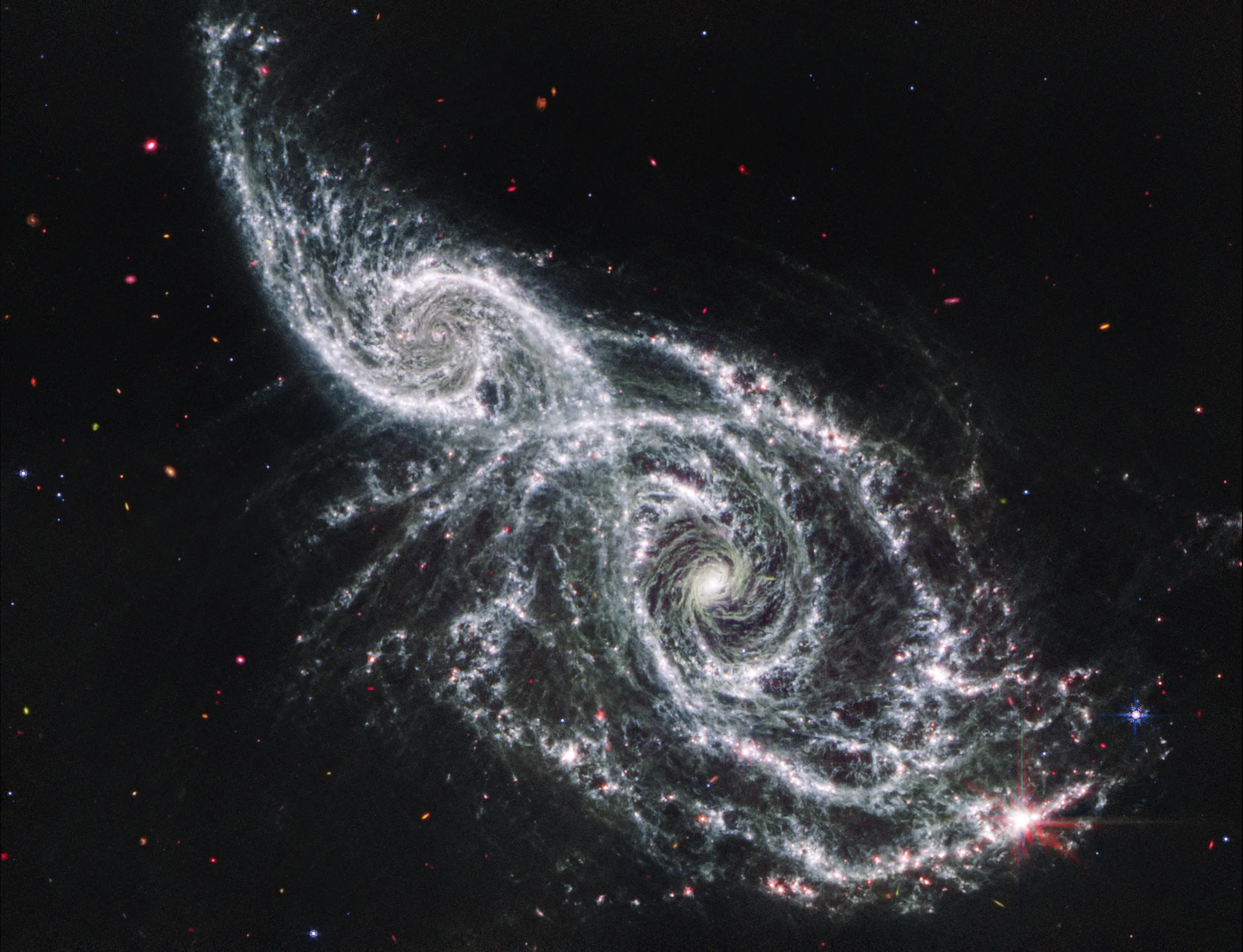
NASA’s Hubble Space Telescope and the James Webb Space Telescope (JWST) have recently provided a breathtaking view of two merging galaxies, IC 2163 and NGC 2207, located in the Canis Major constellation, about 80 million light-years from Earth. These spiral galaxies are in the process of colliding and merging, a cosmic event that will take roughly a billion years to complete. The image, which has been released just in time for Halloween, has sparked excitement among astronomers and the public alike due to the galaxies’ eerie appearance, with scientists describing them as having a “blood-soaked” or “blood-red eye” look. This captivating view offers a glimpse into a dramatic transformation occurring far beyond our solar system.

The combined capabilities of the Hubble and Webb telescopes have allowed scientists to observe this galactic collision from different perspectives. Hubble’s visible and ultraviolet light sensors capture the intricate spiral arms of the galaxies, glowing in hues of blue, while their dense central cores emit a vivid orange. Meanwhile, JWST’s mid-infrared imagery provides a more ethereal view, highlighting the swirling gas and dust with ghostly white hues. This contrast between the two telescopes’ observations offers valuable insights into the complex interactions between the galaxies, particularly the turbulence caused by their gravitational forces and the burst of new star formation happening in the collision zone.

Over the course of their slow merger, IC 2163 and NGC 2207 are rapidly producing new stars, with an estimated 24 solar-sized stars being born each year. This rate of star formation is considerably higher than what we observe in our own Milky Way galaxy, which produces roughly one new star every year. The interaction between the two galaxies has also led to a strikingly high frequency of supernovae, with at least seven observed over recent decades. This is much higher than the one supernova every 50 years observed in the Milky Way. This heightened stellar activity provides a dynamic and volatile environment, as the galaxies continue their long, drawn-out collision.

IC 2163 and NGC 2207 first began their cosmic dance around 40 million years ago, and over time, their orbits have brought them into closer proximity, setting the stage for the ongoing merger. While this process will unfold over billions of years, the current observations show a galaxy pair that is already undergoing intense transformation. The Hubble and Webb telescopes’ joint observations offer a rare and detailed look into the chaotic yet beautiful forces that shape the evolution of galaxies and star systems. These images not only deepen our understanding of galactic collisions but also underscore the incredible power of modern space telescopes in unraveling the mysteries of the universe
NASA’s Hubble Space Telescope Reveals Stunning Spiral Galaxy with Multiple Starburst Regions

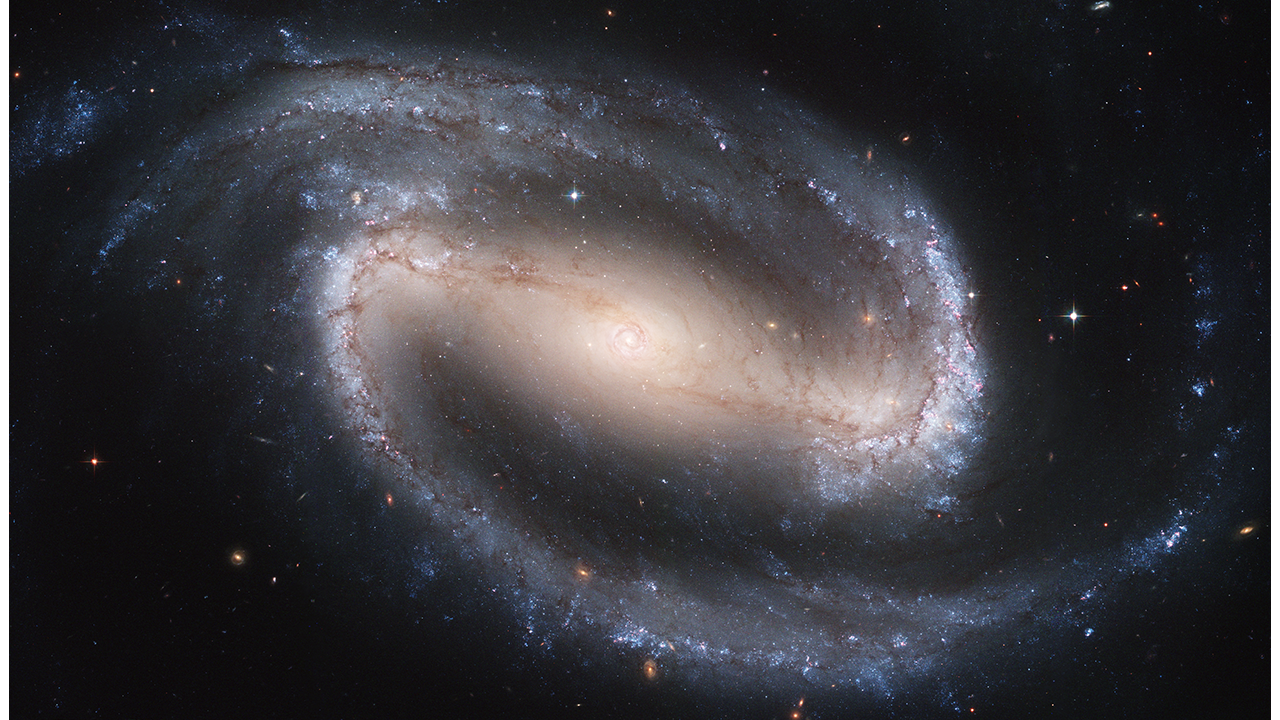
The Hubble Space Telescope has recently unveiled a stunning image of the spiral galaxy NGC 5248, located about 42 million light-years away from Earth in the constellation Boötes. Known as Caldwell 45, NGC 5248 is celebrated for its breathtaking spiral structure and vibrant starburst regions, which have made it a favorite subject for astronomers. This galaxy’s captivating features provide valuable insights into the processes of star formation and galactic evolution.

In the remarkable image captured by Hubble, NGC 5248 reveals its two prominent spiral arms that gracefully extend from a bright central region, almost reaching the edges of the frame. Dark reddish dust lanes weave through these arms, blocking some light and accentuating the intricate details of the galaxy’s structure. Scattered throughout the image are glowing points of bright pink, signifying areas where new stars are actively forming. These starburst regions contribute to the galaxy’s dynamic appearance, highlighting the ongoing processes of stellar birth and development.

Classified as a ‘grand design’ spiral galaxy, NGC 5248 features well-defined arms and a subtle bar structure at its core, although the bar is not fully visible in the Hubble portrait. The distinct morphology of this galaxy is crucial for understanding its evolutionary path. The well-defined spiral arms serve as pathways for the movement of gas and dust, influencing the dynamics within the galaxy and contributing to its star formation rates.

The dynamic flows of gas from the galaxy’s outer regions feed into the central star-forming areas, potentially directing material toward its central black hole. This interaction can facilitate the formation of an active galactic nucleus, a region of intense energy output at the core of the galaxy. As astronomers continue to study NGC 5248 and its intricate features, they gain deeper insights into the mechanisms of galaxy formation and the complex interplay between stars, gas, and dark matter in the universe. The Hubble Space Telescope’s observations of such galaxies not only enhance our understanding of the cosmos but also inspire awe and curiosity about the vastness of space.

NASA Astronaut Captures Stunning Timelapse of Auroras from the International Space Station

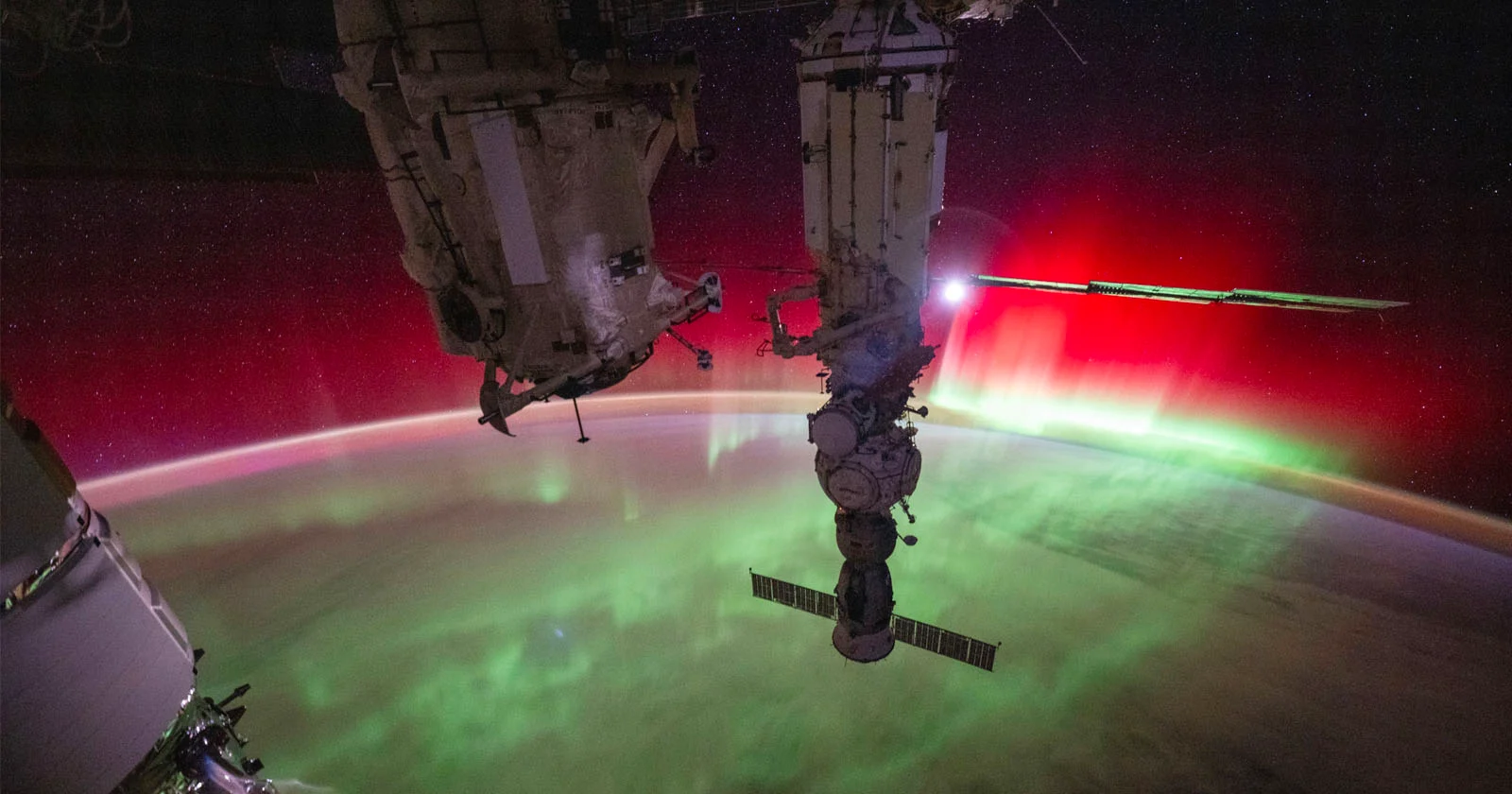
NASA astronaut Matthew Dominick recently unveiled a stunning timelapse video showcasing the vibrant red and green auroras captured from the Dragon Endeavor spacecraft. The footage, recorded on October 8 while orbiting Earth, highlights the breathtaking natural light displays, known as auroras, that result from the interaction between solar activity and the Earth’s atmosphere. These phenomena create mesmerizing visuals visible both from the ground and space, and Dominick’s video offers a unique perspective from high above.

The auroras were filmed through the window of Dragon Endeavor, which was docked near the International Space Station (ISS) at the time. In his post, Dominick noted that the captivating display was further enhanced by the presence of the Dragon Freedom spacecraft in view. The interplay of colors seemed to dance across the sky as he observed from his unique vantage point. “Red and green auroras appear to dance as we fly by Dragon Endeavour’s window with Dragon Freedom in view,” he remarked, emphasizing the surreal quality of the experience. The recent uptick in solar activity contributed to the intensity of the auroras, making the sight even more spectacular.

In addition to sharing the breathtaking auroras, Dominick provided insights into his life aboard the Dragon Endeavor. Since the arrival of Crew-9, he transitioned from his quarters on the ISS to the Dragon Endeavor, which has become his temporary home. He described the living conditions and daily routines aboard the spacecraft, emphasizing the significance of witnessing the auroras during this time. Dominick reflected that the extraordinary visuals made it easy to decide to stay docked longer; undocking earlier would have meant missing out on the once-in-a-lifetime opportunity to witness such an awe-inspiring display.

The timelapse has generated excitement and admiration among space enthusiasts and the general public alike, sparking interest in the science behind auroras and space exploration. As astronauts continue to share their experiences from orbit, viewers are given a rare glimpse into the beauty of our planet from above, fostering a greater appreciation for Earth’s atmosphere and the wonders of the cosmos. Dominick’s footage not only showcases the beauty of auroras but also serves as a reminder of the incredible advancements in space travel and the ongoing exploration of our universe.