Yazılar

James Webb Telescope Detects First Signs of Einstein Zig-Zag Effect in a Remote Quasar

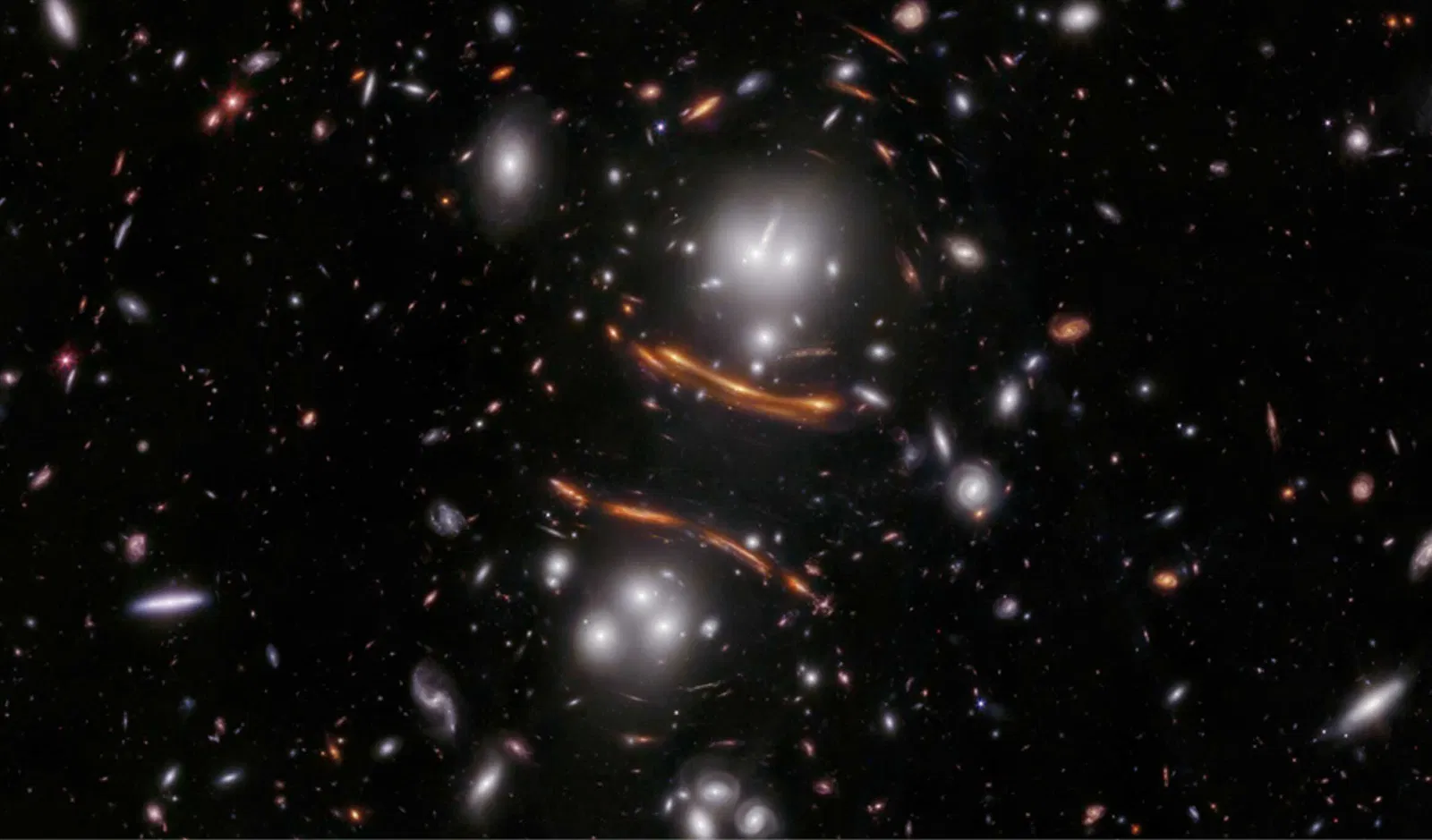
A groundbreaking study leveraging data from the James Webb Space Telescope (JWST) has unveiled a rare cosmic phenomenon termed the “Einstein zig-zag.” This effect occurs when light from a distant quasar travels through two distinct warped regions of space-time, producing multiple mirrored images. Researchers identified six duplicates of a luminous quasar, J1721+8842, providing unprecedented insights into the dynamics of gravitational lensing and offering potential solutions to long-standing questions in cosmology.

The Discovery of a Complex Quasar Configuration

Quasar J1721+8842 was first observed in 2018, appearing as four distinct mirrored points of light situated billions of light-years away. These images were attributed to gravitational lensing, a phenomenon where light from a far-off celestial object bends due to the immense gravity of an intervening galaxy. However, further observations in 2022 revealed two additional, fainter points of light, hinting at a more intricate gravitational lensing scenario involving multiple massive objects.

JWST Sheds New Light on the Phenomenon

With the high-resolution capabilities of the JWST, researchers reanalyzed the data and confirmed that all six images originated from the same quasar. As detailed in a recent study published on arXiv, the quasar’s light was bent by two massive lensing galaxies in a complex manner, forming not only the mirrored images but also a faint Einstein ring. The unique configuration, where the light traveled in opposing directions around the lenses, inspired the term “Einstein zig-zag” to describe the observed effect.

Implications for Cosmology and Gravitational Lensing

This discovery holds profound implications for the study of gravitational lensing and the structure of the universe. By analyzing the “Einstein zig-zag,” scientists can better understand the distribution of dark matter in lensing galaxies and refine models of cosmic evolution. Additionally, the intricate lensing system offers an invaluable tool for probing the nature of quasar light and testing general relativity under extreme cosmic conditions. As researchers continue to explore such phenomena with JWST, new opportunities to unlock the mysteries of the universe are emerging.
NASA’s X-59 Supersonic Jet Successfully Completes Initial Engine Tests, First Flight Nears

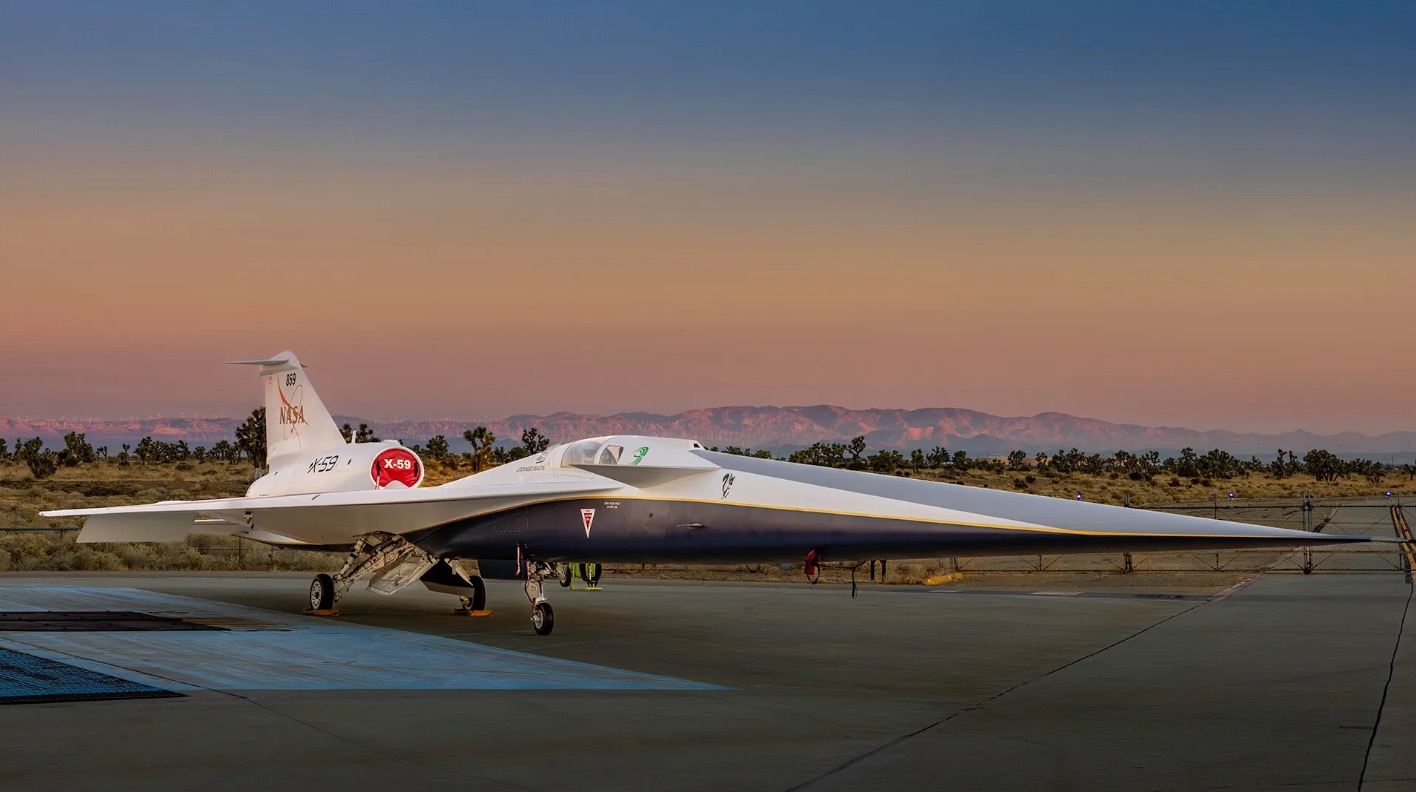
NASA’s experimental X-59 Quiet SuperSonic Technology (QueSST) aircraft has achieved a major milestone with its engine successfully fired up for the first time. Engineers at Lockheed Martin’s Skunk Works facility in Palmdale, California, have been conducting a series of phased engine tests since late October to assess the jet’s engine performance and systems integration. This crucial testing phase brings the aircraft closer to its first flight, although an official date for this event has yet to be set.

Testing Progress and System Integration
The initial engine tests focused on low-speed operations, allowing engineers to thoroughly inspect the aircraft for potential leaks and verify that essential systems—such as hydraulics and electrical components—worked properly in conjunction with the engine. After the completion of these basic checks, the engine was powered up fully for the first time, marking a key milestone in the aircraft’s development. According to Jay Brandon, NASA’s chief engineer for the X-59, the tests acted as a “warmup” to ensure that the engine was performing as expected while supporting the aircraft’s critical systems.

Performance of the Modified F414-GE-100 Engine
The X-59 is powered by a modified F414-GE-100 engine, a version of the engine found in the U.S. Navy’s Boeing F/A-18 Super Hornet. This modification is designed to allow the X-59 to fly at supersonic speeds while significantly reducing the noise produced by the aircraft. Unlike typical supersonic jets that generate disruptive sonic booms, the X-59 is engineered to minimize noise and create a quieter “sonic thump,” which could pave the way for commercial supersonic travel without disturbing communities on the ground.

Looking Ahead: The Quiet Supersonic Future
These successful engine tests represent a crucial step toward achieving NASA’s goal of creating a supersonic jet that reduces the impact of noise on the environment. The X-59 is a key component of NASA’s broader efforts to develop quiet supersonic technologies that could revolutionize air travel. As engineers continue to refine the aircraft’s systems and performance, the first flight of the X-59 will bring NASA one step closer to proving the viability of supersonic flight with minimal noise—a breakthrough that could change the future of commercial aviation.

Russia Achieves Milestone with Successful Deployment of 53 Satellites into Orbit

Russia’s Record Satellite Launch Marks Milestone in Space Efforts
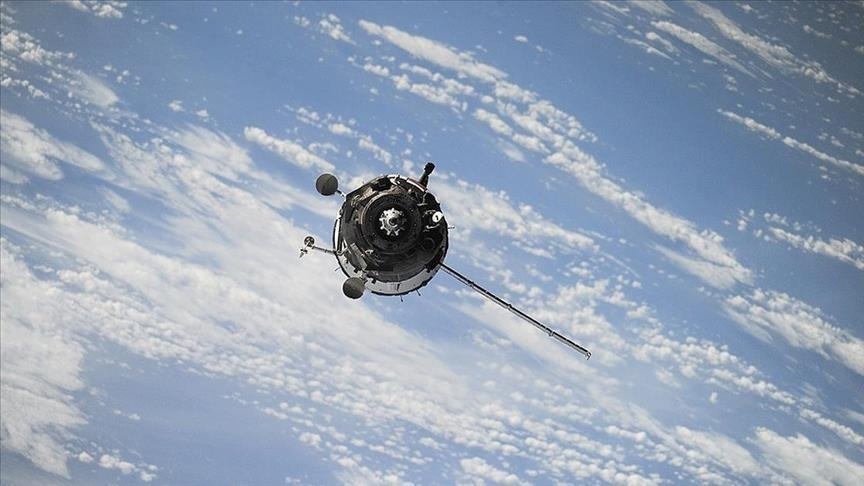
On November 4, 2024, Russia achieved a significant feat in space exploration, successfully launching 53 satellites into orbit. This record-breaking deployment, led by the Russian space agency Roscosmos, utilized a Soyuz-2.1b rocket with a Fregat upper stage. The mission lifted off from the Vostochny Cosmodrome in Russia’s Far East at 6:18 pm EST (2318 GMT or 2:18 am IST on November 5). All satellites reached their designated orbits, marking a seamless accomplishment in Russia’s ongoing efforts to strengthen its presence in the global space industry.

A Global Collaborative Effort
This mission was notable not only for its scale but also for its international collaborations. Among the 53 satellites were 49 of Russian origin, alongside a joint Russian-Chinese satellite and a Russian-Zimbabwean satellite. Additionally, two Iranian satellites joined the payload: the Kowsar imaging satellite, capable of high-resolution imagery, and the Hodhod communication satellite. While this mission set a national record for domestic satellite launches, it fell short of the global benchmark established by SpaceX in January 2021, when 143 satellites were launched in a single mission.

Advancing Ionospheric Research
Included in the payload were two Ionosfera-M satellites, designed to monitor Earth’s ionosphere. These satellites, each weighing 430 kilograms (948 pounds), aim to provide critical data on atmospheric conditions and ionospheric changes, furthering scientific understanding of space weather. Their inclusion underscores Russia’s commitment to leveraging space-based technologies for both scientific and strategic applications.

Significance for Russia’s Space Program
This launch marks the thirteenth of the year for Russia, highlighting a steady, albeit moderate, pace in its space activities compared to global leaders like the United States and China. It reflects Roscosmos’s ambition to expand its satellite infrastructure and international partnerships. With advancements like these, Russia continues to position itself as a key player in the competitive domain of satellite launches and space exploration.