Yazılar

SpaceX Boosts Global Connectivity with Launch of 26 More Starlink Satellites

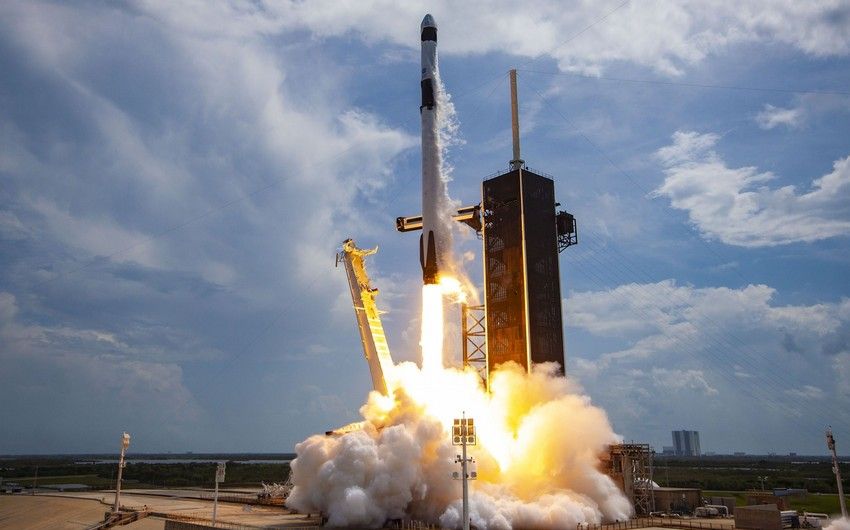
SpaceX successfully completed another milestone in its mission to expand global internet access, launching 26 additional Starlink satellites into low Earth orbit on Thursday night, June 12. The launch took place at 9:54 p.m. EDT from Launch Complex 4 East at Vandenberg Space Force Base in California. Roughly an hour after liftoff, the satellites were deployed into orbit, pushing the total number of active Starlink satellites to over 7,600—further solidifying SpaceX’s dominance in satellite-based broadband services.

The mission, designated as Starlink Group 15-6, was powered by a Falcon 9 rocket whose first-stage booster (B1081) made its 15th flight—another testament to SpaceX’s unmatched reusability strategy. After successfully completing its mission, the booster executed a precise landing on the droneship Of Course I Still Love You, stationed in the Pacific Ocean. With SpaceX’s record for booster reusability standing at 28 flights, the company continues to push the boundaries of cost-effective and sustainable orbital launches.

This particular mission marked SpaceX’s 72nd Falcon 9 launch of the year, with 53 of those specifically dedicated to Starlink. The expanding satellite network is designed to deliver high-speed internet across the globe, with new capabilities like direct-to-cell service already being tested. These advancements aim to improve connectivity in underserved and remote regions, allowing users with compatible smartphones or compact satellite dishes to access internet and messaging services without traditional infrastructure.

Looking ahead, SpaceX is not only reinforcing Starlink’s global footprint but also paving the way for next-gen applications such as real-time communications for emergency services and in-flight Wi-Fi for airlines. With dozens more launches planned, the Starlink megaconstellation is rapidly shaping the future of broadband—bringing connectivity to corners of the world that were previously out of reach.

Elon Musk’s Starlink to Enter Indian Market Offering Plans Below ₹850 Monthly: Report

Starlink is preparing to launch its satellite internet services in India, having cleared key regulatory approvals. According to recent reports, the company plans to offer subscription packages starting at around $10 per month, which is roughly Rs. 850. These plans are expected to include unlimited data as part of initial promotional offers, aiming to attract a large user base quickly. Elon Musk’s SpaceX hopes to reach 10 million Indian subscribers to balance the high costs of spectrum and licensing through scale.

Earlier this month, Starlink received a Letter of Intent from India’s Department of Telecommunications (DoT), granting permission to roll out its satellite communication network in the country. However, the Telecom Regulatory Authority of India (TRAI) has recommended additional charges, including an extra Rs. 500 per month per urban user, which could make satellite internet services pricier than traditional broadband options. These proposals also include fees like 4% of adjusted gross revenue and a minimum annual spectrum charge, along with an 8% licensing fee for commercial operations.

Despite these regulatory costs, Starlink and other satellite internet providers are expected to offer competitive pricing to recover their initial investments. The rumored Rs. 850 monthly plan with unlimited data could position Starlink as one of the most affordable satellite internet services globally, making it accessible to a wide population across India, including rural and underserved areas.

Starlink uses a vast network of low Earth orbit (LEO) satellites orbiting approximately 550 kilometers above Earth to provide high-speed, low-latency internet connectivity. This technology allows Starlink to deliver broadband in remote locations where traditional cable or fiber infrastructure is not feasible. With India’s vast geography and digital demand, Starlink’s entry could significantly boost internet access and bridge connectivity gaps across the country.

SpaceX Conducts Static Fire Test of Starship Upper Stage Ahead of Ninth Flight

SpaceX has once again demonstrated progress with its next-generation Starship spacecraft by conducting a full-duration static fire test of the vehicle’s upper stage on May 12th at its Starbase facility in South Texas. During this important milestone, the 171-foot-tall upper stage fired all six Raptor engines for approximately 60 seconds, confirming the ship’s readiness as it undergoes final preparations. This test marks the third static fire for this particular Starship, highlighting SpaceX’s methodical approach to refining the vehicle before its highly anticipated ninth test flight. The company shared video and images from the test on social media, giving enthusiasts a closer look at the spacecraft’s development.

This static fire represents one of the last critical steps before the vehicle’s next launch, though SpaceX has yet to announce an official date. The booster designated for Flight 9 has also completed its own static fire test, fueling speculation that the launch could be imminent, possibly within weeks. Once fully assembled, the Starship system towers at 403.5 feet, making it the most powerful rocket ever built. Its design emphasizes full reusability for both the Super Heavy booster and the Starship upper stage—an essential feature for future missions to the Moon, Mars, and beyond.

To date, Starship has flown eight test missions, including two in 2025. While the launches themselves proceeded smoothly, the upper stage encountered failures shortly after reaching space during both 2025 flights. Notably, the Super Heavy booster executed impressive and precise landings back at Starbase, aided by the giant launch tower’s “chopstick” arms—a first-of-its-kind rocket-catching method. However, the upper stage exploded less than ten minutes post-launch on both occasions, raising questions about its stability and resilience.

Despite these setbacks, SpaceX continues to refine Starship, pushing closer to achieving a fully reusable spacecraft capable of supporting ambitious space exploration goals. With multiple static fire tests completed and ongoing improvements, the ninth launch is expected to come soon, provided the company maintains its rapid pace of testing and development at Starbase. Enthusiasts and space watchers alike remain eager to see how Starship progresses on its path toward becoming a cornerstone for humanity’s interplanetary future.