Yazılar

Atos Announces Reverse Stock Split to Boost Investor Confidence

French IT company Atos (ATOS.PA) announced on Friday that it will implement a reverse stock split to restore investor confidence following a financial restructuring plan completed last year to address a severe debt crisis. The reverse stock split will begin on March 25 and conclude on April 23, with new shares trading from April 24.

Under the split, every 10,000 old shares, each with a nominal value of 0.0001 euros, will be consolidated into one new share valued at 1 euro. The new shares, which are expected to be priced at around 49 euros ($53.02), will start trading on April 24.

Atos’ shares have dropped to all-time lows, trading at approximately half a cent, following a 233-million-euro capital increase last year that led to significant dilution for shareholders. The reverse stock split is intended to reduce stock price volatility and create a more favorable stock market dynamic.

The company, which owns the supercomputers integral to France’s nuclear deterrent, plans to hold a capital markets day in May to unveil its new strategic direction.

Atos to Launch Reverse Stock Split Amid Investor Confidence Push

French IT company Atos (ATOS.PA) will proceed with a reverse stock split, set to take effect by May 1, in an effort to restore investor confidence. CEO Philippe Salle confirmed the decision on Wednesday, stating that the board will finalize approval in the coming days before initiating the process. The move follows a major financial restructuring last year, which significantly diluted shareholder value.

The reverse split was overwhelmingly approved at a general meeting in January. Atos shares have plummeted to historic lows, now trading at approximately one-third of a cent, after completing a 233-million-euro ($248.49 million) capital increase.

The company reported an annual revenue decline of 5.4% to 9.58 billion euros, missing previous forecasts. Market weakness and contract terminations contributed to the downturn. However, Atos highlighted a recovery in order intake, securing significant contracts such as a 165-million-euro extension with Eurotower and a deal to construct Finland’s latest national supercomputer.

Atos, once valued at 10 billion euros, now has a market capitalization of 600 million euros following governance instability and a failed restructuring attempt. While the company has not issued a 2025 outlook, Salle is set to outline his vision and mid-term strategy at the Capital Markets Day event on May 14.

The French government remains in exclusive negotiations to acquire Atos’ advanced computing segment, deemed critical for national defense. This division includes supercomputers essential for France’s nuclear deterrence and military communications.

Salle, who took over as CEO last month—Atos’ sixth in two years—reaffirmed that no additional asset sales would take place in 2025. “We’re not going to rip the group apart,” he stated, citing a strong cash position of 2.2 billion euros. He also dismissed any plans to raise the asking price for Atos’ mission-critical systems business, despite increasing military expenditures in Europe.

Google’s 67-Qubit Sycamore Quantum Computer Shows Potential to Surpass Leading Supercomputers, Study Finds

Google’s 67-Qubit Sycamore Chip Pushes Quantum Computing to New Heights

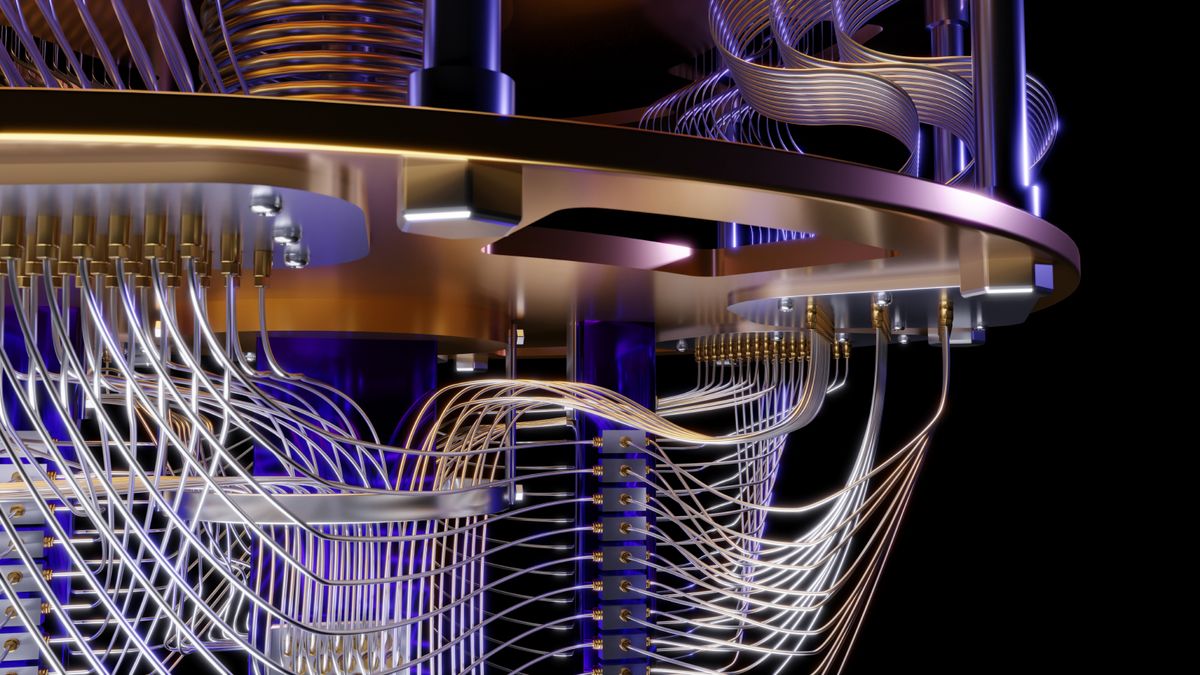
In a major leap for quantum computing, Google’s Sycamore processor, equipped with 67 qubits, has demonstrated performance that outstrips the most advanced classical supercomputers. According to a study published in Nature on October 9, 2024, this achievement marks the Sycamore processor’s entry into what researchers call the “weak noise phase.” This state allows quantum computers to perform calculations with stability, expanding the potential for quantum computing to tackle problems previously unsolvable by traditional methods.

Exploring the Weak Noise Phase

Under the guidance of Alexis Morvan from Google Quantum AI, the research team has shown how Sycamore can harness the weak noise phase to enhance computational capabilities. In this phase, the quantum processor can execute calculations with remarkable complexity, outpacing the fastest supercomputers available today. Google representatives emphasize that this breakthrough demonstrates the potential of quantum technology to solve complex real-world problems that cannot be addressed by classical computing alone. This phase of stability and efficiency brings the field closer to practical applications, marking a critical step toward making quantum computing feasible for broader use.

How Qubits Enable Quantum Superiority

Quantum computing relies on qubits, the quantum equivalent of classical bits, to perform operations. While bits process information sequentially in classical computers, qubits operate based on quantum mechanics, enabling them to execute multiple calculations simultaneously. The power of qubits grows exponentially as more are added to a quantum processor, allowing them to solve certain problems exponentially faster than classical systems. However, qubits are highly susceptible to interference, causing a high failure rate compared to classical bits. For instance, while traditional systems have failure rates as low as one in a billion billion bits, around one in every hundred qubits may fail, posing an ongoing challenge for quantum engineers.

Future Implications of Google’s Quantum Breakthrough

Google’s Sycamore processor exemplifies how quantum computers might one day outstrip classical systems for specific tasks, such as optimization problems, large-scale simulations, and cryptography. This latest breakthrough is an encouraging signal that we are approaching a new era in computational science, where quantum computers could unlock solutions to complex scientific, financial, and technological challenges. As research in error correction and qubit stability progresses, the potential of quantum computers to revolutionize various industries draws closer to reality.