M87 Black Hole Unveils Chaotic Plasma Motion and Accretion Mechanism
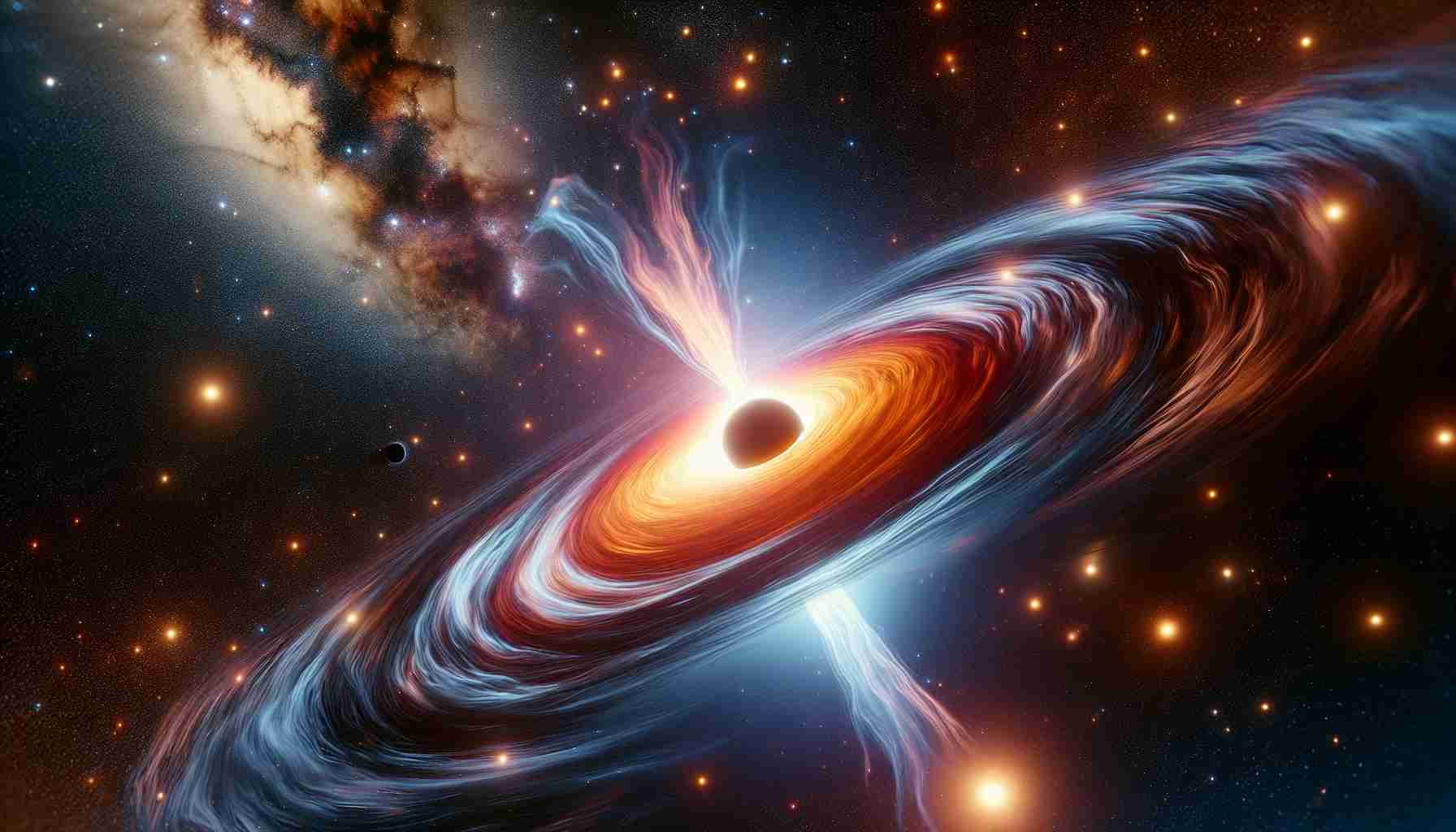
The supermassive black hole M87*, located 55 million light-years away in the Messier 87 galaxy, continues to captivate astronomers with its dynamic accretion process. Observations from the Event Horizon Telescope (EHT) have provided new insights into the turbulence within the flow of gas and plasma that spirals into the black hole. With a mass equivalent to 6.5 billion suns, M87* rotates along an axis pointing away from Earth. The latest findings, derived from EHT data collected in April 2017 and April 2018, have significantly improved our understanding of the chaotic environment near the event horizon.
Tracking Plasma Motion Over Time
A study published in Astronomy & Astrophysics analyzed multi-year observations of M87*, revealing critical changes in the plasma surrounding the black hole. By combining advanced simulations with real-time data, researchers observed that the bright plasma ring encircling M87* displayed noticeable shifts in brightness and structure. Notably, the brightest section of the ring moved counterclockwise by approximately 30 degrees between 2017 and 2018, suggesting the presence of turbulence in the gas flow. Eduardo Ros of the Max Planck Institute for Radio Astronomy emphasized the significance of long-term data collection in refining our understanding of black hole behavior.
The Black Hole’s Feeding Process
Recent findings have also shed light on how M87* consumes surrounding matter. According to Space.com, the study suggests that gas spirals inward toward the black hole, occasionally moving against the direction of its rotation. Researchers leveraged three times the data from 2017 to construct more refined models of this process. These insights align with previous observations made using other radio telescope arrays, reinforcing the complexity of black hole accretion mechanisms.
Advancing Our Understanding of Black Holes
Christian M. Fromm, a member of the EHT theory group, highlighted the importance of combining data from multiple observation periods with sophisticated models. By continuously refining simulations and integrating new observational data, scientists are gradually uncovering the intricate physics governing supermassive black holes. The evolving picture of M87* not only deepens our knowledge of black hole feeding dynamics but also contributes to broader studies on galaxy evolution and cosmic structure formation.