Yazılar

Australia’s Under-16 Social Media Ban Divides Public Opinion

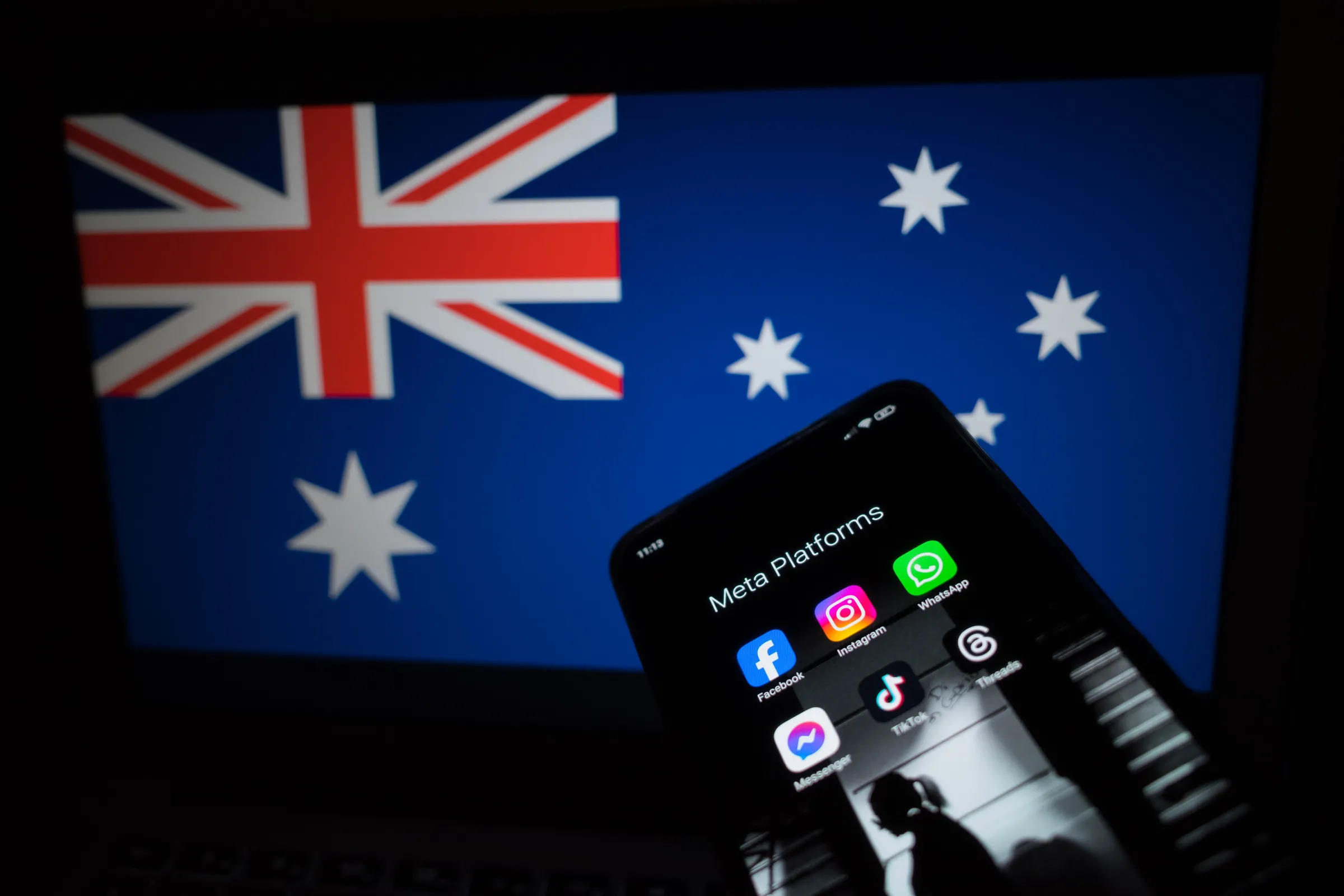
Australia has implemented a groundbreaking social media ban for children under the age of 16, triggering a mix of reactions from citizens, tech companies, and advocacy groups. Announced late Thursday and set for full enforcement by 2025, the law prohibits minors from accessing platforms like Facebook, Instagram, and TikTok, with violators facing fines up to AUD 49.5 million (USD 32 million).

Prime Minister Anthony Albanese defended the move, emphasizing the need to protect children from the physical and mental health risks associated with excessive social media use. He highlighted specific concerns, such as harmful body image portrayals targeting girls and misogynistic content aimed at boys.

“Platforms now have a social responsibility to ensure the safety of our kids,” Albanese stated, adding that the new law enables parents to have “different conversations” about social media use.

Mixed Reactions

Public opinion in Australia is deeply divided. Some, like Sydney resident Francesca Sambas, praised the ban for addressing inappropriate content, saying, “Social media for kids is not really appropriate; sometimes they can look at something they shouldn’t.”

However, others, such as 58-year-old Shon Klose, criticized the government’s decision as authoritarian. “This government has taken democracy and thrown it out the window,” she said, expressing outrage over the lack of public consultation.

Young users also voiced skepticism, with 11-year-old Emma Wakefield suggesting she would find ways to bypass the restrictions.

Global Comparisons and Implementation Challenges

While other countries, including France and some U.S. states, have introduced laws requiring parental permission for minors to access social media, Australia’s ban is the most stringent to date. A similar law in Florida, banning social media use for children under 14, is currently under legal challenge.

Tech companies, particularly TikTok, have expressed concerns over the policy. A TikTok spokesperson criticized the rushed legislative process, warning that such restrictions could drive young users to “darker corners of the internet.” Advocacy groups and mental health experts have also cautioned against potential unintended consequences.

Albanese defended the timing of the legislation, arguing that early action was necessary to address the harms of cyberbullying and online exploitation. “We know that implementation won’t be perfect, just like alcohol bans for under-18s aren’t foolproof, but it’s the right thing to do,” he said.

Political and International Implications

The bill gained bipartisan support, passing swiftly through parliament alongside 30 other pieces of legislation on its final sitting day of the year. Critics have called out the lack of debate, with some lawmakers accusing the government of undermining democratic scrutiny.

Internationally, the law could strain ties with the U.S., where tech mogul Elon Musk, a prominent figure in President-elect Donald Trump’s circle, suggested the ban could pave the way for broader internet censorship in Australia.

This latest move adds to Australia’s history of regulatory clashes with tech giants. The country was the first to mandate payments from social media companies to news outlets and is preparing additional penalties for platforms failing to combat online scams.


Why You’re More Likely to Solve Your Problems on a Therapist’s Sofa Than on Social Media

In an era where mental health issues are increasingly acknowledged, many individuals are turning to platforms like TikTok for guidance rather than seeking professional help. A recent 2024 KFF Health Misinformation Tracking Poll revealed that 66% of adult TikTok users have encountered mental health content on the app.

Dr. Thomas Milam, a psychiatrist and chief medical officer at Iris Telehealth, noted that many TikTok users seek mental health advice through the platform due to the shortage of mental health providers and the difficulty in accessing affordable care. “The majority of people that are accessing TikTok are going to at some point seek some type of mental health guidance,” he explained.

While the rise of mental health discussions on social media can be seen as a positive development, it poses significant risks. Lindsay Liben, a psychotherapist based in New York City, cautioned against diagnosing problems based on social media content. Many posts are created by individuals without proper mental health training, leading to the spread of misleading or inaccurate information. For instance, a 2023 study published in the Journal of Autism and Developmental Disorders found that 41% of TikTok videos related to autism were inaccurate, and a 2022 study in The Canadian Journal of Psychiatry reported that 52% of ADHD-related videos contained misleading claims.

Despite TikTok’s efforts to combat misinformation by working with independent partners and providing a Safety Center for reliable health information, diagnosing mental health conditions through social media remains problematic. Symptoms such as low energy and fatigue can indicate various issues, from anxiety to sleep deprivation, complicating self-diagnosis efforts.

Moreover, parents seeking solutions for their children’s sleep issues might overlook deeper problems, like bullying, as highlighted by Liben. Misinterpreting normal feelings of worry or sadness as mental health disorders can also lead to confusion and unnecessary anxiety.

A further concern is that some creators on social media promote products like sleep aids and vitamins alongside their mental health content, often oversimplifying complex issues. Milam emphasized that quick fixes are rarely effective for serious conditions like anxiety or depression, which require nuanced approaches. When solutions fail, it can exacerbate feelings of inadequacy among individuals trying to improve their mental health.

For those looking for credible mental health resources online, experts recommend seeking content from licensed professionals, such as doctors or licensed therapists, who are transparent about their qualifications. It’s essential to verify the educational backgrounds and training of content creators and to rely on sources that reference high-quality research.

Milam suggests that individuals who suspect they may have mental health concerns should first reach out to their primary care physicians, who can offer guidance and referrals to mental health specialists. Resources from the American Psychiatric Association and the American Psychological Association can also provide reliable information.

Ultimately, while social media can facilitate discussions around mental health, experts agree that addressing these issues effectively requires more than a quick video. The most reliable answers are often found on the traditional therapist’s sofa, where professional support can lead to meaningful solutions.


TikTok Reduces Workforce Amid Transition to AI-Powered Content Moderation

TikTok, the popular social media platform owned by ByteDance, has begun a major reduction in its workforce, signaling a shift towards AI-driven content moderation. The layoffs, which number in the hundreds globally, come as the company seeks to leverage artificial intelligence to improve its content review processes, a move seen as more cost-effective and efficient than relying solely on human moderators. A significant portion of these layoffs reportedly impact employees in Malaysia, where TikTok has a large content moderation team.

Initial reports suggested that over 700 staff members in Malaysia were affected by the layoffs. However, ByteDance later clarified that the number was less than 500, attempting to downplay the extent of the workforce reduction. This decision highlights a growing trend among social media companies, which are increasingly turning to AI to handle the complex and large-scale task of moderating user-generated content.

Employees impacted by the layoffs, primarily content moderators, were reportedly notified of their job termination via email. Most of these individuals were responsible for monitoring TikTok’s content for policy compliance, such as identifying and removing harmful or inappropriate videos. Sources close to the matter indicated that the email notifications were sent late on Wednesday, leaving many staff members uncertain about their next steps.

This transition to AI moderation reflects TikTok’s commitment to more efficient and potentially less biased content review. However, it also raises questions about the accuracy of AI in distinguishing between acceptable and inappropriate content, particularly in sensitive or nuanced cases. As TikTok continues to expand globally, the company’s reliance on AI could redefine content moderation standards across the industry.