
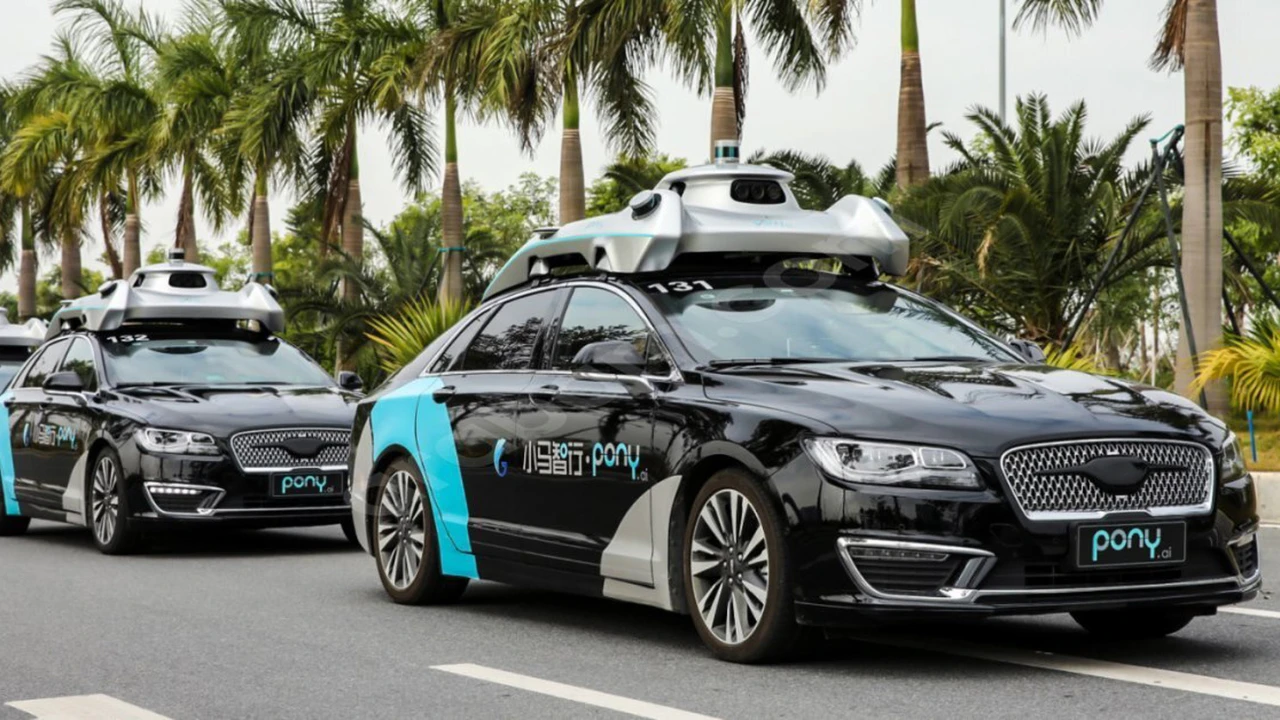
Pony.ai Robotaxi Catches Fire After Malfunction, No Injuries Reported
Pony.ai, one of China’s leading autonomous vehicle companies, confirmed on Wednesday that one of its driverless robotaxis caught fire in Beijing after a system malfunction triggered an emergency stop. The incident occurred while the vehicle was being handled by service personnel. Fortunately, no passengers were on board, and no injuries were reported.
According to a company statement, the car—operating without a human driver—experienced an “abnormal status” early Tuesday morning, prompting its safety system to initiate a stop. Service staff arrived within two minutes, but during the response process, the vehicle ignited and caught fire.
“No collision occurred and no one was injured. The specific cause is currently under investigation,” Pony.ai stated.
Incident Footage and Public Response
Videos circulating on Chinese social media show thick black smoke rising from a multi-lane highway, with a burned-out vehicle straddling a road divider. The car appears to be a Lexus, the luxury brand under Toyota, which is a known backer of Pony.ai. However, Reuters was unable to verify the model or authenticity of all media posted online.
An unnamed Beijing traffic police officer told Qingdao city’s broadcast outlet that the fire broke out when the engine was restarted, further complicating the cause analysis.
Regulatory and Industry Implications
The incident comes at a sensitive time, as Chinese regulators have begun tightening scrutiny on autonomous driving systems following a recent fatal autopilot-related crash involving a Xiaomi vehicle. The government has been encouraging the deployment of autonomous driving technology, with Pony.ai, Baidu, and others receiving approval to operate fully driverless robotaxis in designated urban zones.
However, high-profile failures—like the Waymo robotaxi incident in San Francisco where the vehicle was set on fire by a crowd—have raised broader concerns about safety, emergency response, and public trust in autonomous vehicles.
Ongoing Investigation
Neither Pony.ai nor Toyota provided additional details as of this writing. The cause of the fire remains under investigation, and regulators are likely to monitor the situation closely as the government refines its autonomous vehicle safety standards.

