Yazılar

Turkey’s Pasifik Holding Eyes Global Tech and Port Investments

Turkey’s Pasifik Holding, a conglomerate with interests spanning real estate, logistics, mining, and energy, is expanding its global ambitions in technology and port operations, according to Chairman Fatih Erdogan. Speaking to reporters in Istanbul on Tuesday, Erdogan outlined the company’s strategic focus for 2025, emphasizing partnerships, acquisitions, and new investments.

Expansion into Technology and Defense

Pasifik Holding is actively pursuing partnerships and acquisitions in the global technology sector, particularly in defense technologies. This move aligns with the company’s vision to strengthen its footprint in innovative industries and enhance its portfolio across international markets.

Port and Terminal Investments

The company also plans to invest in port and terminal operations, marking a significant diversification of its business activities. Erdogan noted that these investments are a priority for the year and reflect the growing importance of logistics and trade infrastructure in the global economy.

Public Listing Plans

Pasifik Holding is preparing to list 20% of its holding company on Borsa Istanbul during the first quarter of the year. This public offering is expected to raise funds to support its ambitious growth plans. The group already has four subsidiaries listed on the exchange:

  • Orcay (ORCAY.IS)
  • Pasifik Eurasia Lojistik (PASEU.IS)
  • Pasifik GYO (PSGYO.IS)
  • Pasifik Teknoloji (PATEK.IS)

With a workforce exceeding 2,500 across 55 companies, Pasifik Holding aims to leverage its diversified portfolio to tap into new markets and industries, reinforcing its position as a leading Turkish conglomerate.
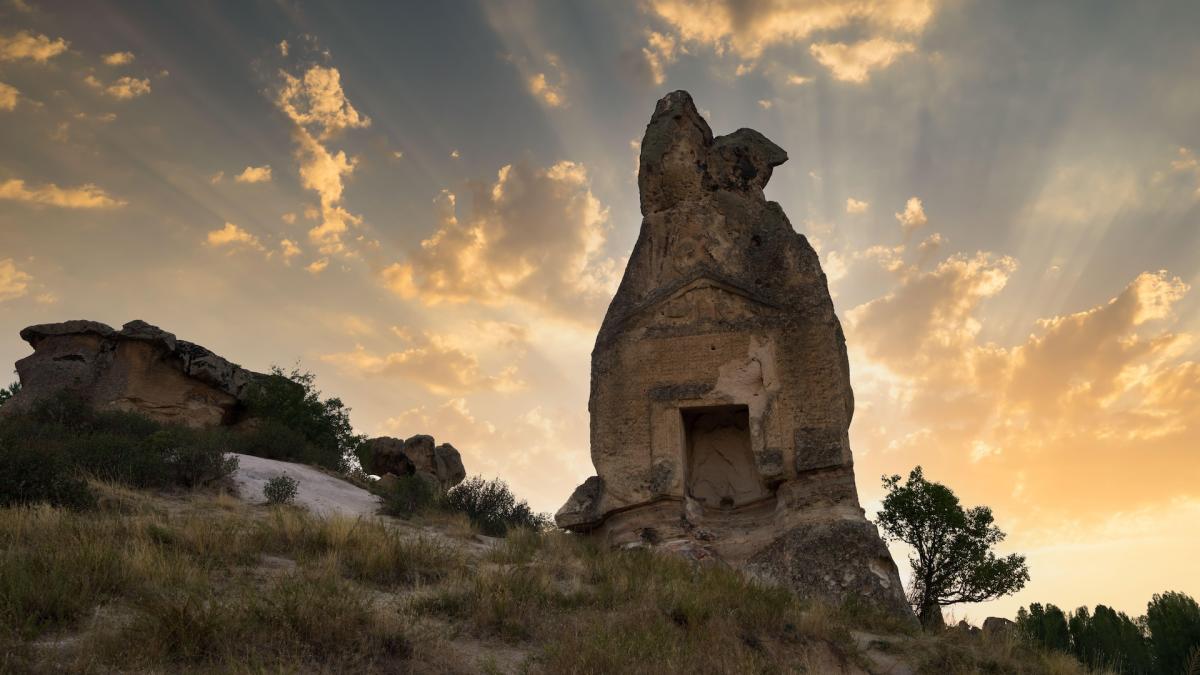

 

2,600-Year-Old Inscription in Turkey Decoded: What It Reveals

A 2,600-year-old inscription carved into the Arslan Kaya monument in Turkey has finally been deciphered, revealing significant insights into ancient religious practices. The research, led by Professor Mark Munn of Pennsylvania State University, confirms that the inscription contains references to Materan, a goddess revered by the Phrygians, who flourished in the region from 1200 to 600 B.C. Despite enduring centuries of weathering and damage from looting, the inscription sheds new light on the spiritual beliefs of this ancient civilization. Materan, often referred to simply as “the Mother,” was central to Phrygian religious life.

The Arslan Kaya monument, which stands as a testament to Phrygian art and culture, is adorned with depictions of lions and sphinxes, symbols of strength and protection. These symbols are commonly associated with the gods and goddesses worshipped by the Phrygians. The deciphered inscription, which appears alongside an image of Materan, confirms her prominence within the society. Materan’s significance extended beyond the Phrygians; she was later venerated by the Greeks as the “Mother of the Gods” and by the Romans as “Magna Mater” or “Great Mother.”

During the time the inscription was created, the region was heavily influenced by the Lydian kingdom, which also held Materan in high regard. The inscription may have been part of a larger text that outlined not only the goddess’s importance but also the identity of the commissioning party responsible for the monument. This discovery provides valuable context for understanding the religious and political landscape of the period, revealing the cultural exchanges that took place in the ancient world.

The decipherment of the Arslan Kaya inscription is a remarkable achievement that offers a glimpse into the spiritual life of the Phrygians and their enduring influence on later civilizations. As scholars continue to study this and other ancient texts, new layers of understanding will emerge about the shared religious and cultural traditions that connected the ancient peoples of the Near East.

Israeli Troops Kill Turkish-American Activist at West Bank Protest

Israeli troops shot and killed Aysenur Ezgi Eygi, a 26-year-old Turkish-American activist, during a protest against settlement expansion in the West Bank on Friday, according to Palestinian and Turkish officials. Eygi, who held both U.S. and Turkish citizenship and had recently graduated from the University of Washington, was participating in a demonstration in Beita when she was fatally injured. Turkey’s foreign ministry accused Israeli Prime Minister Benjamin Netanyahu’s government of responsibility for her death, while the White House expressed deep concern and called for an investigation.

Eygi, who was studying psychology and Middle Eastern languages and cultures, was described by her family as a passionate human rights advocate. She had been involved in various protests, including those against U.S. support for Israel’s actions in Gaza. The University of Washington’s president, Ana Mari Cauce, remembered her as a positive influence and peer mentor.

The Israeli military reported that troops fired towards a male protester they deemed a threat but acknowledged that a female foreign national was killed during the incident. The military is reviewing the circumstances of Eygi’s death. No immediate response was given by Netanyahu’s office.

In a related incident, a 13-year-old girl was also killed by Israeli gunfire in the village of Qaryut, near Beita, amid violent confrontations between settlers and Palestinians. The rise in violence by Israeli settlers in the West Bank has provoked international criticism and led to U.S. sanctions on some individuals involved in the settler movement.

Turkey’s President Tayyip Erdogan condemned the killing and vowed to work against what he called Israel’s policy of occupation and genocide. U.S. Senator Chris Van Hollen criticized the Biden Administration for not doing enough to seek justice for American victims and called for a thorough investigation. Since the 1967 Middle East war, Israel’s occupation of the West Bank has been a contentious issue, with international condemnation of Israeli settlements which are widely considered illegal under international law.