Yazılar

Wall Street Sees Gains Ahead of Megacap Earnings and Presidential Election

Wall Street closed on a positive note on Monday, buoyed by anticipation of key earnings releases from major tech companies and the nearing U.S. presidential election on November 5. Additionally, market sentiment improved as recent developments in the Middle East did not affect global energy supplies. Although Israel responded to an Iranian missile strike earlier this month, the targeted sites focused on missile facilities around Tehran rather than on energy infrastructure, alleviating immediate supply concerns.

Tech Stocks Drive Market Gains

The “Magnificent Seven” group of megacap tech stocks, which have been pivotal to Wall Street’s recent highs, saw modest gains as Alphabet, Meta, and Apple rose ahead of their earnings reports. Nvidia’s recent ascent as the world’s most valuable company added to the focus, with investors closely watching for AI-related spending trends in the upcoming earnings.

In total, 169 S&P 500 companies are expected to report earnings this week, with guidance on capital expenditures anticipated to provide insights into future tech investments. Microsoft and Amazon are also scheduled to release earnings, adding to the week’s tech-heavy reporting.

Market Performance by the Numbers

  • S&P 500: Up 15.4 points (0.27%) to 5,823.52
  • Nasdaq Composite: Up 48.58 points (0.26%) to 18,567.19
  • Dow Jones Industrial Average: Up 273.17 points (0.65%) to 42,387.57
  • Russell 2000: Outperformed major indexes with a 1.63% jump, showing strength in small-cap stocks, which often lead during economic rebounds.

Paul Christopher, head of Global Investment Strategy at Wells Fargo, noted that gains in small-cap stocks may indicate market optimism for a “soft landing,” or recovery with minimal recessionary impact. He also observed potential investor shifts in response to expectations surrounding a possible Trump administration return.

Sectoral Performance and Corporate Highlights

  • Energy Sector: Fell 0.65%, as crude prices dropped 5% amid eased supply worries.
  • Financial Sector: Led sectoral gains, benefiting from stable economic indicators.

Other significant moves included Boeing, whose shares fell 2.8% after the company announced a stock offering worth up to $22 billion. This move aims to bolster Boeing’s finances as it faces financial pressure from an ongoing worker strike. Meanwhile, industrial giant 3M saw a 4.4% increase after JP Morgan raised its price target on the company’s stock, positively impacting the Dow.

Economic Data and Election Impact

Investors are also awaiting economic data this week, particularly the Personal Consumption Expenditure Price Index due on Thursday, a key inflation gauge for Federal Reserve policy assessment. The broader market is also factoring in election dynamics, with some anticipation of a second term for former President Donald Trump, though the race remains close.

Advancing issues led decliners on the NYSE by a ratio of 1.88-to-1, reflecting a generally optimistic market sentiment. The S&P 500 posted 15 new 52-week highs, while the Nasdaq Composite recorded 101 new highs, signaling investor confidence despite economic and geopolitical uncertainties.
 

China’s Exporters Brace for U.S. Election Impact

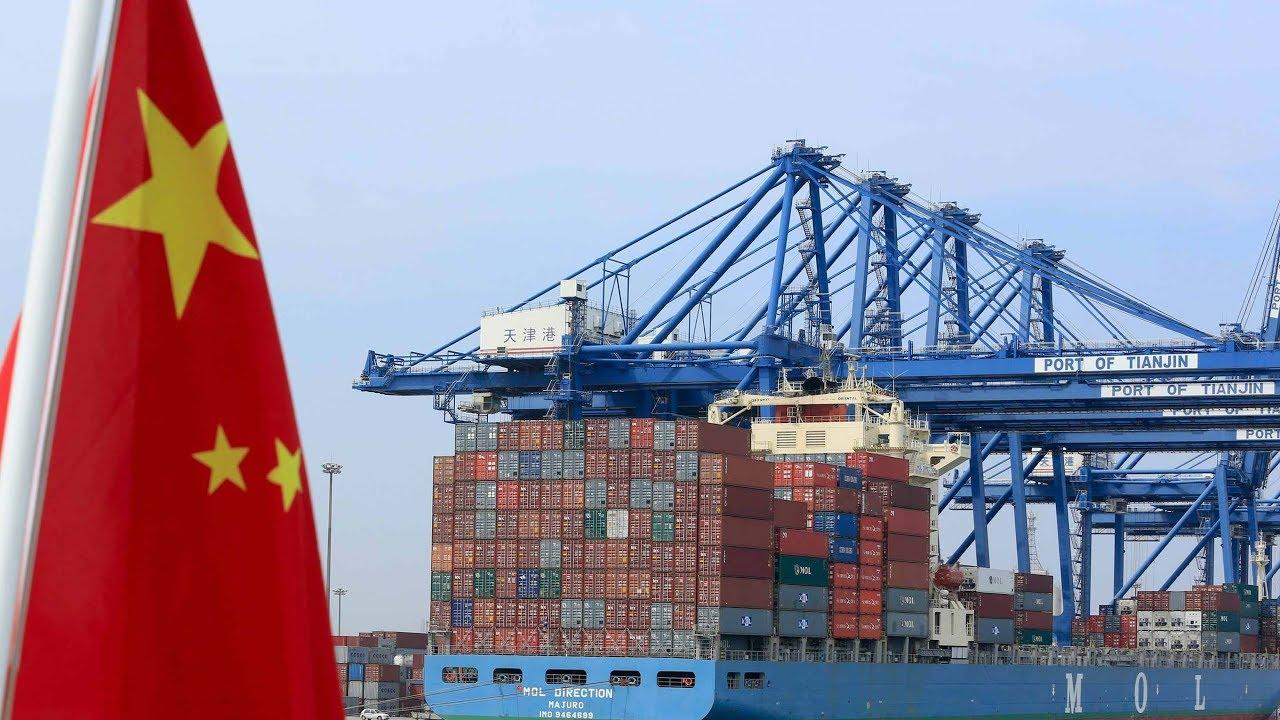
As the U.S. presidential election draws near, Chinese exporters are preparing for a potential shift in trade policies, particularly if Donald Trump returns to the White House. Mike Sagan, vice-president of supply chains at KidKraft, a toy-making company, plans to halve his China-based supply chain within a year if Trump wins, in response to the potential imposition of 60% tariffs on Chinese goods. This significant increase in tariffs is seen as a game-changer for many companies reliant on Chinese manufacturing.

Trump’s initial tariffs in 2018, which ranged from 7.5% to 25%, already prompted some firms, including KidKraft, to move production to countries like Vietnam and India. However, a new round of tariffs could further disrupt supply chains, leading to higher production costs and prices for U.S. consumers. Sagan notes that moving production outside of China is costly and comes with concerns over quality control, but the need to diversify supply chains is becoming urgent.

The sentiment is echoed by many other Chinese exporters. Of the 27 Chinese companies Reuters interviewed, 12 plan to accelerate relocation if Trump is re-elected, while others are considering opening overseas factories. Higher tariffs are expected to negatively impact Chinese exporters by shrinking profits, disrupting supply chains, and exacerbating the country’s ongoing economic challenges.

Matt Cole, co-founder of m.a.d Furniture Design, also expresses concern about the potential tariff increases. Though he hasn’t yet moved his production out of China, he is contemplating relocating to Southeast Asia if Trump wins. Cole’s hesitation stems from the fact that even after moving, many components would still need to be sourced from China, making the shift less cost-effective.

Picture background

Tariff Impact and Global Supply Chains

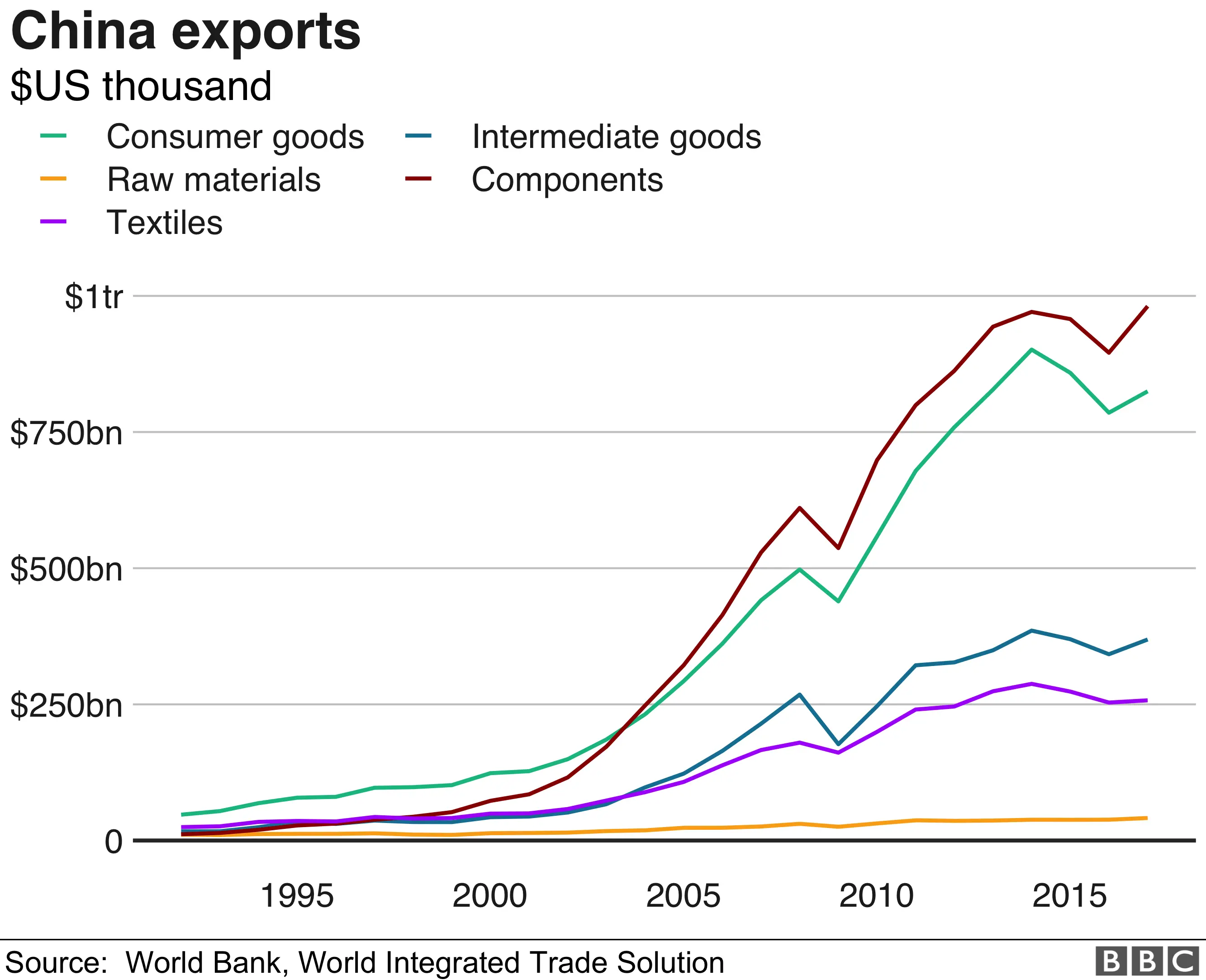
The 2018 tariffs, though beneficial for Southeast Asia as an assembly hub, did not significantly damage China’s overall economic growth or global manufacturing dominance. In fact, China has grown its share of global manufacturing as it redirected resources into factory production. However, the looming threat of 60% tariffs could have a more profound impact, especially on exporters operating with thin margins.

For instance, Zeng Zhaoliang, head of Guangzhou Liangsheng, which exports 30-40% of its cookers to the U.S., says a 60% tariff would be devastating. Many companies, like GL Wholesale, which has already lost 40% of its business since Trump’s presidency, are scouting alternative suppliers in countries like India and Vietnam. But even these regions are raising their prices, further complicating the situation.

The potential tariffs would not only hurt Chinese industries such as electric vehicles, solar panels, and batteries, but they also pose a risk to global supply chains. Trump’s aggressive stance on trade has caused Chinese companies to rethink their production strategies, with some opting to build factories overseas in anticipation of further global trade challenges.

China’s Response and Economic Outlook

Should Trump implement a new wave of tariffs, economists predict it could reduce Chinese economic growth by 0.4-0.7 percentage points in 2025 due to decreased investment and output cuts. In response, Beijing could deploy stimulus measures, export controls, or currency devaluation, but these steps carry their own risks, including debt accumulation and potential capital flight.

Most Chinese exporters hope Trump would moderate his stance on trade if he wins the presidency again. However, they acknowledge that further tariffs could severely impact their ability to operate. For instance, Yang Qiong, an executive at Chongqing Hybest Tools Group, states that her company would expand its facilities in Vietnam if Trump returns to office.

Experts warn that a second Trump term could disrupt China’s near-term economic growth and further challenge the global economic order that has benefited China. In contrast, Kamala Harris’s approach, while still expected to confront China on trade issues, is perceived as potentially less aggressive, allowing for a more measured response.

Conclusion

As the U.S. election nears, Chinese exporters are bracing for a potentially turbulent trade environment. While Trump’s return to power could lead to higher tariffs and significant supply chain shifts, a Harris presidency may offer a more tempered approach. Regardless, the prospect of further trade conflict underscores the need for companies to diversify their supply chains and adapt to an increasingly volatile global economic landscape.

Trump Campaign Accuses UK Labour Party of Interfering in U.S. Election

Donald Trump’s presidential campaign has accused the UK’s Labour Party, led by Prime Minister Keir Starmer, of “blatant foreign interference” in the U.S. election, after several volunteers from Labour traveled to support Kamala Harris’s campaign. The Trump campaign has filed a complaint with the Federal Election Commission (FEC), requesting an investigation into what it claims are illegal contributions from Labour to the Harris campaign.

While Labour Party volunteers have traditionally supported the Democrats in U.S. elections, this recent collaboration has sparked controversy. According to U.S. law, foreign nationals may volunteer for campaigns but are prohibited from making financial contributions. The Trump campaign’s complaint referenced media reports and a now-deleted LinkedIn post from a Labour official, which indicated that nearly 100 Labour staff would be assisting Harris’s campaign in the coming weeks.

The complaint further accused Labour of inspiring what it described as Harris’s “dangerously liberal policies and rhetoric.” Starmer, however, defended the volunteers, stating that they were working in their personal time and that this type of support for U.S. elections has been a long-standing practice.

Despite the controversy, experts suggest that even if Trump wins the presidency in November, the incident is unlikely to significantly affect U.S.-UK relations. Greg Swenson, chairman of Republican Overseas UK, believes Trump may move past the issue, though some “scar tissue” could remain.

This situation mirrors a previous case where Bernie Sanders’s campaign was fined by the FEC after Australia’s Labour Party funded flights and food for its volunteers supporting Sanders. Trump’s camp argues that Labour’s actions represent foreign interference in plain sight and is calling for accountability.