Yazılar

Hong Kong Stocks Drop as Stimulus Rally Fades; Japan’s Nikkei Leads Gains Across Asia

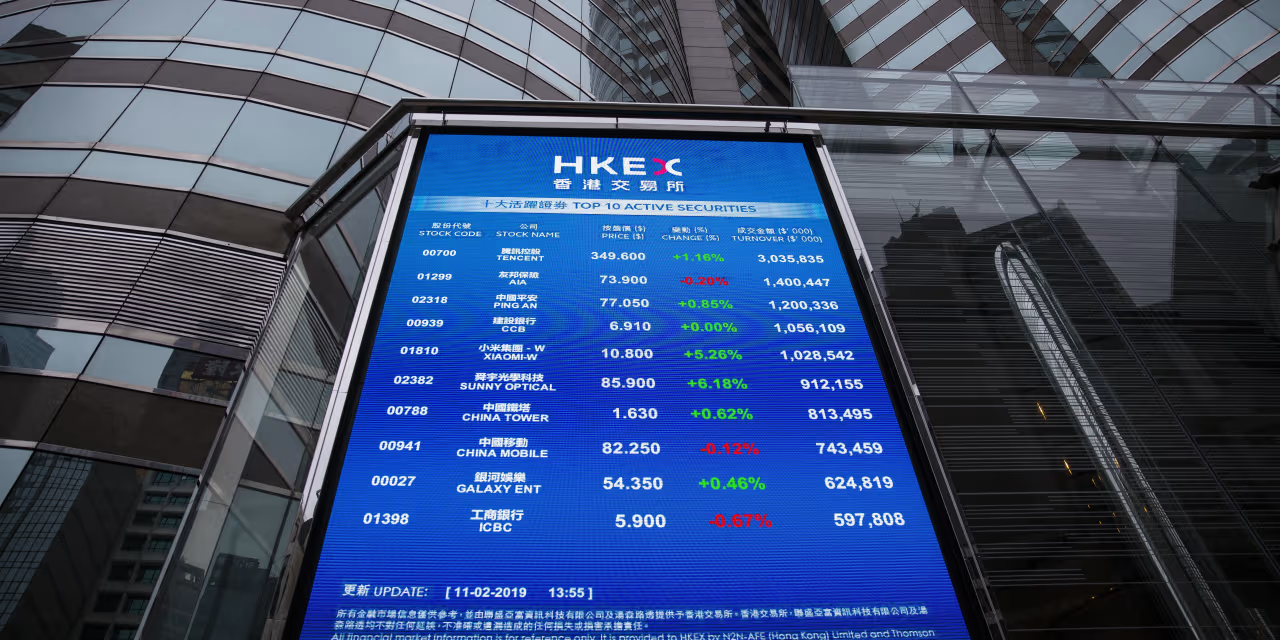
Hong Kong’s stock market tumbled on Thursday, with the Hang Seng index falling by 3% after a brief stimulus-fueled rally. This comes after the index surged over 6% on Wednesday, marking a 22-month high. The sudden downturn was driven by significant declines in the property and tech sectors, with the Hang Seng Mainland Properties Index dropping over 10%, led by Longfor Group Holdings and New World Development, which plunged 12.8% and 10%, respectively. The Hang Seng Tech Index also suffered a 6% loss.

While mainland Chinese markets remain closed until October 8 for holidays, investors are questioning the long-term impact of recent stimulus measures announced by Chinese authorities. Analysts, like Nomura’s chief China economist Ting Lu, urge caution, suggesting that future fiscal policies might lack clarity and could lead to market uncertainty.

Japan’s Markets Show Strength

Contrary to Hong Kong’s struggles, Japan’s Nikkei 225 surged 2.1%, leading gains across Asia, while the Topix rose 1.3%. Japan’s market gains were bolstered by a weakening yen, which hit 147.15 against the U.S. dollar, marking its largest single-day decline since June 2022.

Japan’s newly-appointed Prime Minister Shigeru Ishiba assured reporters that the current economic environment does not support an interest rate hike, following his meeting with Bank of Japan Governor Kazuo Ueda. These comments helped boost investor sentiment, further driving market performance.

Mixed Economic Data from Australia

Elsewhere, Australia’s S&P/ASX 200 index increased by 0.25% despite some mixed economic signals. The country’s Judo Bank Composite PMI for September dipped to 49.6 from 51.7 in August, signaling a contraction in private sector activity. Meanwhile, the Australian Bureau of Statistics reported a trade surplus of AU$5.64 billion for August, surpassing estimates but reflecting a slight decline from July’s AU$6.01 billion.

Other Key Updates

  • Japan: The au Jibun Bank Composite PMI for September stood at 52.0, reflecting slower growth in the private sector compared to August’s 52.9. The service sector PMI also showed softer expansion, at 53.1 in September versus 53.7 in August.
  • South Korea and Taiwan: South Korea’s markets were closed for National Foundation Day, and Taiwan’s markets remained shut as Typhoon Krathon brought severe weather to the region.
  • Middle East Conflicts: Geopolitical tensions in the Middle East continue to affect market sentiment globally. Israel launched a ground operation into Lebanon, and Iran retaliated with a ballistic missile strike following the death of Hezbollah leader Hassan Nasrallah.

U.S. Market Update

U.S. markets were relatively flat on Wednesday as investors weighed the risks of escalating Middle East conflicts. The S&P 500 inched up by 0.01% to 5,709.54, while the Dow Jones Industrial Average gained 39 points to close at 42,196.52. The Nasdaq Composite saw a modest rise of 0.08%, closing at 17,925.12.


 

India Emerges as a Top Global Market: Key Drivers and Investment Opportunities

India’s stock market has been on a remarkable upward trend in 2024, with the NSE Nifty 50 Index rising 18.7% and the iShares MSCI India ETF (INDA) gaining nearly 19%, its best performance since 2017. This surge, combined with India’s robust economic fundamentals, is drawing increased attention from global investors who view the country as a key player for long-term market outperformance.

Key Drivers of India’s Market Rally

  1. Technological Transformation in Banking: India’s banking sector is becoming increasingly tech-driven, with private sector banks leading the charge in digital adoption. This shift is improving operational efficiencies and contributing to GDP growth, while offering attractive valuations compared to other sectors.
  2. Infrastructure Investments: The Indian government has been investing heavily in infrastructure development. These projects are driving domestic growth, particularly in the steel and construction industries. Investors see this as a long-term growth driver, benefiting sectors such as real estate and industrials.
  3. Supply Chain Diversification from China: With global companies seeking alternatives to China, India is becoming a favorable destination for manufacturing. This shift supports India’s industrial growth and strengthens its position in global supply chains.
  4. Growing Consumer Spending: India’s young and growing middle class is driving consumer spending across various sectors, including real estate. Increased disposable incomes are spurring demand for larger homes and new office spaces, further bolstering the domestic economy.
  5. Lower U.S. Federal Reserve Interest Rates: India’s equity market is becoming more attractive as U.S. interest rates decline. Historically, Indian equities gain 3.73% for every 1% drop in the U.S. dollar versus the Indian rupee. If the Fed continues to cut rates, as expected, this could further fuel India’s market rally.

India Overtakes China in Emerging Markets

India has overtaken China as the largest emerging market in the MSCI All-Country World Index. With an expected annual earnings growth of 6-8% over the next five years, India is seen as a defensive play, especially given its favorable political relationships and status as the world’s largest democracy. Investors also appreciate India’s potential to attract foreign investment due to its stability compared to China.

India has consistently outperformed broader emerging markets. Over the past five years, the INDA fund has risen 77.2%, while the iShares MSCI Emerging Markets ETF (EEM) has only grown by 16%. This trend underscores India’s resilience and ability to compound growth over time.

Picture background

Risks to India’s Market Growth

Despite the optimism, there are risks to consider:

  • U.S. Federal Reserve Rate Cuts: A slower pace of rate cuts by the Fed could dampen enthusiasm for Indian equities. If the Fed reduces rates less aggressively, India’s market may not see the same level of gains.
  • Income Inequality: While the middle class is expanding, India’s wealth distribution remains highly unequal, with the top 10% of the population controlling nearly 50% of the national income. This could limit the broader economic impact of growth unless employment opportunities increase.
  • Political and Geopolitical Risks: Domestic political instability or changes in global trade relations could derail India’s economic progress. Barclays analyst Venugopal Garre warned that these factors could pose a threat to India’s long-term growth prospects.

Investment Opportunities in India

  • Financials: Investors are particularly bullish on India’s financial sector, which benefits from a combination of GDP growth, banking sector expansion, and digitalization. Portfolio managers like Krishna Mohanraj highlight HDFC Bank, ICICI Bank, and Axis Bank as top picks due to their strong balance sheets and technological investments. U.S. investors can access these banks through American Depository Receipts (ADRs) for ICICI and HDFC, while Axis Bank shares are available over-the-counter.
  • Infrastructure and Industrials: India’s infrastructure push continues to offer attractive opportunities for investment. Whitehaven Coal, an Australian mining company that supplies coal to India’s steel industry, is well-positioned to benefit from this trend. Infrastructure-linked industrial stocks may be expensive in some cases, but long-term growth potential remains high.
  • Real Estate: Real estate is becoming increasingly attractive as rising incomes drive demand for larger homes and new commercial spaces. Prestige Estates Projects is a top pick in this sector, and its shares are available to U.S. investors through over-the-counter markets. The industry is also benefiting from foreign investment, particularly in major cities where development is booming.

Conclusion

India’s stock market rally is supported by solid economic fundamentals, government initiatives, and favorable global trends. As the country continues to emerge as a leader among emerging markets, investors have numerous opportunities to capitalize on its growth story. Financials, infrastructure, and real estate are among the key sectors poised for long-term gains. However, risks related to global interest rates, income inequality, and political instability should be carefully monitored as the market continues its upward trajectory.


European Markets Set for Positive Opening Amid Anticipations of U.S. Interest Rate Cuts and Strong Asia-Pacific Performance

European markets are set to open higher on Tuesday, recovering from a slow start to September trading earlier in the week. Investors are showing optimism following a volatile August, with key indices like the U.K.’s FTSE, Germany’s DAX, France’s CAC 40, and Italy’s FTSE MIB expected to edge up. Analysts are closely watching economic data and interest rate expectations as the U.S. Federal Reserve prepares for its next meeting in mid-September, where a potential rate cut is on the horizon.

In Asia-Pacific, markets mostly posted gains overnight, driven by South Korea’s inflation easing to its lowest year-on-year level since March 2021. This positive momentum is contributing to the cautiously optimistic outlook in Europe. Meanwhile, Europe is awaiting key economic data, including Spanish unemployment figures and U.K. retail sales, which will further shape investor sentiment.

With U.S. markets reopening after the Labor Day holiday and a major jobs report on the way, September trading is expected to remain dynamic. Investors are bracing for what could be a challenging month, but the anticipation of interest rate cuts offers some support for market recovery in the coming days.