Yazılar

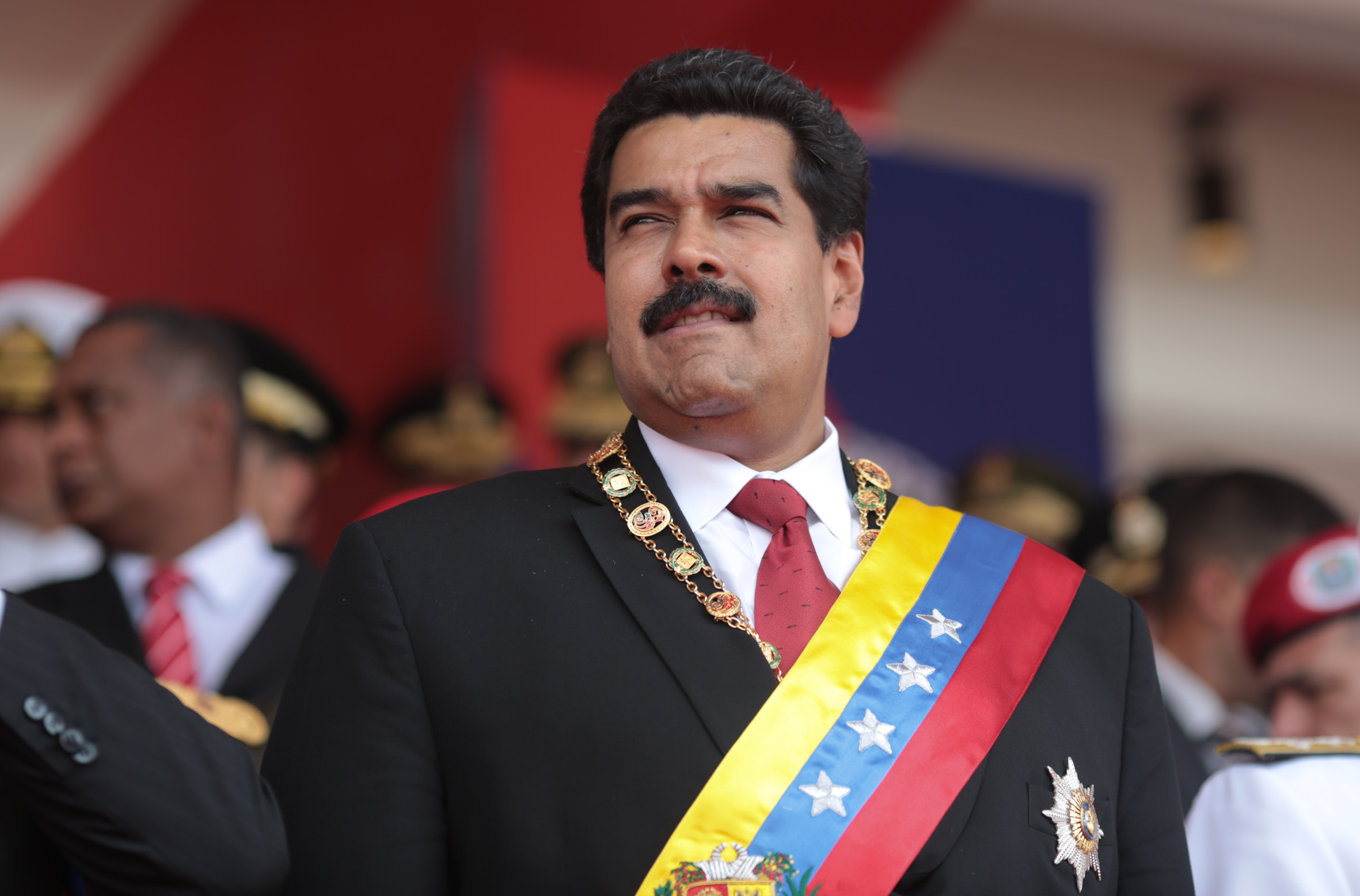
US Seizes Venezuelan President Nicolas Maduro’s Private Jet Amid Sanctions Violation Investigation

The United States has seized a private jet linked to Venezuelan President Nicolas Maduro, alleging its illegal acquisition violated US sanctions and involved other criminal activities. The Dassault Falcon 900EX, valued at $13 million, was seized in the Dominican Republic while undergoing maintenance and flown to Florida. US authorities, including Homeland Security Investigations and the Department of Justice, led the operation, citing that the jet was used exclusively by Maduro and Venezuelan military officials for international travel.

The seizure signifies a notable escalation in the already strained relations between the US and Venezuela. US officials have long targeted Venezuela’s government over alleged corruption, sanctions violations, and narco-terrorism activities. In response, the Venezuelan government condemned the jet seizure, labeling it “piracy” and accusing the US of aggressive coercion.

The plane, previously used in state visits by Maduro, was found to be registered under an individual’s name rather than the Venezuelan government. Investigations revealed that the jet had been smuggled out of the US through the Caribbean in April 2023. The US authorities believe the jet was part of a network of illicit assets benefitting Maduro’s regime.

Tensions between the US and Venezuela have heightened following Maduro’s disputed reelection in July. The US reimposed sanctions on Venezuela’s oil sector, citing electoral concerns and demanding credible election data. Meanwhile, millions of Venezuelans have fled the country due to economic collapse, further intensifying the humanitarian crisis.

This high-profile seizure marks another chapter in the US’s ongoing efforts to disrupt Maduro’s alleged illegal activities, adding to the over $2 billion in assets already frozen or seized by US agencies.
Fossil Discovery in Venezuela Uncovers Prehistoric Sea Cow Preyed Upon by Both Crocodile and Shark

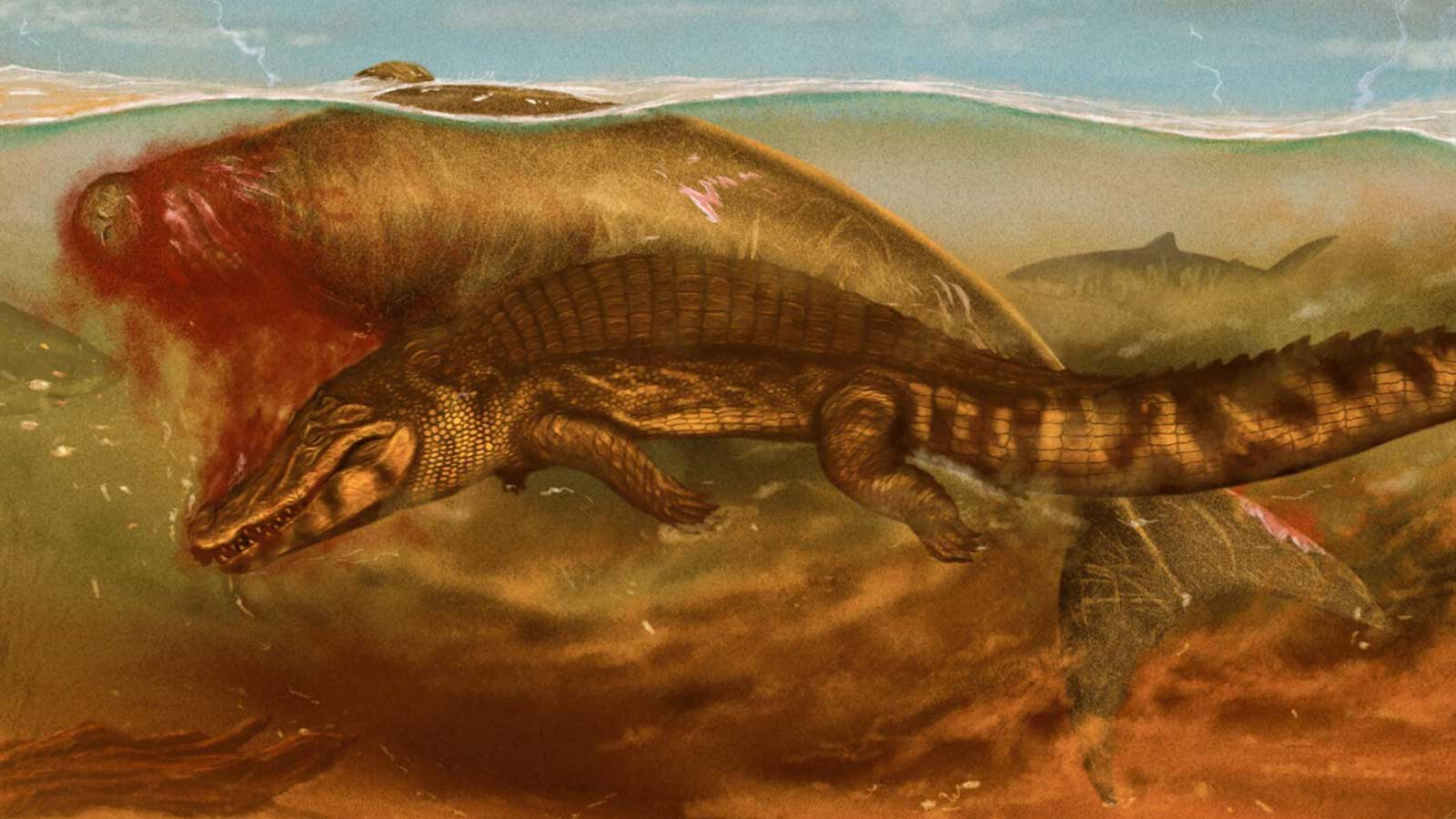
A rare fossil unearthed in Venezuela has revealed a prehistoric sea cow’s grim demise at the jaws of both a crocodile and a tiger shark approximately 15 million years ago. The fossil, belonging to an extinct species of dugong known as Culebratherium, provides a rare glimpse into a violent episode from the Miocene Epoch when this manatee-like marine mammal was attacked by two apex predators.

Scientists analyzed the fossil—a partial skull and 13 vertebrae—and identified evidence of a coordinated attack from both predators. The crocodile, likely a large species measuring between 13 and 20 feet long, appears to have struck first, leaving deep bite marks on the sea cow’s snout, likely in an attempt to suffocate it. Other large incisions suggest that the crocodile dragged the animal during a vicious “death roll,” a behavior seen in modern crocodiles that helps to subdue prey.

The sea cow’s ordeal, however, did not end with the crocodile. After the initial attack, a tiger shark—identified by the discovery of a fossilized tooth lodged in the sea cow’s neck—joined in, scavenging the remains. According to researchers, the bite marks found throughout the sea cow’s body, combined with their irregular distribution and varying depth, suggest that the tiger shark was primarily feeding on the leftovers from the crocodile’s assault.

Aldo Benites-Palomino, the study’s lead author and a doctoral student at the University of Zurich, remarked that finding evidence of two predators on a single specimen is extremely rare and offers invaluable insights into the dynamics of prehistoric food chains. The study, published in the Journal of Vertebrate Paleontology, sheds light on the interactions of marine predators and prey during the Miocene Epoch, roughly 11.6 to 23 million years ago.

Picture background

Despite the compelling findings, determining whether the sea cow was actively hunted by both predators or scavenged postmortem remains a challenge. Dean Lomax, a paleontologist from the University of Bristol who was not involved in the study, pointed out that without direct evidence, it is difficult to say with absolute certainty whether the dugong was alive during both attacks. He noted that it is possible the sea cow had already died and was later scavenged by the two predators.

The fossil discovery came about by chance when a farmer in southern Venezuela stumbled upon the remains in an area not previously known for fossils. Initially, the research team struggled to identify the fossils but eventually recognized them as belonging to a dugong, an ancestor of today’s manatees and dugongs, which can grow up to 16 feet in length.

Today, dugongs and manatees are still preyed upon by sharks and crocodiles, but their size makes them less vulnerable to attacks compared to their prehistoric ancestors. The rare fossil underscores the significance of conducting paleontological research in underexplored regions like South America, where new fossil sites can provide fresh insights into ancient ecosystems.

The research team believes this discovery highlights the need to continue searching for fossils in non-traditional areas such as Venezuela, where the untapped fossil record could hold many more secrets of prehistoric life. As Benites-Palomino expressed, “We have been going to the same fossil sites in North America and China for a long time, but every time we work in these new areas, we constantly find new fossils.”

Venezuelan Opposition Protests Intensify Amid Disputed Election Results

In Venezuela, the political opposition and its supporters have taken to the streets across the country, demanding recognition of their candidate Edmundo Gonzalez’s alleged victory in the presidential election held nearly three weeks ago. Despite the electoral authority’s declaration that President Nicolas Maduro secured a third term with just under 52% of the vote, the opposition, led by former lawmaker Maria Corina Machado, claims to have evidence showing Gonzalez won with 67% of the votes, based on tallies from 83% of voting machines.

The disputed election has plunged the economically struggling nation into a deep political crisis, exacerbated by a government crackdown on protests that has resulted in at least 2,400 arrests and 23 deaths. The international community has proposed various solutions, including a new election, but both the ruling party and the opposition have largely rejected these suggestions.

In Caracas, thousands of opposition supporters gathered in the eastern part of the city, where Machado called for international verification of the election results and urged her followers to continue their protests. Similar demonstrations took place in cities across Venezuela, including Maracaibo, Valencia, San Cristobal, and Barquisimeto, with many protesters carrying Venezuelan flags and copies of voting tallies as symbols of their demand for electoral transparency.

The protests have also resonated with the Venezuelan diaspora, with gatherings reported in cities like Mexico City, where nearly 1,000 people rallied in support of a free Venezuela. Many of these expatriates, driven out by the country’s severe economic and political turmoil, expressed hope for an end to Maduro’s rule and the possibility of returning to their homeland.

Maduro, in response, addressed his supporters at Miraflores Palace, dismissing international criticism and asserting Venezuela’s sovereignty. He promised economic growth despite the country’s severe downturn, which has seen a loss of over 73% of its GDP since 2013. While some countries like Russia and China have congratulated Maduro on his victory, others, including many Western nations, have called for the full publication of election results.

As the opposition continues to press for recognition of its candidate’s victory, their options appear to be narrowing, with international focus gradually shifting away from the crisis. However, Latin American leaders are expected to discuss the situation during a gathering in the Dominican Republic, where the crisis in Venezuela will likely be a key topic of conversation.