
Yazılar

Applied Intuition Surges to $15 Billion Valuation After $600 Million Investment Boost

Applied Intuition, a leading autonomous vehicle software firm, has secured $600 million in a new funding round and tender offer, doubling its valuation to $15 billion, underscoring a renewed investor confidence in the self-driving vehicle sector.

The round was co-led by BlackRock-managed funds and Kleiner Perkins, with additional support from Franklin Templeton and the Qatar Investment Authority. The funding marks a significant jump from the startup’s previous valuation of $6 billion in March 2023, which included backing from Porsche—its first investment from an automaker.

Founded in 2017 and based in Mountain View, California, Applied Intuition develops software platforms for autonomous systems used in vehicles, defense, and logistics. The company counts major automotive brands like Toyota and Volkswagen among its customers.

CEO Qasar Younis stated the funds would fuel expanded investments in intelligent mobility technology, aiming to integrate autonomous capabilities into a wide range of vehicles and machinery.

Applied Intuition’s rise comes amid a broader resurgence of investor interest in autonomous driving, bolstered by expectations of regulatory easing under the Trump administration, including potential exemptions from certain safety standards.

Last week, the company also announced a new partnership with OpenAI, aimed at embedding generative AI into driving experiences to create more personalized vehicle behavior.
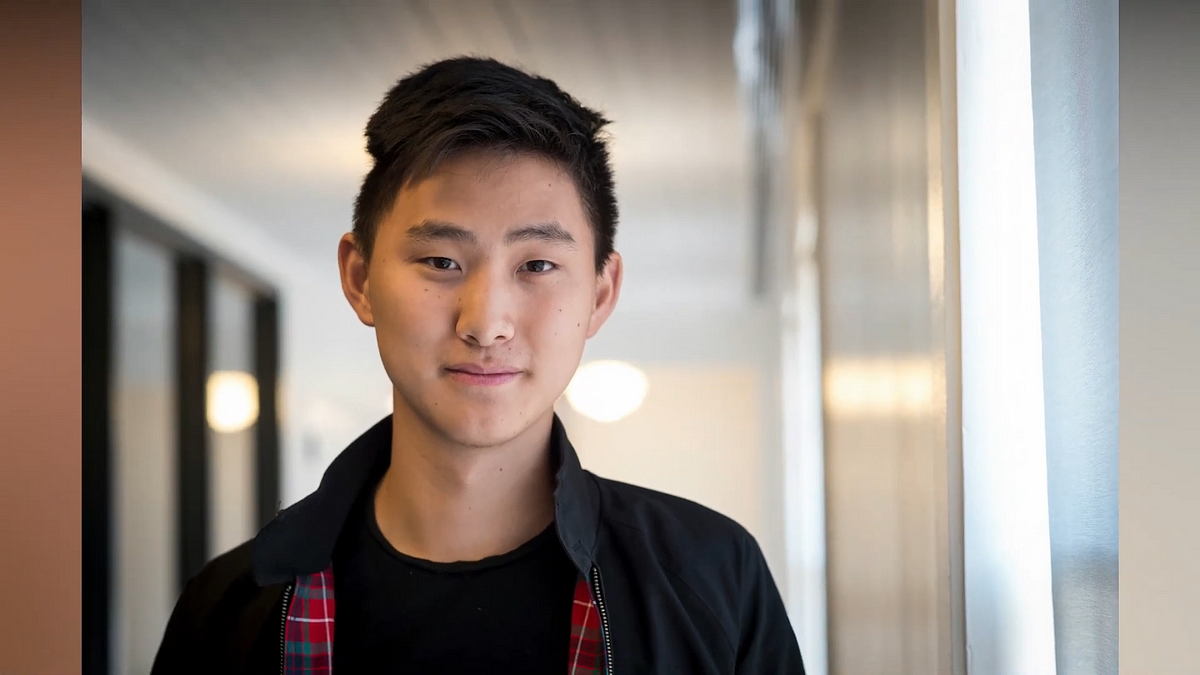
Meta Poaches 28-Year-Old Scale AI CEO in $14.3 Billion Stake Deal

Meta, the parent company of Facebook, has taken a 49% stake in the data-labeling startup Scale AI for $14.3 billion, valuing the company at $29 billion. As part of the deal, Scale’s 28-year-old CEO Alexandr Wang will join Meta to lead its new superintelligence efforts, marking a major move in Meta’s artificial intelligence strategy.

Meta confirmed plans to deepen collaboration on data production for AI models, but did not disclose financial details publicly. Sources close to the discussions said the primary motivation behind the multibillion-dollar investment was securing Wang’s leadership for Meta’s superintelligence unit.

Wang, a Los Alamos, New Mexico native born to Chinese immigrant physicists, dropped out of MIT to co-found Scale AI. He quickly gained acclaim as one of Silicon Valley’s most promising entrepreneurs, achieving billionaire status in his twenties. His influence extends into Washington D.C., where he has testified before Congress and helped secure government contracts for Scale.

Meta’s AI efforts have faced challenges recently, including staff departures and delays in launching open-source AI models that could compete with Google, OpenAI, and China’s DeepSeek. By recruiting Wang—a business-focused leader rather than a research scientist—Meta CEO Mark Zuckerberg is betting on a new approach to revitalize its AI ambitions.

Scale’s chief strategy officer, Jason Droege, will serve as interim CEO following Wang’s transition. Despite the large investment, Meta does not plan to take a board seat at Scale. A select group of Scale employees will also join Wang at Meta, while Wang will retain his seat on Scale’s board.

The $14.3 billion investment ranks as Meta’s second-largest acquisition after its $19 billion WhatsApp buyout. It remains uncertain whether the deal will face regulatory review amid ongoing antitrust scrutiny faced by Meta, which has been sued by the U.S. Federal Trade Commission for allegedly stifling competition via acquisitions like Instagram and WhatsApp.

Founded in 2016, Scale AI plays a pivotal role in providing accurately labeled data essential for training advanced AI models such as OpenAI’s ChatGPT. The company uses platforms like Remotasks and Outlier to manage gig workers who manually label data. Scale was valued at nearly $14 billion in a May 2024 funding round backed by Nvidia, Amazon, and Meta.

While the deal represents a windfall for early investors like Accel and Index Ventures—who can now sell half their stake—it may raise concerns among Scale’s AI lab clients, who might fear Meta gaining insight into competitors’ data priorities through Wang’s ongoing board membership.

Glean Reaches $7.2 Billion Valuation Amid AI Investment Surge

AI search startup Glean announced on Tuesday that it has reached a valuation of $7.2 billion following its latest funding round — the company’s third capital raise in under two years. This represents a valuation increase of nearly 57% since its previous round in September, where its value had already more than doubled in just over six months, highlighting continued strong investor demand for AI-driven companies.

The Palo Alto-based enterprise AI firm secured $150 million in this latest round, led by asset management firm Wellington Management. As public markets remain uncertain, many startups like Glean are choosing to remain private longer, raising significant late-stage funding. According to Michael Ashley Schulman, partner at Running Point Capital Advisors, “Founders avoid the volatility of public markets and employees receive secondary-market liquidity via structured rounds.”

Founded in 2019 by former Google search engineers, Glean has surpassed $100 million in annual recurring revenue in its last fiscal year. The company develops AI-powered search tools and large language models that provide businesses with personalized query responses, aiming to optimize enterprise productivity and internal information management.

Glean’s 72x valuation multiple on revenue is considered aggressive, but Schulman noted that investors are receiving “early access to a franchise,” particularly given that the company is currently cash-flow positive.

Earlier this year, Glean introduced its Glean Agents platform, which enables businesses to automate various operations through AI. The company expects the platform to facilitate 1 billion agent actions by the end of 2025. Industry leaders have pointed to AI-based agents as one of the most transformative applications of artificial intelligence. Microsoft CEO Satya Nadella has also highlighted how AI agents could disrupt the long-dominant software-as-a-service (SaaS) business model.

The AI sector continues to attract robust global investment as enterprises and governments pursue artificial intelligence for diverse use cases such as drug discovery, infrastructure management, and productivity enhancement.