Yazılar

Ericsson’s shares surge 13% after profit beat and minimal tariff concerns

Swedish telecoms giant Ericsson saw its shares soar more than 13% on Tuesday, marking its strongest single-day rise since 2018, after the company reported better-than-expected quarterly earnings and dismissed concerns over U.S. tariffs.

Adjusted EBIT (earnings before interest and taxes) — excluding restructuring costs — reached 15.4 billion Swedish crowns ($1.62 billion) for the quarter ending September, exceeding analysts’ forecasts of 14.1 billion crowns, according to an Infront poll.

The company attributed its strong performance to ongoing cost savings and its leading market share in North America, where it has outpaced rival Nokia in the race to deploy 5G infrastructure. Ericsson’s finance chief Lars Sandström told Reuters that while no firm is entirely immune to tariffs, the company currently sees “no additional impact going forward.”

Although total net sales fell 9% year-on-year to 56.2 billion crowns, they still surpassed expectations of 55.7 billion. Sales in the Americas declined 8% compared to 2024’s strong performance, which benefited from major customer investments and network deliveries.

Ericsson also announced a new five-year partnership with Vodafone to modernize programmable networks and confirmed the completion of its Iconectiv sale, generating a one-off profit of 7.6 billion crowns — potentially paving the way for higher dividends or a share buyback program.
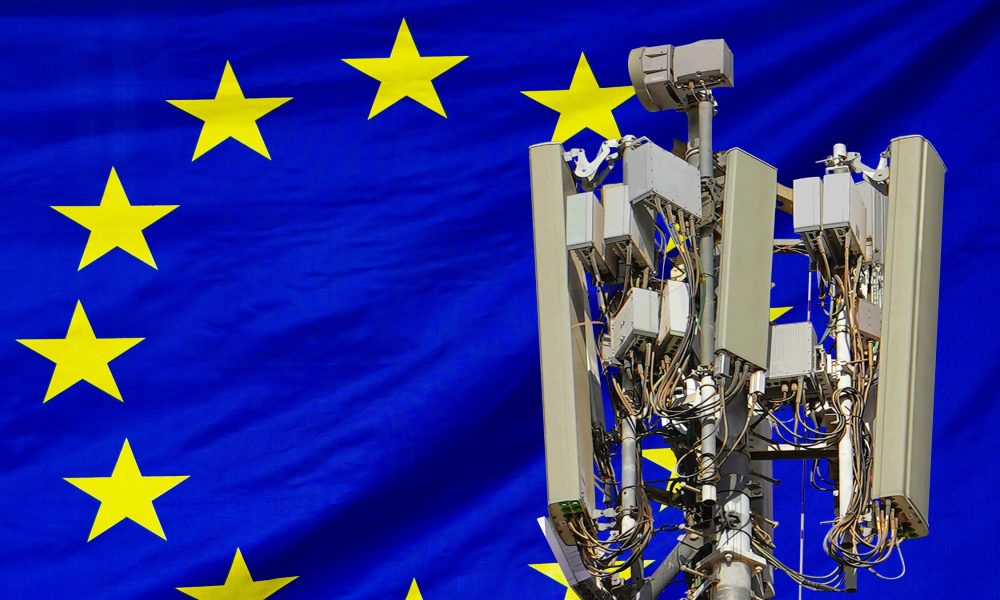
European telecom firms warn against EU deregulation push, fear market ‘re-monopolisation’

A group of European telecom companies, including Vodafone, Iliad, and 1&1, have jointly criticized the European Commission’s proposal to relax regulations on fixed broadband networks, arguing that such a move could reverse progress on market competition and fiber optic rollout.

In an open letter published Thursday, the companies expressed concerns that loosening regulations for dominant operators—typically former monopolists such as Deutsche Telekom in Germany—would lead to a “re-monopolisation” of national markets and undermine the EU’s digital goals.

Pushback against deregulation

The European Commission is reviewing rules that currently require dominant network owners to allow competitors access to their infrastructure under regulated terms. The proposal under consideration would ease those obligations, particularly in markets deemed to have improved competition.

However, the signatories of the letter argue that such deregulation would be a “step backwards” for Europe. They warn it would:

  • Contradict the EU’s own pro-competition policies,

  • Stifle the deployment of fiber optic networks,

  • Reinforce the dominance of historical operators in national markets.

“This would undo years of progress and hurt consumer choice,” the letter states.

Fiber optic rollout remains contentious

The development and expansion of fiber-to-the-home (FTTH) networks remains a divisive issue across Europe. Smaller telecoms argue that the incumbent operators—who control much of the legacy infrastructure—already enjoy significant advantages, and further deregulation would only deepen their dominance.

National developments reflect broader tension

Earlier in July, Germany’s Bundestag passed new legislation aimed at accelerating the rollout of fiber and mobile networks. However, critics say that without firm regulatory oversight, smaller providers risk being squeezed out of lucrative markets, undermining investment diversity.

With the EU pushing for widespread gigabit connectivity by 2030, the tension between market liberalization and infrastructure control is emerging as a key regulatory battleground.

Vodafone Achieves World’s First Satellite Video Call with a Regular Smartphone

Vodafone has announced a groundbreaking achievement in mobile communications by successfully making the world’s first satellite video call using a standard smartphone. The call was made from a remote location without any traditional network coverage, demonstrating the potential of satellite connectivity to bridge connectivity gaps. The company plans to roll out this technology to its users across Europe later this year and into 2026, marking a significant step toward expanding mobile access to underserved areas.

The historic call took place on Monday, with Vodafone’s CEO Margherita Della Valle receiving a video call from company engineer Rowan Chesmer, who was stationed in the Welsh mountains, an area with no cellular signal. The call was made using a satellite connection, requiring no specialized hardware or modifications to the smartphone. “We were using the only satellite service that can offer a full mobile experience with a normal device, so you get everything from voice to text to video data transmission,” Della Valle stated. She emphasized Vodafone’s commitment to making this service available to customers as soon as possible.

The technology behind this breakthrough is powered by AST SpaceMobile’s constellation of five BlueBird satellites in low-Earth orbit. These satellites enable transmission speeds of up to 120 megabits per second, allowing users to make calls, send messages, and stream video content without needing traditional mobile towers. Unlike other satellite services that typically require specialized equipment, Vodafone’s approach ensures seamless integration with existing smartphones.

Vodafone is a key investor in AST SpaceMobile, alongside major industry players such as AT&T, Verizon, and Google. The collaboration reflects a broader push within the telecommunications industry to extend coverage to remote and rural areas using satellite technology. As Vodafone moves forward with the deployment, the success of this initiative could reshape mobile connectivity worldwide, making reliable service accessible even in the most isolated locations.