
Yazılar

Wall Street Sees Gains Ahead of Megacap Earnings and Presidential Election

Wall Street closed on a positive note on Monday, buoyed by anticipation of key earnings releases from major tech companies and the nearing U.S. presidential election on November 5. Additionally, market sentiment improved as recent developments in the Middle East did not affect global energy supplies. Although Israel responded to an Iranian missile strike earlier this month, the targeted sites focused on missile facilities around Tehran rather than on energy infrastructure, alleviating immediate supply concerns.

Tech Stocks Drive Market Gains

The “Magnificent Seven” group of megacap tech stocks, which have been pivotal to Wall Street’s recent highs, saw modest gains as Alphabet, Meta, and Apple rose ahead of their earnings reports. Nvidia’s recent ascent as the world’s most valuable company added to the focus, with investors closely watching for AI-related spending trends in the upcoming earnings.

In total, 169 S&P 500 companies are expected to report earnings this week, with guidance on capital expenditures anticipated to provide insights into future tech investments. Microsoft and Amazon are also scheduled to release earnings, adding to the week’s tech-heavy reporting.

Market Performance by the Numbers

  • S&P 500: Up 15.4 points (0.27%) to 5,823.52
  • Nasdaq Composite: Up 48.58 points (0.26%) to 18,567.19
  • Dow Jones Industrial Average: Up 273.17 points (0.65%) to 42,387.57
  • Russell 2000: Outperformed major indexes with a 1.63% jump, showing strength in small-cap stocks, which often lead during economic rebounds.

Paul Christopher, head of Global Investment Strategy at Wells Fargo, noted that gains in small-cap stocks may indicate market optimism for a “soft landing,” or recovery with minimal recessionary impact. He also observed potential investor shifts in response to expectations surrounding a possible Trump administration return.

Sectoral Performance and Corporate Highlights

  • Energy Sector: Fell 0.65%, as crude prices dropped 5% amid eased supply worries.
  • Financial Sector: Led sectoral gains, benefiting from stable economic indicators.

Other significant moves included Boeing, whose shares fell 2.8% after the company announced a stock offering worth up to $22 billion. This move aims to bolster Boeing’s finances as it faces financial pressure from an ongoing worker strike. Meanwhile, industrial giant 3M saw a 4.4% increase after JP Morgan raised its price target on the company’s stock, positively impacting the Dow.

Economic Data and Election Impact

Investors are also awaiting economic data this week, particularly the Personal Consumption Expenditure Price Index due on Thursday, a key inflation gauge for Federal Reserve policy assessment. The broader market is also factoring in election dynamics, with some anticipation of a second term for former President Donald Trump, though the race remains close.

Advancing issues led decliners on the NYSE by a ratio of 1.88-to-1, reflecting a generally optimistic market sentiment. The S&P 500 posted 15 new 52-week highs, while the Nasdaq Composite recorded 101 new highs, signaling investor confidence despite economic and geopolitical uncertainties.

 

European Markets Set to Maintain Positive Momentum into New Trading Week

European stock markets are expected to continue their upward trajectory as the new trading week begins, following strong gains in both Asia overnight and Wall Street’s rally last Friday. Positive sentiment is being driven by a combination of encouraging economic data and strong performances across global markets.

Indices across Europe are poised to open higher, with U.K.’s FTSE 100 predicted to rise by 27 points to 8,360, Germany’s DAX up 75 points to 19,196, France’s CAC 40 adding 31 points to 7,578, and Italy’s FTSE MIB set to climb 1 point to 33,594, according to data from IG.

Boost from U.S. Jobs Report

The strong momentum in European markets stems partly from last week’s U.S. nonfarm payrolls report, which revealed that the U.S. economy added 254,000 jobs in September, well above the 150,000 jobs predicted by economists polled by Dow Jones. This positive news from the U.S. labor market reinforced confidence that the Federal Reserve may achieve a “soft landing” for the U.S. economy, avoiding a sharp economic downturn while managing inflation. The optimism carried through to European stocks, with investors hopeful that stronger-than-expected U.S. data will support global economic stability.

Asia-Pacific Markets Lead the Charge

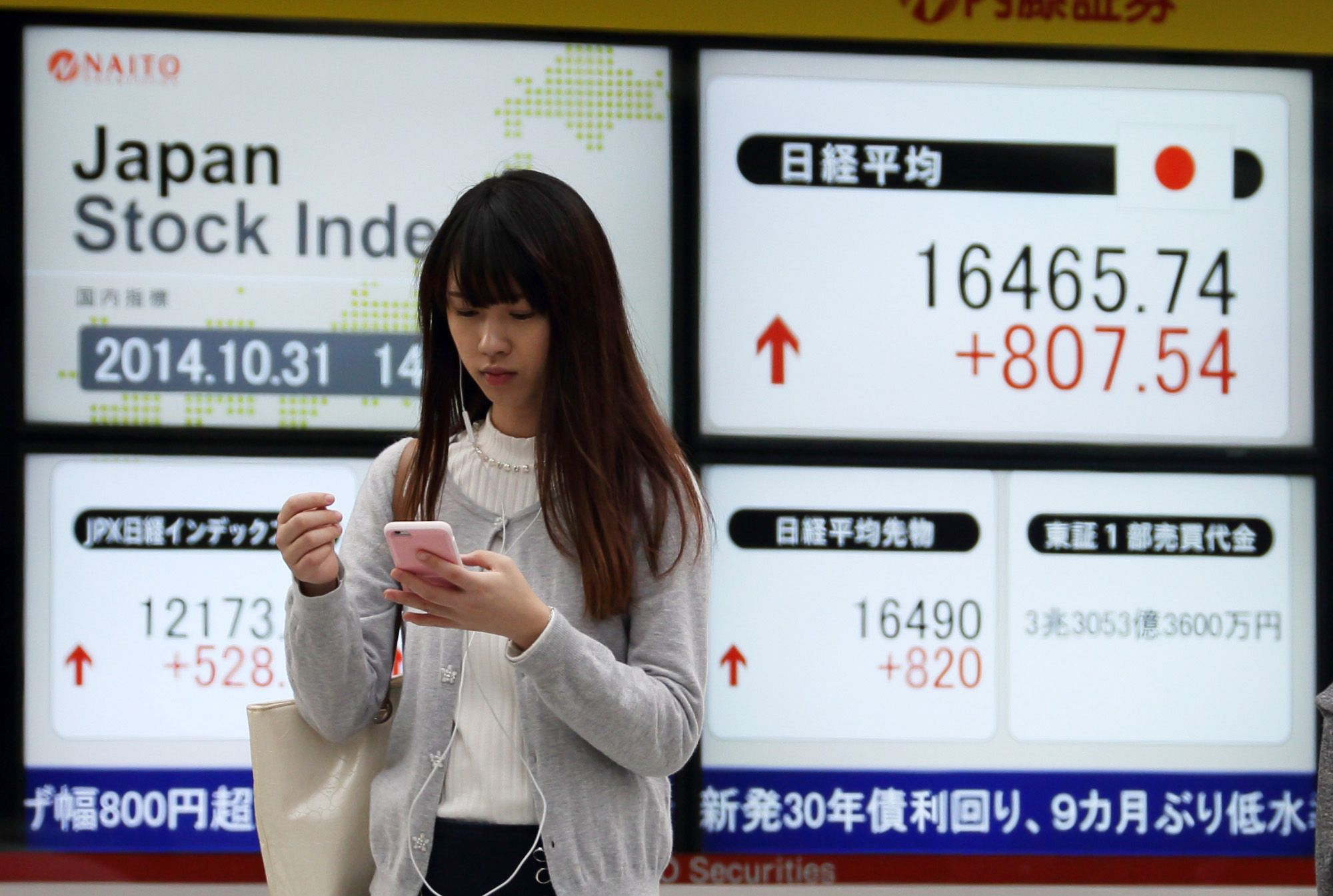
Asia-Pacific markets also posted notable gains overnight, led by Japan’s Nikkei 225, which surged nearly 2% as investors anticipated a busy week of central bank announcements. Major banks, including the Bank of Korea, the Reserve Bank of New Zealand, and the Reserve Bank of India, are set to make decisions that could influence market conditions in the region.

Calm Start for U.S. Stock Futures

On Sunday evening, U.S. stock futures were calm as investors prepared for the week ahead. Following Friday’s rally, which was driven by the robust jobs report, Wall Street looks to maintain its positive momentum. Investors are keenly watching for more indications that the Fed might navigate the economy through inflation without causing a severe recession.

Key Data Releases in Europe

In terms of economic data, the U.K. will release its Halifax House Price Index on Monday, which will provide insights into the state of the British housing market. Meanwhile, European retail sales data is also due, offering a snapshot of consumer spending trends across the continent.

As Europe enters the new trading week, market sentiment remains buoyant, with optimism surrounding global economic stability and confidence in the ability of central banks to steer their economies through the complex challenges ahead.


Asia-Pacific Markets Surge as Tech Stocks Lead Gains

Asia-Pacific markets rallied on Thursday, tracking a strong performance on Wall Street driven by a tech sector surge. The Nikkei 225 in Japan jumped 2.77%, while the broader Topix rose 1.91%. Semiconductor stocks were among the biggest gainers, with Tokyo Electron up 3.56%, Advantest climbing 7.18%, and Renesas Electronics rising 2.23%. SoftBank Group, which holds a stake in chip designer Arm, also surged 7.2%.

In South Korea, the Kospi gained 1.41%, while the Kosdaq added 2.53%. Semiconductor giants SK Hynix and Samsung Electronics were up 6% and 1%, respectively.

Taiwan’s Taiex climbed over 3%, with Taiwan Semiconductor Manufacturing Company (TSMC) up 5.13% and Hon Hai Precision Industry (Foxconn) gaining 4.13%. The tech rally was fueled by Nvidia CEO Jensen Huang’s optimistic outlook on AI chip demand, boosting sentiment across Asia’s semiconductor sector.

Shares of Seven & i Holdings surged as much as 7.3% after reports indicated that Alimentation Couche-Tard is considering raising its offer for the Japanese retail giant, following an initial $39 billion buyout approach. The revised offer is expected to be significantly higher.

Economic Data: Japan’s producer price index (PPI) rose 2.5% year-on-year in August, below expectations of 2.8% and down from July’s 3%. This data is closely monitored by the Bank of Japan, which has signaled its intention to raise interest rates further in the coming months. Hong Kong’s PPI for the second quarter is due later today, while India’s consumer price index (CPI) for August is expected to rise 3.5% year-on-year, slightly lower than the previous month’s 3.54%.

In other news, Chinese home appliance manufacturer Midea Group is preparing to price its shares at the top of the range, aiming to raise at least $3.46 billion in its upcoming Hong Kong listing, the largest in the city since May 2021.

Elsewhere in Asia: Australia’s S&P/ASX 200 climbed 0.57%, Hong Kong’s Hang Seng advanced 0.81%, while mainland China’s CSI 300 remained flat.

Wall Street Overview: In the U.S., the S&P 500 gained 1.07%, the Nasdaq Composite rallied 2.17%, and the Dow Jones Industrial Index edged up 0.31%. Investors were buoyed by a higher-than-expected rise in core CPI and are now looking ahead to the release of the producer price index for August, with expectations of a 0.2% increase in both headline and core inflation.