Yazılar

CNN to launch $6.99 “All Access” streaming subscription on October 28

CNN will debut a new $6.99-per-month subscription tier called “All Access” on October 28, marking its latest move into streaming three years after Warner Bros Discovery shut down CNN+.

The new U.S.-only service will combine live and on-demand video programming with full access to CNN.com articles and a library of CNN Originals, the network said on Thursday. The “All Access” package expands on CNN’s existing Basic tier, which launched last year and offers unlimited digital content and subscriber-only articles.

Current pay-TV subscribers will be able to log in to the new service at no extra cost, while digital-only users can subscribe monthly or opt for an annual plan at $69.99, discounted to $41.99 for the first year if purchased by January 5.

CNN CEO Mark Thompson, the former New York Times executive credited with driving its digital transformation, has been pushing to modernize CNN’s business as Warner Bros Discovery seeks to offset falling cable revenue and refocus on streaming.

“This is an essential step in CNN’s evolution,” said Alex MacCallum, CNN’s executive vice president for digital products and services.

The launch comes as rival Fox Corp rolled out its own subscription-based service, Fox One, in August for $19.99 per month, signaling intensifying competition for paid digital news audiences.
Larry Ellison reemerges as tech and media power player

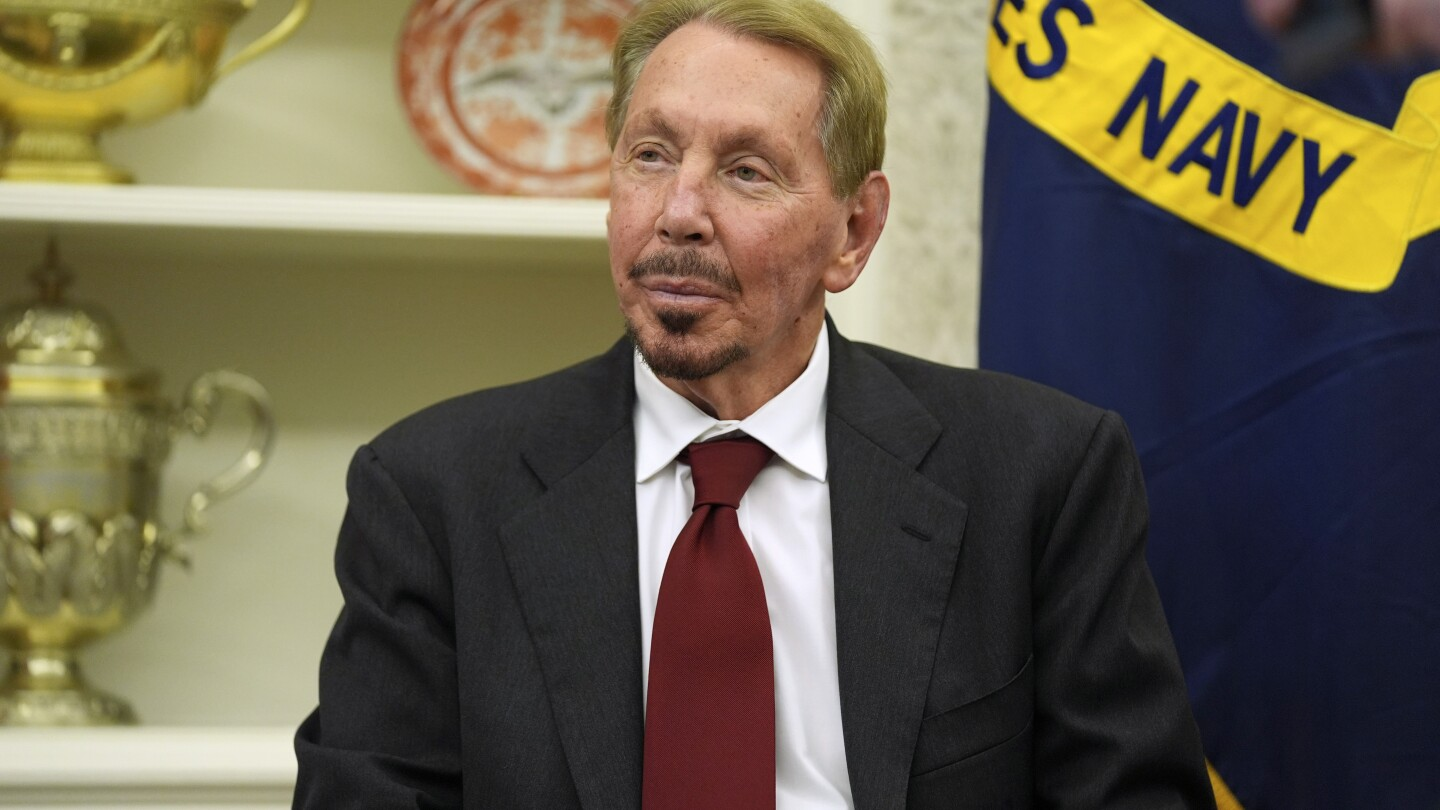
Forty-eight years after co-founding Oracle, Larry Ellison is once again at the center of global business headlines. Oracle’s stock surged 35.9% on the back of blockbuster cloud computing deals tied to AI, propelling Ellison’s net worth to nearly $400 billion—second only to Elon Musk.

Adding to his influence, Ellison’s family-controlled Paramount is preparing a bid for Warner Bros Discovery, a move that could dramatically reshape Hollywood. At the same time, his son David Ellison has begun steering CBS News with a more conservative tilt, hiring former Hudson Institute CEO Kenneth Weinstein as ombudsman and reportedly courting journalist Bari Weiss for a leadership role.

Ellison has also entrenched Oracle in the TikTok saga, providing U.S. infrastructure for the Chinese-owned app since 2022 amid national security scrutiny. Behind the flash of yachts, Hawaiian islands, and movie cameos—he played himself in Iron Man 2—Ellison has steadily bet big on AI.

Oracle became a major AI landlord, securing marquee clients including Meta, Elon Musk’s xAI, and OpenAI, which committed to a $300 billion compute deal over five years. This pivot helped Oracle’s booked revenue soar more than four-fold to $455 billion.

Unlike rivals Microsoft, Amazon, and Google, Oracle chose not to build custom AI chips, instead deepening ties with Nvidia. At a 2024 dinner with Musk and Nvidia CEO Jensen Huang, Ellison reportedly said, “Please take our money”—and soon after, Oracle secured GPU supplies that fueled the Stargate project with OpenAI.

Oracle’s cloud revival—after a failed 2016 launch—has proven cheaper and more adaptable. Its rapid scaling during the Zoom pandemic traffic surge and smooth takeover of TikTok’s U.S. user data in 2022 highlighted technical strength.

Still, huge risks remain. Oracle outsources critical infrastructure like land, data centers, and power, making it reliant on partners. Analysts warn that dependence on a small group of AI clients—particularly OpenAI—could expose Oracle to shocks if those firms stumble.

Ellison’s career has long swung between hubris and vindication, but with AI reshaping the tech landscape, the Silicon Valley “bad boy” may yet have the last laugh.

Warner Bros Discovery Sues Midjourney Over Use of Superman, Scooby-Doo in AI Images

Warner Bros Discovery (WBD.O) has filed a lawsuit against AI photo-generation company Midjourney, accusing it of illegally using iconic characters such as Superman, Batman, Wonder Woman, Bugs Bunny, and Scooby-Doo to train and generate images without authorization.

In a complaint lodged in Los Angeles federal court, Warner Bros alleged that Midjourney built its platform by exploiting copyrighted material, enabling subscribers to create high-quality, downloadable depictions of its characters “in every imaginable scene.” The lawsuit claims Midjourney knowingly disregarded copyright protections, pointing to the company’s prior restriction on video generation from infringing images, a safeguard that was recently lifted and promoted as an upgrade.

“Midjourney has made a calculated and profit-driven decision to offer zero protection for copyright owners, even though it knows the breathtaking scope of its piracy,” the complaint states. Warner Bros is seeking damages, disgorgement of profits, and an injunction to stop further unauthorized use.

The action follows a similar case brought in June by Walt Disney and Comcast’s Universal, which accused Midjourney of misusing characters including Darth Vader, Shrek, Bart Simpson, and Ariel from The Little Mermaid.

Founded in 2022 by David Holz, San Francisco-based Midjourney has grown rapidly, amassing nearly 21 million users and generating an estimated $300 million in revenue in 2024. The company has previously argued that training AI models on copyrighted works falls under “fair use,” allowing for the “free flow of ideas and information.”

Warner Bros, whose portfolio spans DC Comics, Hanna-Barbera, Cartoon Network, and Turner Entertainment, said protecting its intellectual property is vital to safeguarding its creative partnerships and investments. “The heart of what we do is develop stories and characters to entertain our audiences,” a company spokesperson said.

The case is Warner Bros Entertainment Inc et al v Midjourney Inc, U.S. District Court, Central District of California, No. 25-08376.