
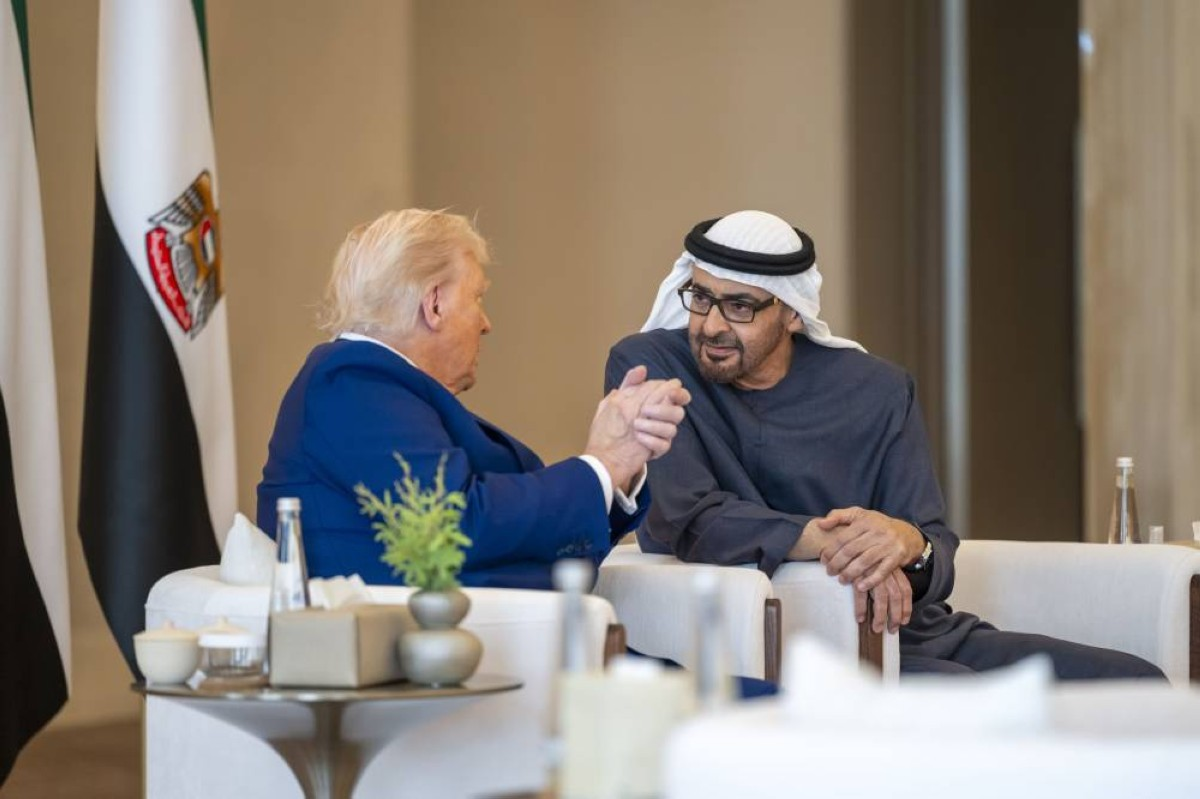
The United Arab Emirates (UAE) and the United States have signed a historic technology agreement to construct the largest artificial intelligence campus outside the U.S., signaling a major policy shift that clears the way for the UAE to access advanced U.S. AI chips, particularly from Nvidia.
Finalized during President Donald Trump’s visit to Abu Dhabi, the deal marks a significant easing of restrictions that previously barred such transfers over U.S. concerns about China’s access to critical technologies.
Key Components of the Agreement:
-
The AI campus, covering 10 square miles (25.9 km²), will be located in Abu Dhabi and have 5 gigawatts of power, enough to support 2.5 million Nvidia B200 chips, per estimates by Rand Corporation analyst Lennart Heim.
-
The facility will be developed by G42, a UAE state-backed firm, but operated and managed by American companies, ensuring compliance with U.S. security protocols.
-
The UAE has committed to build or finance data centers in the U.S. that are at least as powerful as those in the UAE, reinforcing reciprocal investment and security alignment.
Chip Access and U.S. Industry Involvement:
-
Sources say the UAE could be permitted to import up to 500,000 of Nvidia’s most advanced chips annually beginning in 2025.
-
The agreement includes support from U.S. tech giants:
-
Amazon Web Services will collaborate on cybersecurity and cloud adoption.
-
Qualcomm will help establish an AI engineering center in the region.
-
“American companies will operate the data centers and offer American-managed cloud services throughout the region,” said U.S. Secretary of Commerce Howard Lutnick.
Strategic Implications:
The deal represents a recalibration of UAE tech policy, allowing it to:
-
Deepen ties with the U.S. on strategic technologies like compute infrastructure and cloud services
-
Maintain economic ties with China, while minimizing reliance on Chinese hardware in critical infrastructure
“It doesn’t mean abandoning China,” said Mohammed Soliman of the Middle East Institute, “but recalibrating tech strategy to align with U.S. standards where it matters most.”
Geopolitical Context:
-
Under Biden, export controls were imposed to prevent chip diversion to China, limiting UAE access.
-
The Trump administration has reversed course, with AI czar David Sacks stating the Biden-era rules were “never intended to capture friends, allies, or strategic partners.”
-
In recent months, G42 and MGX have cut Chinese hardware use and divested from Chinese holdings to meet U.S. compliance conditions.
Still, Huawei and Alibaba Cloud remain active in the UAE, and past AI chip smuggling routes through Singapore, Malaysia, and the UAE have raised flags among U.S. regulators.
This deal marks a strategic turning point not just for U.S.-UAE relations, but for the global AI infrastructure race, cementing the UAE’s ambition to become a top-tier AI superpower—with Washington’s blessing.