Most and Least Expensive U.S. States for Monthly Living Costs in 2024

A recent report highlights the disparity in the cost of living across the United States, revealing which states are the most and least expensive based on average monthly household bills. The report, compiled by a bill pay service, examined ten common household expenses, including utilities, rent, mortgage payments, and insurance costs, to provide a comprehensive view of where Americans are spending the most and least each month.

The 2024 Cost of Bills Index, which forms the basis of this analysis, assigned a national average score of 100. States were then ranked according to whether their average monthly costs were above or below this baseline.

Hawaii topped the list as the most expensive state for the second consecutive year. Residents in the Aloha State spend an average of $3,091 per month on essential bills, which is 45% higher than the national average. Notably, the average monthly mortgage in Hawaii is $2,576, while rent averages $1,983. The high cost of living is compounded by other factors, such as the state’s high energy costs and the impact of recent natural disasters like the 2023 Maui wildfires, which have exacerbated the already challenging housing market.

On the other end of the spectrum, West Virginia was identified as the least expensive state, with residents paying an average of $1,596 per month—25% below the national average. The state’s low cost of living is reflected in its affordable housing, with the average mortgage costing $961 and rent averaging $846 per month. West Virginia’s affordability also influences local wages, which are among the lowest in the nation.

The report’s findings offer a stark contrast between the costliest and most affordable states, underscoring the wide economic disparities across the country. For those seeking to optimize their finances, understanding these differences can be crucial in making informed decisions about where to live and how to manage household expenses.


The Hidden Risks of Mold: A Coverage Gap That Surprises Homeowners

When Brandi Schmitt’s Maryland home was battered by a nor’easter in 2018, the aftermath turned her life upside down. The storm led to significant wind and water damage, which eventually morphed into a more insidious problem: mold. Despite having insurance and even paying for extra coverage, Schmitt found herself in a protracted battle with her insurer, USAA, over the mold damage. The ordeal left her home uninhabitable and her family struggling with health issues.

Schmitt’s experience highlights a significant coverage gap that continues to surprise homeowners: mold damage is often not fully covered, or is excluded entirely, from standard homeowners insurance policies. This gap stems from a shift in the insurance industry that began decades ago, prompted by high-profile lawsuits and the costly nature of mold remediation.

A Shift in the Insurance Landscape

In the early 2000s, several high-profile lawsuits, most notably the Ballard v. Farmers Insurance Group case in Texas, sent shockwaves through the insurance industry. A jury initially awarded $32 million to the homeowner in a mold-related case, later reduced to $4 million. The size of the verdicts, coupled with the uncertainty around health risks associated with mold and the high cost of remediation, led insurers to swiftly cap or exclude mold coverage from policies.

“We called it at the time a mold stampede,” said Amy Bach, executive director of United Policyholders, reflecting on how insurers reacted by pulling back on mold coverage.

Limited Coverage and Surprises for Homeowners

Today, most standard homeowners insurance policies exclude mold damage unless it is the result of a covered peril, such as a sudden pipe burst. However, if mold develops over time due to ongoing leaks or poor maintenance, it typically won’t be covered. Some insurers offer limited mold coverage as an add-on, but these caps often fall far short of the actual cost of remediation, which can run into tens of thousands of dollars.

For instance, USAA offers up to $15,000 in mold coverage under certain conditions, while Nationwide caps its coverage at $10,000 for mold damage caused by covered incidents. However, these limits can be insufficient, as mold remediation can easily exceed these amounts, especially in severe cases.

The policy language around mold coverage can be convoluted and difficult for homeowners to understand. Insurance experts recommend that homeowners carefully review their policies and consider consulting a professional to fully understand what is and isn’t covered.

The Impact of Climate Change

The increasing frequency and severity of storms, driven by climate change, are likely to exacerbate the problem. Water damage, including mold, accounted for 27.6% of homeowners insurance losses in 2022, according to the Insurance Services Office. As severe weather events become more common, the risk of mold damage is expected to rise, putting more homeowners at risk of discovering too late that their insurance doesn’t fully cover mold-related costs.

Insurance companies are closely monitoring the broader impact of climate change on the industry, but specific coverage for mold remains limited. Insurers have the right to not renew policies based on prior claims, including those for mold, which adds another layer of risk for homeowners who make such claims.

The Aftermath for Homeowners

Six years after the storm, Schmitt’s home remains uninhabitable. Despite her efforts to secure coverage, her family has been left to deal with the aftermath, including health issues and ongoing legal battles with their insurer. Schmitt’s case is a stark reminder of the importance of understanding insurance coverage and the potential pitfalls that homeowners may face when dealing with mold damage.

For many homeowners, the discovery that their policy doesn’t fully cover mold can be a costly surprise. As weather patterns continue to shift, the need for clear and comprehensive insurance coverage becomes increasingly important, especially in areas prone to severe weather.


 

Harris Matches Trump’s Proposal to Eliminate Taxes on Tips at Las Vegas Rally

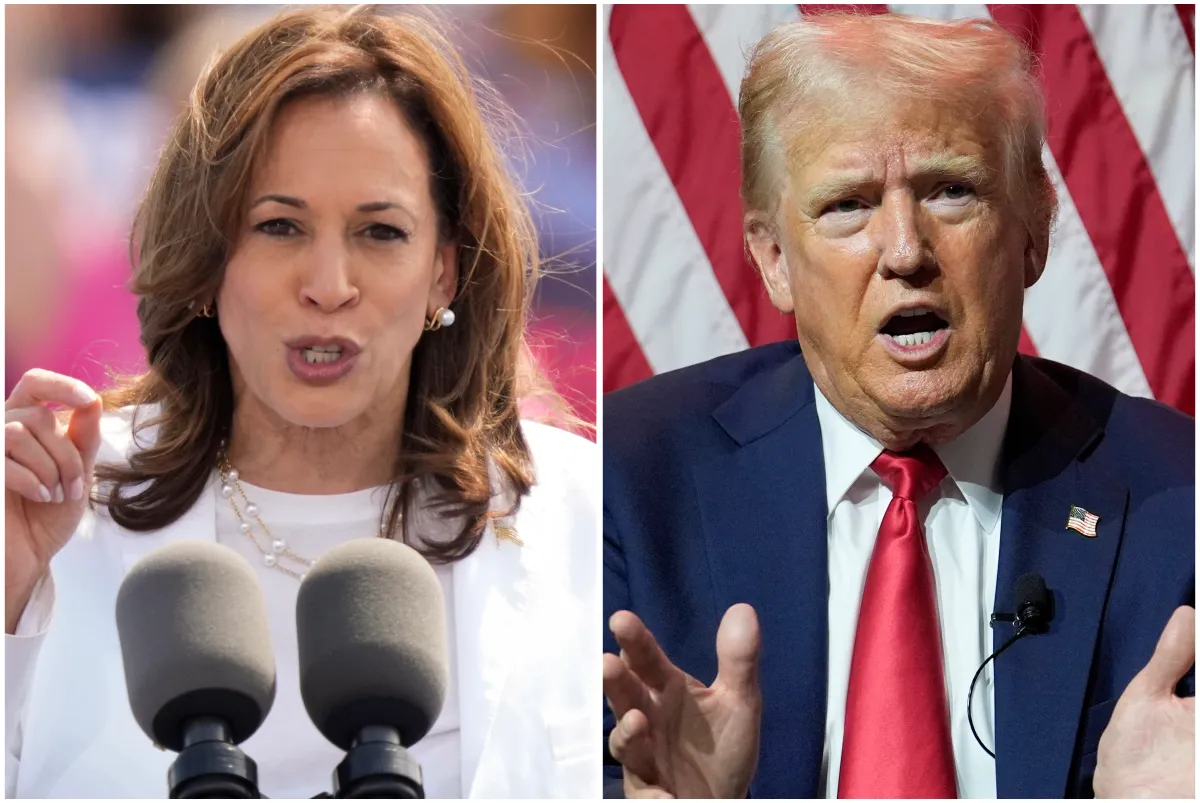
In a move that aligns with former President Donald Trump’s earlier proposal, Vice President Kamala Harris announced her plan to eliminate taxes on tips in the service and hospitality sectors if she wins the presidency. This announcement came during a rally in Las Vegas, a critical battleground state where the hospitality industry plays a significant role in the economy.

Addressing a crowd of over 12,000 supporters, Harris emphasized her commitment to working families, stating, “When I am president, we will continue our fight for working families of America; including to raise the minimum wage, and eliminate taxes on tips for service and hospitality workers.” Her proposal aims to provide financial relief to workers in these sectors, who make up a substantial portion of Nevada’s workforce.

This announcement followed the endorsement of Harris by the Culinary Workers Union, a powerful labor group in Nevada. The timing of this endorsement and Harris’s proposal highlights her strategic focus on appealing to Nevada voters, particularly those employed in the state’s vast hospitality industry.

However, Harris’s proposal has drawn criticism for mirroring Trump’s earlier pledge to remove taxes on tips, which he announced at his own Las Vegas rally in June. Trump quickly took to social media to claim credit, accusing Harris of copying his idea. “Harris has no imagination, whatsoever, as shown by the fact that she played ‘COPYCAT’ with, NO TAXES ON TIPS!” Trump posted on Truth Social.

While both candidates champion the idea of tax-free tips, implementing such a policy would require new legislation and congressional approval. A Harris campaign official acknowledged this, adding that her administration would work with Congress to design a policy with income limits and safeguards to prevent abuse by higher-income individuals.

Critics of the proposal, including the nonpartisan Committee for a Responsible Federal Budget, argue that eliminating taxes on tips could lead to a significant loss in federal revenue, estimated to be between $150 billion and $250 billion over the next decade. Additionally, some economists question the effectiveness of this policy in alleviating the tax burden on low-income workers.

Ernie Tedeschi, economics director at Yale University’s Budget Lab, pointed out that only a small segment of low-income workers are in tipped jobs, and many of these workers are already exempt from paying income tax due to their low earnings. Tedeschi also expressed concerns about the potential for creating disparities among low-income jobs and the possibility of employers encouraging tipping over wage increases.

The debate over this proposal underscores the complexities of tax policy and its impact on workers. As both Harris and Trump vie for support in key states like Nevada, the conversation around tax-free tips is likely to continue to be a focal point in their campaigns.