Merck Shares Fall 9% Despite Earnings Beat and Strong Demand for Key Drugs

Merck reported second-quarter revenue and adjusted earnings that exceeded Wall Street’s expectations, driven by strong sales from its blockbuster cancer drug Keytruda and other treatments in its oncology and vaccines portfolios, as well as a newly launched cardiovascular drug. Despite this, Merck’s shares fell by 9% due to lighter-than-expected sales of Gardasil, a vaccine for HPV, exacerbated by shipment issues in China.

Merck raised its full-year sales forecast to $63.4 billion to $64.4 billion, slightly up from its previous guidance of $63.1 billion to $64.3 billion. However, it lowered its adjusted profit guidance to a range of $7.94 to $8.04 per share, down from $8.53 to $8.65 per share, reflecting one-time charges for its acquisitions of Harpoon Therapeutics and EyeBio.
For the second quarter, Merck reported adjusted earnings per share of $2.28, surpassing the expected $2.15, and revenue of $16.11 billion, above the anticipated $15.84 billion. The company posted a net income of $5.46 billion, or $2.14 per share, compared to a net loss of $5.98 billion, or $2.35 per share, in the same period last year.

Keytruda recorded $7.27 billion in revenue, up 16% year-over-year, driven by higher uptake for earlier-stage cancers and strong demand for metastatic cancers. Gardasil sales increased by only 1% to $2.48 billion due to shipment timing issues in China. Winrevair, approved in March for treating a progressive lung condition, posted $70 million in revenue, while Capvaxive, a newly approved pneumococcal vaccine, is expected to drive future growth.

Merck’s pharmaceutical division saw a 7% increase in revenue to $14.41 billion. The company’s Type 2 diabetes treatment, Januvia, faced a 27% decline in sales to $629 million due to lower demand, prices, and generic competition. Sales of Merck’s Covid antiviral pill, Lagevrio, fell by 46% to $110 million but still exceeded expectations.

Merck’s animal health division reported $1.48 billion in sales, up 2% from the previous year, but slightly below analyst expectations. Despite strong overall performance, investor concerns about Gardasil sales and future challenges in the pharmaceutical landscape influenced the decline in Merck’s stock.


FDA Approves Guardant Health’s Blood Test for Colon Cancer Screening

The Food and Drug Administration (FDA) has approved Guardant Health’s blood test, Shield, for colon cancer screening. While not intended to replace colonoscopies, Shield is generating enthusiasm among doctors for its potential to improve screening rates for the second-highest cause of cancer death in the U.S. Previously available at an out-of-pocket cost of $895, Shield’s FDA approval means Medicare and private insurance are likely to cover it, making it more accessible.

Dr. Arvind Dasari from MD Anderson Cancer Center welcomed the approval but noted that the impact on improving screening and reducing mortality remains to be seen. The American Cancer Society estimates over 53,000 deaths from colorectal cancer this year. Research in March showed Shield was 83% effective in detecting colorectal cancers by identifying DNA from cancerous tumors in the bloodstream, though it was less effective at detecting early-stage polyps.

Starting at age 45, Shield would need to be administered every three years. A positive result requires a follow-up colonoscopy to confirm the presence and stage of cancer, as noted by Robert Smith of the American Cancer Society. Shield is the second blood test for colon cancer, following the less accurate and less utilized Epi proColon approved in 2016.

Colorectal cancer rates have risen among those under 55 since the mid-1990s, while rates have declined among those over 60. Dr. William Grady of Fred Hutchinson Cancer Center emphasized that colorectal cancer is preventable with screening, and colonoscopy remains the most accurate method. However, screening rates are low, with fewer than 60% of eligible individuals undergoing recommended screenings. Dr. Sapna Syngal of Dana-Farber Cancer Center highlighted that increasing screening rates through tests like Shield could significantly impact cancer detection.

The March study led by Grady found that people in their 40s and 50s, often busy with work and family, are less likely to undergo screenings. The time-consuming nature and “ick” factor of colonoscopies deter many from the procedure. Electra Paskett of Ohio State University noted that a blood test would be more appealing for many people.

John Gormly, 77, avoided colonoscopies but opted for the Shield test, which led to the detection and successful surgical removal of stage 2 colon cancer. Gormly’s experience underscores the potential life-saving impact of accessible screening options like Shield.

Medicare Drug Price Negotiations: Short-Term Stability, Long-Term Concerns for Pharma

The conclusion of the first round of Medicare drug price negotiations marks a significant milestone, though the final negotiated prices for the selected medications remain undisclosed. These prices, set to be revealed in early September, will come into effect in 2026. While the pharmaceutical industry continues to view these negotiations as a long-term threat to innovation and profits, there appears to be a sense of short-term stability among drugmakers based on recent earnings calls from key companies like Bristol Myers Squibb, Johnson & Johnson, and others.

Executives from major pharmaceutical companies have expressed varying degrees of confidence regarding the immediate impact of these negotiations. Bristol Myers Squibb CEO Christopher Boerner mentioned that the company has received the final price for its blood thinner Eliquis, shared with Pfizer, and is “increasingly confident” in navigating the impact. AbbVie CEO Robert Michael noted that the expected sales impact on its leukemia drug Imbruvica is included in financial forecasts, with AbbVie still expecting to meet its long-term outlook. Similarly, J&J Worldwide Chairman Jennifer Taubert expressed confidence in the company’s long-term growth despite new prices for its blood thinner Xarelto and psoriasis treatment Stelara.

However, Novartis CEO Vasant Narasimhan acknowledged that while the short-term impact on its drugs, such as the heart failure drug Entresto, might be manageable, the policy’s long-term effects are concerning. Narasimhan criticized the policy for its negative implications on innovation and patient care.

Despite the immediate stabilization, the pharmaceutical industry remains strongly opposed to Medicare drug price negotiations, labeling them as bad public policy. Executives like Boerner from Bristol Myers Squibb highlighted concerns about the long-term implications on innovation due to the Inflation Reduction Act (IRA). Legal challenges from companies like Merck and Novartis are ongoing, with similar claims from other industry players and trade groups being recently rejected.

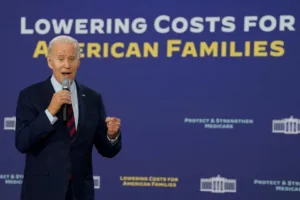
The Medicare drug price negotiation authority, established under President Joe Biden’s Inflation Reduction Act, aims to make medications more affordable for older Americans. While the immediate concerns over the new Medicare drug prices have somewhat subsided, the pharmaceutical industry remains wary of the long-term impacts. The upcoming price disclosures in September will provide clearer insights into how these negotiations will shape the market and influence future strategies for drugmakers.