
Global Tech Outage Costs Fortune 500 Companies $5 Billion: CrowdStrike’s Software Glitch Revealed

The recent CrowdStrike software glitch, deemed the largest IT outage in history, has led to substantial financial losses, with Fortune 500 companies alone estimated to face over $5 billion in direct damages. The incident, triggered by a faulty update to CrowdStrike’s Falcon cybersecurity software, has had wide-ranging effects, including flight cancellations, disruptions in healthcare, and financial losses across multiple sectors.

CrowdStrike’s preliminary report, released on Wednesday, details how a software update intended to enhance cybersecurity inadvertently caused millions of Windows computers globally to crash. The glitch occurred due to a bug in CrowdStrike’s cloud-based testing system, which failed to catch problematic content in the update before its release. As a result, affected computers displayed the notorious Blue Screen of Death, necessitating manual fixes for up to 8.5 million devices.

The financial impact has been severe. The healthcare sector experienced losses of $1.94 billion, while the banking industry faced $1.15 billion in damages. Major airlines, including American and United, suffered a collective loss of $860 million. The total estimated cost of the outage for Fortune 500 companies reaches up to $5.4 billion, excluding secondary losses from decreased productivity and reputational damage. Insurance coverage for these losses is expected to be limited, covering only about 10% to 20% of the total costs.

Fitch Ratings highlighted the incident as an example of the risks associated with reliance on single points of failure, as consolidation in the tech industry leads to fewer, more dominant vendors. The firm’s blog post emphasized the growing need for robust risk management and diversification strategies to mitigate such widespread disruptions.

CrowdStrike has committed to preventing future occurrences by enhancing its validation checks and adopting a staggered update release approach. The company is also working on giving customers more control over the timing of updates to avoid similar issues in the future.
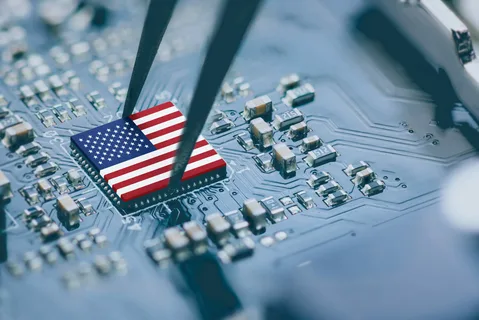

 

Trump Accuses Taiwan of Stealing U.S. Chip Industry; Experts Say Taiwan’s Growth is Organic

Former President Donald Trump recently claimed that Taiwan had effectively stolen America’s semiconductor industry, asserting that the island democracy had taken “almost 100%” of the market from the U.S. Trump suggested that this loss was a grave error and that Taiwan should pay for American defense support.

However, industry experts dispute this assertion. Taiwan’s semiconductor success is attributed to its strategic vision and innovative business model, not theft. Morris Chang, the founder of Taiwan Semiconductor Manufacturing Company (TSMC), established the company in 1987 after a distinguished career in the U.S. semiconductor industry. Chang’s vision was revolutionary—creating a “pure-play foundry” model focused solely on manufacturing chips designed by other companies.

This approach transformed the global chip sector. Today, Taiwan produces over 90% of the world’s advanced semiconductors, according to the Semiconductor Industry Association. TSMC’s success is built on its ability to scale production, invest heavily in R&D, and maintain efficiency. The company’s recent opening of a global R&D center in Hsinchu further underscores its commitment to advancing chip technologies.

Experts highlight that Taiwan’s achievements are rooted in its effective contract manufacturing model, skilled engineers, and a supportive tech ecosystem. While Intel and Samsung are attempting to replicate TSMC’s success, Taiwan’s advantages remain challenging to duplicate.

In response to Trump’s remarks, Taiwanese Premier Cho Jung-tai emphasized that Taiwan remains committed to maintaining its R&D capabilities domestically. This stance underscores the strategic importance of Taiwan’s semiconductor industry amid growing geopolitical tensions, including the risk of Chinese aggression.

The ongoing U.S.-China rivalry and chip shortages during the pandemic have prompted the U.S. to seek greater domestic chip production through initiatives like the CHIPS and Science Act. As TSMC expands its operations with new factories in Arizona, it faces challenges integrating its operations into different cultural and regulatory environments.

Experts advise that fostering a cooperative relationship between Taiwan and the U.S. could benefit both sides, ensuring stability and progress in the global semiconductor industry.


Moderna Stock Plummets 20% After Lowering Guidance on EU Sales and U.S. Vaccine Market Challenges

Moderna experienced a significant 20% drop in its stock price on Thursday after reporting second-quarter results that, while beating revenue expectations, prompted the company to sharply reduce its full-year sales forecast. The biotech firm now anticipates 2024 product revenue between $3 billion and $3.5 billion, down from its previous estimate of $4 billion.

The revised guidance is attributed to lower-than-expected sales in Europe, heightened competition in the U.S. vaccine market, and potential delays in international revenue. Moderna’s newly approved respiratory syncytial virus (RSV) vaccine, mRESVIA, began shipping in the U.S., but faces stiff competition from existing RSV vaccines by Pfizer and GSK.

Moderna CEO Stephane Bancel highlighted the increased competition for both RSV and Covid vaccines and noted difficulties in securing new contracts with European governments due to tight budgets and existing agreements with Pfizer and BioNTech. The ongoing conflict in Ukraine is also putting strain on government finances.

Despite the current challenges, Bancel expressed optimism for a recovery, projecting sales growth in 2025 and a break-even point by 2026, driven by new product launches.

For the second quarter, Moderna reported:

  • Loss per share: $3.33, better than the expected loss of $3.39
  • Revenue: $241 million, exceeding the $132 million forecast

Revenue from Moderna’s Covid vaccine fell 37% year-over-year, contributing to the company’s net loss of $1.28 billion. However, Moderna achieved a reduction in costs, including a significant drop in sales expenses and a 19% decrease in selling, general, and administrative costs. R&D expenses rose by 6% to $1.2 billion due to increased personnel costs.

Despite these setbacks, Moderna’s stock has risen nearly 20% this year, reflecting confidence in its pipeline and messenger RNA technology. The company is advancing 45 products in development, including a combination vaccine for Covid and flu, and a personalized cancer vaccine with Merck.