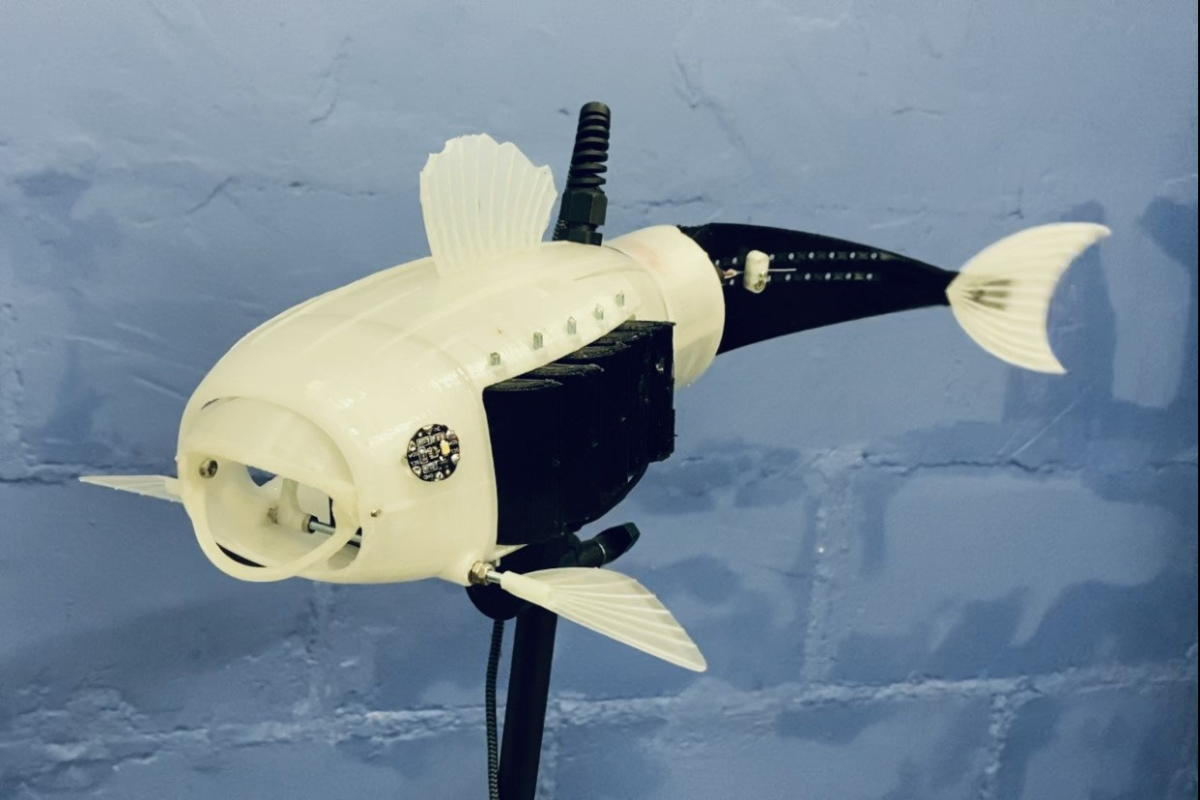
Meet ‘Eve’: The Robotic Fish Revolutionizing Ocean Studies

In a groundbreaking development from ETH Zurich, engineering students have introduced “Eve,” a sophisticated robotic fish designed to enhance ocean research. Although stationed 400 kilometers from the nearest sea, Eve is being tested in Lake Zurich by the student-led SURF-eDNA group, which aims to advance how we study aquatic ecosystems.

Eve, with its biomimetic design, mimics the movements of a real fish with a silicone tail and internal pumps that propel it smoothly through the water. This design minimizes disturbance to the local ecosystem, allowing Eve to blend seamlessly with its surroundings, as noted by master’s student Dennis Baumann. The robot’s ability to remain unobtrusive is key to gathering accurate environmental data without disrupting the habitat.

Beyond its lifelike appearance, Eve boasts several high-tech features. It is equipped with a camera for underwater filming, sonar for obstacle navigation, and a specialized filter for collecting environmental DNA (eDNA). This eDNA, shed by organisms in the water, is collected and analyzed to identify the species present in the area, providing a deeper understanding of aquatic biodiversity.

Martina Lüthi, a postdoctoral researcher at ETH Zurich, explains that eDNA can reveal the variety of life forms in a given water body by capturing the genetic material shed by animals. This approach, combined with Eve’s autonomous capabilities, represents a significant leap from traditional methods of collecting eDNA, which often involve manually scooping water samples.

The advancement of tools like Eve is crucial for exploring and protecting the world’s oceans, which cover over 70% of the Earth’s surface yet remain largely unexplored. Innovations such as Aquaai’s clownfish-like drones and deep-sea rovers demonstrate the growing trend towards using advanced technology to monitor and study marine environments.

As climate change, overfishing, and other human activities threaten ocean habitats, sophisticated tools like Eve could become essential for more effective conservation efforts. Baumann and his team hope that by refining their technology, they can offer a reliable, scalable tool for biologists worldwide. Their goal is to help prevent species endangerment and extinction, thereby contributing to the preservation of marine biodiversity.

Eve represents a promising step towards more precise and less invasive environmental monitoring, underscoring the potential of robotics to transform our understanding and protection of the natural world.

How Much Is Too Much to Spend on Jeans? Blake Lively’s $19,000 Pair Sparks Debate

Blake Lively recently made headlines when she wore a $19,000 pair of Valentino jeans to a screening of her latest movie, “It Ends with Us.” This extravagant purchase raised eyebrows and sparked a broader conversation: How much is too much to spend on a pair of jeans?

The Valentino jeans, featuring thigh-to-heel cut-outs and intricate hibiscus embroidery, were styled simply with a white tank and Christian Louboutin heels. While undeniably eye-catching, these jeans are designed for the wealthy and fashion-forward, not for everyday errands. With most high-end denim brands offering jeans priced between $2,500 and $3,500, Lively’s choice stands out as an outlier.

For most consumers, spending $19,000 on jeans is unimaginable. The market offers a wide range of options, from affordable $100 Levi’s to sustainable brands like MUD Jeans or ELV Denim, priced around $200 to $500. But how should one decide on the right pair of jeans? Beyond price, factors such as style, comfort, and the intended use of the jeans are crucial.

Stylist Becky Malinsky advises considering how and where you’ll wear your jeans, emphasizing the importance of fit and comfort. Brands like Citizens of Humanity and Levi’s are often recommended for their balance of fashion and fit. Malinsky suggests trying on jeans to ensure they’re comfortable in various positions, noting that a bit of stretch can enhance comfort without sacrificing shape.

When it comes to quality, Malinsky emphasizes the importance of the “hand feel” of the denim. Jeans that feel too soft may not be durable, whereas those with a bit of resistance are likely to last longer. For men, Malinsky advises against overly distressed jeans, recommending classic cuts in darker washes instead.

While spending thousands on jeans might seem excessive, there’s a case for investing in quality denim. As Sandra Capponi of sustainable fashion site Good on You points out, producing a pair of jeans requires significant resources, and cheap prices often indicate poor labor conditions. Investing in high-quality jeans that you’ll wear repeatedly can be more cost-effective and environmentally friendly in the long run.

Ultimately, the decision comes down to personal values and financial priorities. For some, luxury denim is worth the splurge if it becomes a wardrobe staple. For others, the thought of spending more than a few hundred dollars on jeans is unthinkable. But as long as you’re thoughtful about your purchase and choose jeans that make you feel great, the price tag is secondary. And if $19,000 jeans still leave you in disbelief, remember that fashion is subjective—just like the person who paid over $400,000 for Kurt Cobain’s old Levi’s.

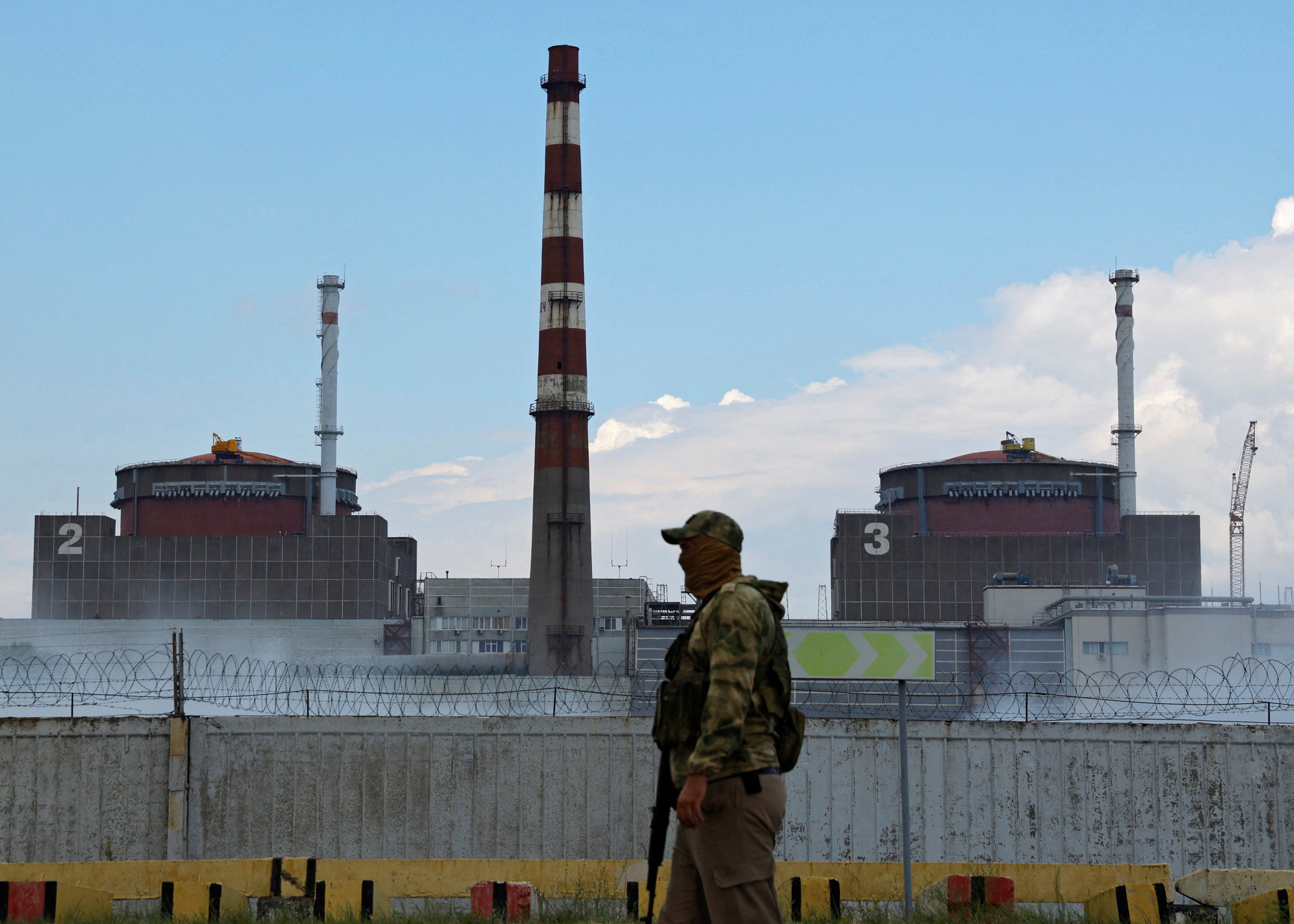
Safety at Zaporizhzhia Nuclear Plant Deteriorates Following Drone Strike, IAEA Warns

The safety situation at the Zaporizhzhia Nuclear Power Plant in southern Ukraine is worsening, following a drone strike on a nearby road, according to the International Atomic Energy Agency (IAEA). The plant, under Russian control since March 2022, faces increasing threats, with IAEA Director General Rafael Mariano Grossi expressing grave concern over the escalating nuclear safety and security risks. The drone strike, which occurred near essential cooling water sprinkler ponds and a crucial power line, did not result in casualties or equipment damage, but the road between the plant’s main gates was affected.

Russian media outlet TASS blamed Ukraine for the attack, claiming the strike posed a direct threat to the plant’s personnel and safety. Ukraine has not commented on the incident, though both nations have previously accused each other of endangering the plant. The IAEA reported intensified military activity in the area, including a significant fire at one of the plant’s cooling towers earlier in the week, which, although it did not pose an immediate nuclear threat, caused considerable damage.

This latest incident underscores the vulnerability of nuclear facilities in conflict zones, with Grossi reiterating the need for strict adherence to safety principles. The IAEA team also noted air raid alarms and drone attacks at other nuclear sites across Ukraine, including Khmelnytskyy, Rivne, and South Ukraine, as well as at Chernobyl. Grossi emphasized that nuclear plants are not designed to withstand direct military attacks, highlighting the critical need for continued monitoring of these fragile situations.

Grossi has expressed willingness to visit the Zaporizhzhia plant, while Russian officials have also extended an invitation for him to visit the Kursk Nuclear Power Plant in southern Russia, amid ongoing conflict in the region. Ukrainian authorities have warned of potential Russian provocations, accusing Moscow of attempting to frame Ukraine for a “dirty bomb” attack or other nuclear threats. The deteriorating situation at Zaporizhzhia and the surrounding conflict zones continues to raise alarms about the safety and security of nuclear facilities in the region.