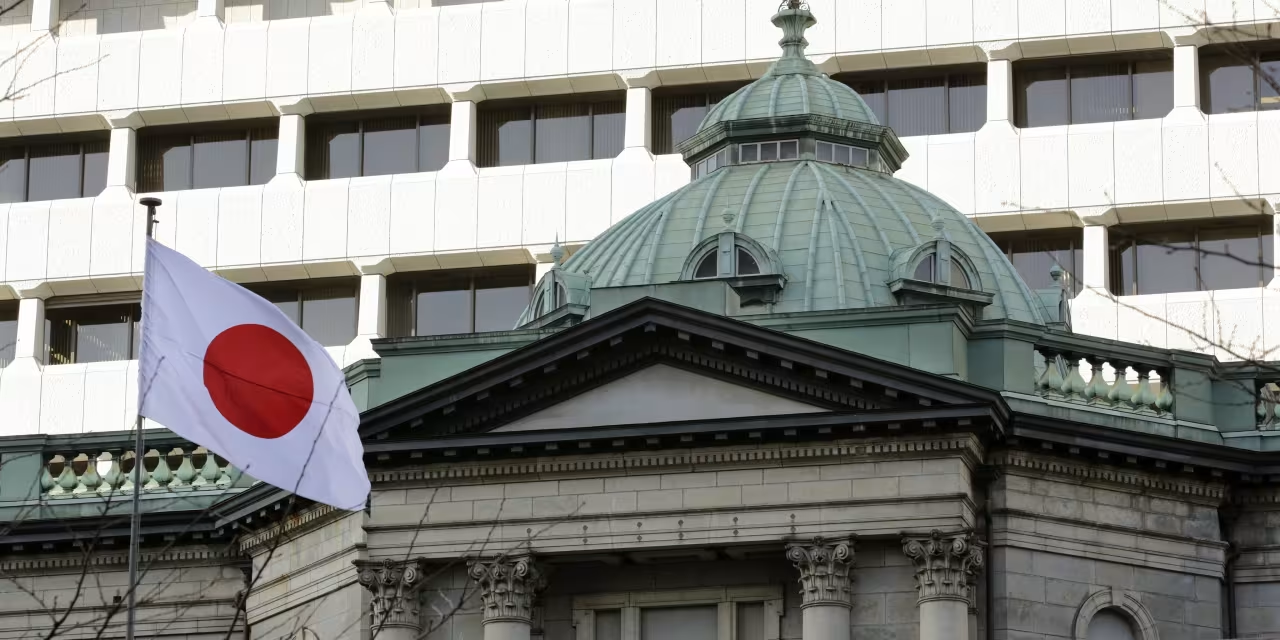
BOJ Keeps Interest Rates Steady, Upgrades View on Consumption Signaling Confidence in Economic Recovery

The Bank of Japan (BOJ) maintained its interest rates unchanged on Friday, while offering a more optimistic view on private consumption. This move reflects the central bank’s confidence that Japan’s economic recovery is progressing, potentially allowing for another interest rate hike in the near future. The decision, widely anticipated by market watchers, keeps short-term interest rates at 0.25%, marking the conclusion of the two-day meeting.

In its post-meeting statement, the BOJ noted that private consumption is “on a moderate increasing trend,” an upgraded assessment from previous reports that described consumption as resilient. This shift suggests that the central bank sees a stronger economic trajectory, despite headwinds from rising prices. The yen responded by paring losses, while the Nikkei average saw some gains shrink, as markets interpreted the central bank’s positive outlook as a sign of a possible rate hike soon.

Analysts believe this upgraded view reflects growing confidence that wage increases will support household spending, offsetting the impact of inflation. Naomi Muguruma, chief bond strategist at Mitsubishi UFJ Morgan Stanley Securities, stated, “If upcoming data further supports the BOJ’s optimistic outlook, we could see another rate hike as early as December.”

Japan has been dealing with accelerated inflation, with core consumer prices rising 2.8% in August, marking the fourth consecutive month of increases. This sustained inflation, alongside an annualized GDP growth of 2.9% in the second quarter and rising real wages, has fueled expectations of further interest rate hikes. The next opportunity for the BOJ to reassess its projections will come during its October 30-31 meeting, where the board will review its quarterly forecasts.

The BOJ’s decision to maintain its current rate stands in contrast to other major central banks, such as the U.S. Federal Reserve, which has recently shifted toward reducing borrowing costs. Governor Kazuo Ueda has maintained a hawkish stance, indicating that the BOJ is prepared to raise rates again if inflation continues to meet the bank’s 2% target.

Despite Japan’s domestic economic strength, external challenges loom, including weaker demand from China and slower growth in the U.S. Moreover, recent volatility in the yen and stock market fluctuations are key concerns for BOJ policymakers. However, the central bank has reiterated its readiness to implement further rate hikes, with some members advocating for a gradual increase in short-term rates to around 1% over time.


 

Israel Intensifies Strikes on Lebanon as US and UK Call for Restraint Amid Growing Conflict

On Thursday night, Israel launched its heaviest airstrikes on southern Lebanon in nearly a year, marking an escalation in its ongoing conflict with Hezbollah. The attacks came as calls for restraint poured in from the United States and the United Kingdom, both urging an immediate ceasefire. White House spokesperson Karine Jean-Pierre expressed concerns over potential further escalation, emphasizing the need for a diplomatic solution. Similarly, the UK called for urgent action to de-escalate the situation.

The strikes were a response to earlier attacks in Lebanon that left 37 dead and over 3,000 wounded, many of whom Hezbollah blames on Israel. Thursday’s operation, which lasted more than two hours, saw Israeli jets target rocket launchers in southern Lebanon that were poised to strike Israel. The Israeli military confirmed hitting over 100 rocket launchers, and Lebanon’s state news agency NNA reported more than 52 strikes, making it one of the most intense bombardments since the conflict began.

Hezbollah’s leader, Hassan Nasrallah, condemned the attacks, accusing Israel of committing war crimes, and warned that further provocations could lead to all-out war. While Israel has not officially commented on the earlier pager explosions, many believe the Mossad was responsible. The Lebanese government, meanwhile, has urged the United Nations Security Council to take a firm stand against Israel’s aggression, accusing the country of using technological warfare to destabilize Lebanon.

Amid the escalating tensions, Israeli Defense Minister Yoav Gallant vowed to continue military operations against Hezbollah, warning that the group would pay an “increasing price” as the conflict progresses. Meanwhile, two Israeli soldiers were killed in combat in northern Israel, adding to the already mounting casualties on both sides of the border.

Though Hezbollah and Israel have been exchanging fire since the October 7 Hamas attack on Israel, neither side has allowed the situation to escalate into full-scale war. However, with Hezbollah now vowing a “crushing response” and Iran’s Revolutionary Guard pledging its support, the possibility of broader regional conflict looms large.

As Israel continues its strikes, U.S. Secretary of State Antony Blinken called for restraint in a speech in Paris, cautioning all parties against actions that could hinder progress toward a Gaza ceasefire. Despite the calls for peace, the situation remains fragile, and the prospect of a wider war seems increasingly likely.


WazirX CEO Urges Users to Withdraw Funds Amid Uncertainty Over Full Recovery

In Singapore, Zettai Partners with Financial Restructuring Firm Kroll to Aid WazirX’s Recovery Devamını Oku