
Divorce Trends in China Spark New Business Opportunities for Entrepreneurs

Wedding photographer Tan Mengmeng’s career once centered on capturing the joy of couples on their big day. However, as marriage rates in China continue to decline, Tan, like many others, is shifting focus to a growing trend: divorce. Official data shows a sharp decline in marriages, dropping from around 13 million in 2013 to under 7 million in 2022. Despite a slight recovery in 2023, the number of divorces continues to climb, with a 25% rise recorded last year.

The 28-year-old photographer from Henan province recognized the business potential after observing long lines at government offices handling separations. Since expanding her services to divorce photography, Tan has captured over 30 couples, immortalizing moments of both heartbreak and, in many cases, celebration. “Joy and sorrow are both worth recording,” she notes, pointing to the changing attitudes in China towards marriage and divorce.

For many years, Chinese society attached a strong stigma to divorce, with traditional values emphasizing family unity. However, younger generations now prioritize personal freedom, career development, and a willingness to end marriages that no longer bring happiness. This cultural shift has opened new business opportunities for photographers like Tan, who help couples commemorate the end of their relationships.

Other services have emerged alongside divorce photography. Companies now offer to ceremonially destroy wedding mementos, providing emotional closure for individuals looking to move on from their past. Liu Wei, who runs such a service in a factory outside Beijing, says his business has destroyed wedding photos for over 2,500 couples since 2021, with demand continuing to rise.

The increase in divorces reflects broader demographic challenges in China. An aging population, coupled with the legacy of the one-child policy, has led to fewer women of marriageable age. Additionally, high work pressure and living costs contribute to declining marriage rates. These factors, combined with changing social norms, suggest that the divorce market may continue to grow.

Tan remains optimistic about the future. She offers a unique incentive for couples who might reconcile, providing an 18% discount on new wedding photos if they remarry. As divorce rates rise, entrepreneurs like Tan are finding innovative ways to turn societal changes into profitable ventures.
 

China Overtakes U.S. in Nuclear Fusion Race with Major Investments and Breakthroughs

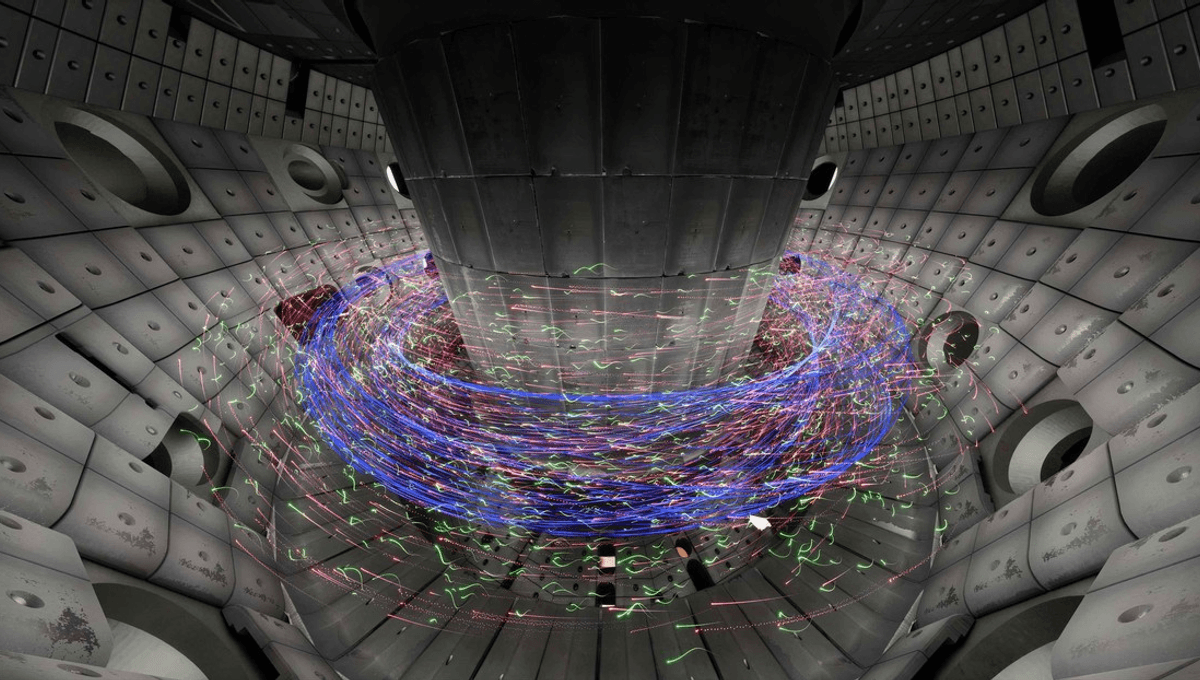
As the world races to unlock the potential of nuclear fusion, China is emerging as a serious contender to overtake the U.S. in mastering this near-limitless form of clean energy. In Shanghai, the burgeoning tech hub that showcases China’s innovations in 6G internet and robotics, a small start-up called Energy Singularity is pushing the boundaries of nuclear fusion research.

For decades, the U.S. led the global effort to replicate nuclear fusion, the process that powers the sun, on Earth. But with China’s recent surge in investment and technological advancements, U.S. experts are increasingly worried about losing that edge. China’s government is currently outspending the U.S. on fusion energy research, with estimates suggesting Beijing invests between $1 billion to $1.5 billion annually, compared to the U.S. government’s $800 million.

Fusion is a difficult process to harness, but its potential is immense. A controlled fusion reaction could generate four million times more energy than burning fossil fuels, and four times more than nuclear fission, without producing long-lived radioactive waste. While fusion won’t be a near-term solution to climate change, it holds promise for addressing the world’s long-term energy needs.

China’s rapid progress is reflected in companies like Energy Singularity, which has built its own fusion reactor, known as a tokamak, in just three years—faster than any comparable machine to date. The start-up has also pioneered the use of advanced high-temperature superconducting magnets, which allow for smaller, more efficient reactors. Its ambitious timeline aims to prove commercial viability by 2027, with grid-ready fusion power by 2035.

Meanwhile, U.S. tokamaks are aging. Andrew Holland, CEO of the Fusion Industry Association, noted that American researchers now rely on machines in Japan and Europe for much of their work. In contrast, China’s state-of-the-art fusion park, CRAFT, is set to open next year, with no similar facility in the U.S.

China’s strategy includes leveraging American designs. According to Holland, several Chinese fusion reactors resemble U.S. designs from companies like Commonwealth Fusion Systems and Helion. This echoes previous patterns in other industries, where China has rapidly followed U.S. innovations and then dominated global supply chains, as seen with solar technology.

While China races ahead with tokamak technology, the U.S. is diversifying its approach. Last year, researchers at the Lawrence Livermore National Laboratory achieved a milestone using lasers to generate more energy from a fusion reaction than they put in. However, the tokamak remains the most advanced and well-researched fusion concept, and with China’s immense funding, it is evolving rapidly.

The stakes are high. Whichever country succeeds in taming nuclear fusion could reshape the global energy landscape. With China pouring over a billion dollars annually into fusion research, it may soon surpass the private investment driving U.S. innovation. If successful, China’s breakthroughs could redefine its role in global energy production, powering not only its iconic light shows but casting the country as a leader in the future of clean energy.


Tesla, Nvidia Lead Nasdaq Surge After Fed Rate Cut

The Nasdaq experienced one of its strongest rallies of 2024 on Thursday, surging 2.5% as investors flocked to tech stocks following the Federal Reserve’s first interest rate cut since 2020. Tesla and Nvidia led the charge, with Tesla shares climbing 7.4% and Nvidia jumping 4%, boosting the tech-heavy index to its fourth-largest gain this year. The biggest surge occurred on February 22, when the Nasdaq rose by 3%.

Tech stocks tend to benefit from lower interest rates due to reduced borrowing costs and more favorable investment conditions. The Fed’s half-point rate cut, along with indications of further reductions by the year’s end, created a bullish environment for tech stocks. The central bank’s “dot plot” suggests another 50 basis points of cuts before 2025, potentially reducing rates by 2 percentage points overall.

Thursday’s rally lifted the Nasdaq to 18,013.98, its highest point since mid-July and only 3.5% below the 2024 peak of 18,647.45, reached on July 10. Nvidia, a key player in the artificial intelligence (AI) revolution, closed at $117.87, up 4%. The company’s processors are fueling the rise of generative AI and tools like OpenAI’s ChatGPT. Nvidia’s stock is up around 138% this year, although still 13% below its all-time high from June.

Nvidia’s impressive growth is largely driven by major customers such as Microsoft, Meta, Alphabet, Amazon, Oracle, and OpenAI, which use its technology to develop large language models and manage substantial AI workloads. However, lower interest rates are expected to further bolster Nvidia’s stock performance.

Other chipmakers saw gains as well, with Advanced Micro Devices (AMD) up 5.7% and Broadcom rising 3.9%. While AMD is still trailing Nvidia in the AI race, its CEO, Lisa Su, emphasized that AI is a long-term game. Speaking with CNBC’s Jim Cramer, Su pointed out that the widespread adoption of AI is still in its early stages, and its impact will be seen in fields like education and healthcare over time. “We all use it, and we’re all learning,” she said.

Tesla was the standout among the tech megacap companies, posting a 7.4% gain on Thursday. Despite this jump, the electric vehicle maker has struggled in 2024, with its stock down nearly 2% for the year. However, Tesla is up 72% from its lowest point in April. Other tech giants, including Apple and Meta, also saw strong performances, both closing with nearly 4% gains.