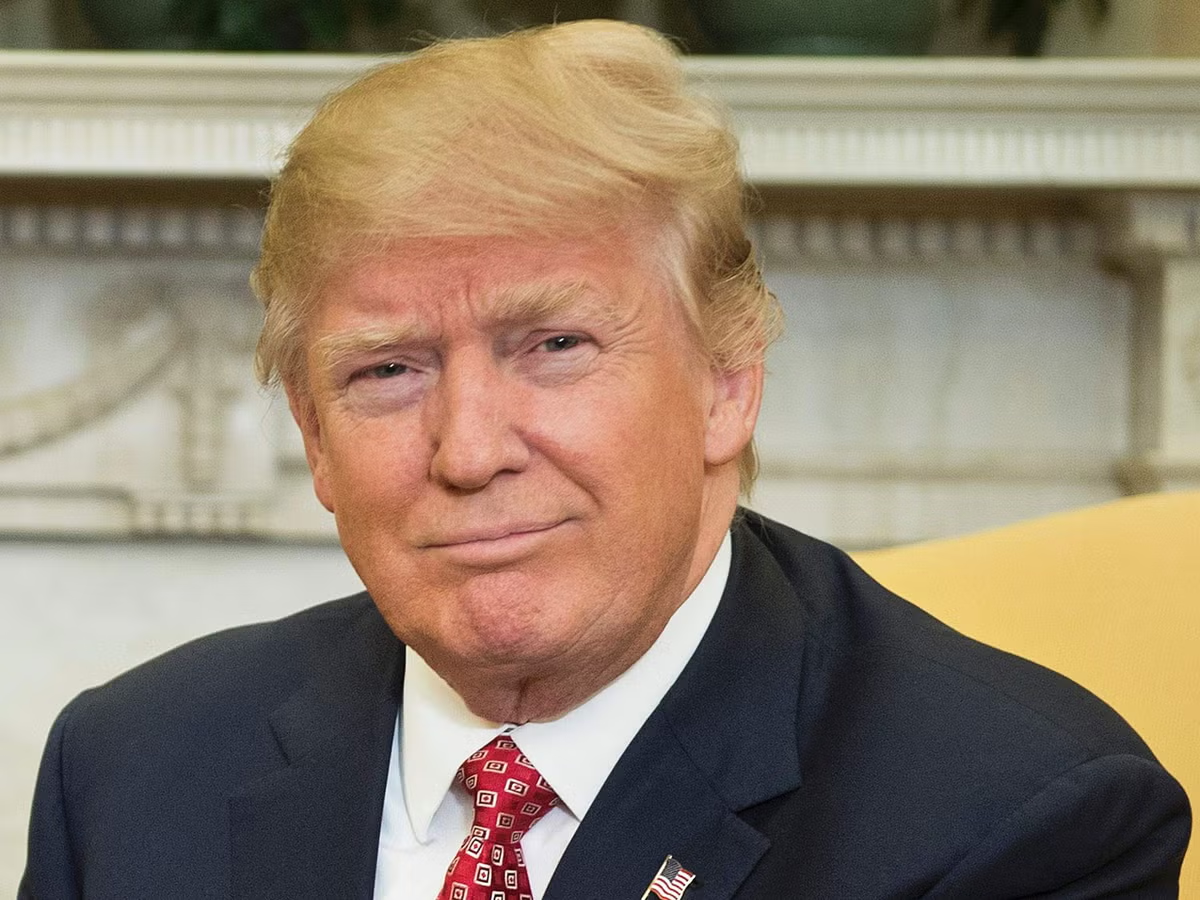
Trump Accuses Taiwan of Undermining U.S. Chip Industry: Election Impacts on Semiconductor Sector

In a recent appearance on the Joe Rogan Experience podcast, former President Donald Trump criticized Taiwan, accusing it of “stealing” the U.S. semiconductor business. Trump argued that Taiwan has leveraged its chip production dominance unfairly, targeting Taiwan Semiconductor Manufacturing Company (TSMC), the world’s leading chipmaker and a crucial supplier for companies like Nvidia and Apple. Trump’s remarks come amid heightened geopolitical tensions with China, which regards Taiwan as part of its territory and has increased military activities around the island.

Shares of TSMC dropped by 4.3% following Trump’s comments and renewed his stance on imposing tariffs on Taiwanese chip imports if elected. Analysts warn that tariffs could significantly impact TSMC and the U.S. tech industry’s reliance on Taiwanese chip production.

Impact on the Semiconductor Supply Chain

Taiwan manufactures over 90% of advanced semiconductors, with tech giants like Amazon, Google, and Microsoft sourcing chips from TSMC. Despite U.S. efforts to bolster its own semiconductor infrastructure through the CHIPS Act, which allocates funding to domestic production, alternatives to TSMC’s advanced production capacity remain limited. U.S.-based Intel has faced delays and competition challenges, although its new U.S. foundries are expected to benefit from CHIPS Act funding.

The Biden administration has directed nearly $7 billion from the U.S. Commerce Department toward TSMC’s Arizona facility, expected to start volume production by 2025. However, Trump’s comments on foreign companies potentially misusing U.S. funds reflect concerns over U.S. reliance on Taiwan’s chip output.

Tariff and Trade War Implications

Trump’s proposal for tariffs on Taiwanese chips could create cost increases across the chip supply chain. Citi analysts estimate that implementing tariffs would require complex audits, given the variety of chips across thousands of devices. Historically, similar tariffs led to increased costs and broader trade tensions, which, according to Moor Insights & Strategy CEO Patrick Moorhead, could elicit retaliatory tariffs from China. A new trade war might strain U.S.-China relations and further restrict companies like Micron, which already face barriers in the Chinese market.

Despite Trump’s stance, experts warn that even a victory by Vice President Kamala Harris would not exempt the industry from trade restrictions. Under the Biden administration, stringent export controls on semiconductor sales to China were implemented, particularly affecting Nvidia, whose revenue from China plummeted after controls reduced its China sales share from 25% to under 10%.

Outlook for U.S. Semiconductor Strategy

Trump’s criticisms reflect broader calls for self-reliance within the semiconductor sector, mirroring concerns over U.S. vulnerability due to Taiwan’s dominance in chip manufacturing. Proposals to further support domestic companies like Intel, Texas Instruments, and Global Foundries align with Trump’s America-first trade strategy, which could prioritize U.S. fabs and incentivize domestic chip production if he is re-elected.

U.S. tech markets remain volatile amid these policy uncertainties. Following Trump’s comments, semiconductor stocks reacted, with TSMC declining and U.S.-based chipmakers showing gains on the prospect of potential government backing. However, tariffs and trade restrictions could have sweeping consequences, potentially leading to higher costs and supply chain disruptions for the global tech sector.


COP16 Stalled as Nature Crisis Intensifies, Scientists Urge Immediate Action on Extinction Risks

At the U.N. COP16 biodiversity summit, held in Cali, Colombia, negotiations have stalled on key conservation funding issues, raising concerns over the ability to reach critical goals to halt nature loss. With nearly 40% of global tree species facing extinction due to deforestation for agriculture, mining, and infrastructure, experts warn time is running out to prevent irreversible damage.

The COP16 discussions center on implementing the 23 goals set out in the 2022 Kunming-Montreal Global Biodiversity Framework, which aims to halt and reverse biodiversity loss by 2030. A central target, known as the 30-by-30 goal, asks each country to conserve 30% of its land and ocean areas by 2030. However, current conservation efforts are significantly behind; only 17.6% of the world’s land and 8.4% of marine areas are under protection, according to the U.N. Environment Programme (UNEP).

Funding and High-Value Conservation Sites in Focus

UNEP Executive Director Inger Andersen emphasized the importance of targeting ecologically valuable regions for conservation, rather than uninhabited or low-biodiversity areas, urging that conservation areas should not just be set aside in “museums of nature.” High-priority regions, often inhabited by indigenous communities and rich in biodiversity, require focused protection.

Despite the urgency, talks are gridlocked on how to mobilize the substantial financial support needed to address global biodiversity losses, with delegates debating the creation of a dedicated fund for conservation financing. According to David Ainsworth, spokesperson for the summit secretariat, productive but challenging discussions highlight a “low level of trust” among countries, complicating efforts to reach consensus on funding and policy.

Advances in Indigenous Representation

One significant area of progress has been the near-finalization of a measure to give Indigenous groups a formal role in biodiversity governance, addressing longstanding calls for representation. Observers see this as a hopeful development, but funding commitments remain a critical litmus test for the summit’s success.

Outlook for COP16

As COP16 enters its final days, the pressure is on to secure financial agreements that will enable the rapid deployment of resources needed to meet the 30-by-30 target and other goals. If successful, the summit could set a transformative path for biodiversity conservation. However, with funding talks stalled and deadline pressures mounting, the world’s ability to mitigate the rapid decline in species and natural ecosystems remains uncertain.

Ford Cuts Profit Outlook, Faces Stock Drop

Ford Motor Co. announced on Monday that it now anticipates meeting only the lower end of its full-year profit expectations, leading to a 5% dip in after-hours stock trading. The automaker forecasts annual earnings before interest and taxes (EBIT) around $10 billion, down from the previous $10-12 billion target.

Financial Performance and EV Adjustments

Despite its weakened forecast, Ford’s third-quarter earnings came in slightly better than expected, with adjusted profits of $0.49 per share compared to analysts’ projections of $0.47. However, net income dropped to $900 million, or $0.22 per share, from $0.30 per share a year ago, influenced by a $1 billion charge incurred after the cancellation of a three-row electric SUV in August.

CEO Jim Farley’s strategic cutbacks in Ford’s electric vehicle (EV) segment reflect intensified competition from Tesla and emerging Chinese EV brands. The scrapped three-row EV, once projected as a “personal bullet train,” was ultimately deemed unprofitable within the necessary timeframe for EV business sustainability.

EV Losses and Cost-Cutting Initiatives

Ford’s electric vehicle segment is projected to incur a $5 billion loss this year, with an EBIT loss of $1.2 billion in the third quarter alone, raising the segment’s total loss for 2024’s first three quarters to $3.7 billion. Although the company made cost improvements totaling nearly $1 billion over the past year, industry-wide pricing pressures have limited visible gains.

Looking ahead, Ford remains committed to cutting $2 billion in annual expenses by year-end through reductions in materials, manufacturing, and freight costs. Chief Financial Officer John Lawler noted that pricing pressures are likely to persist, potentially offsetting cost gains.

Market Reactions and Competitor Insights

Ford’s stock has declined 6% this year, a relatively smaller drop than Jeep-manufacturer Stellantis, whose shares have fallen by 40%. Conversely, General Motors has led the “Big Three” automakers in stock performance, with shares up 47% following robust earnings and consistently improved financial guidance.