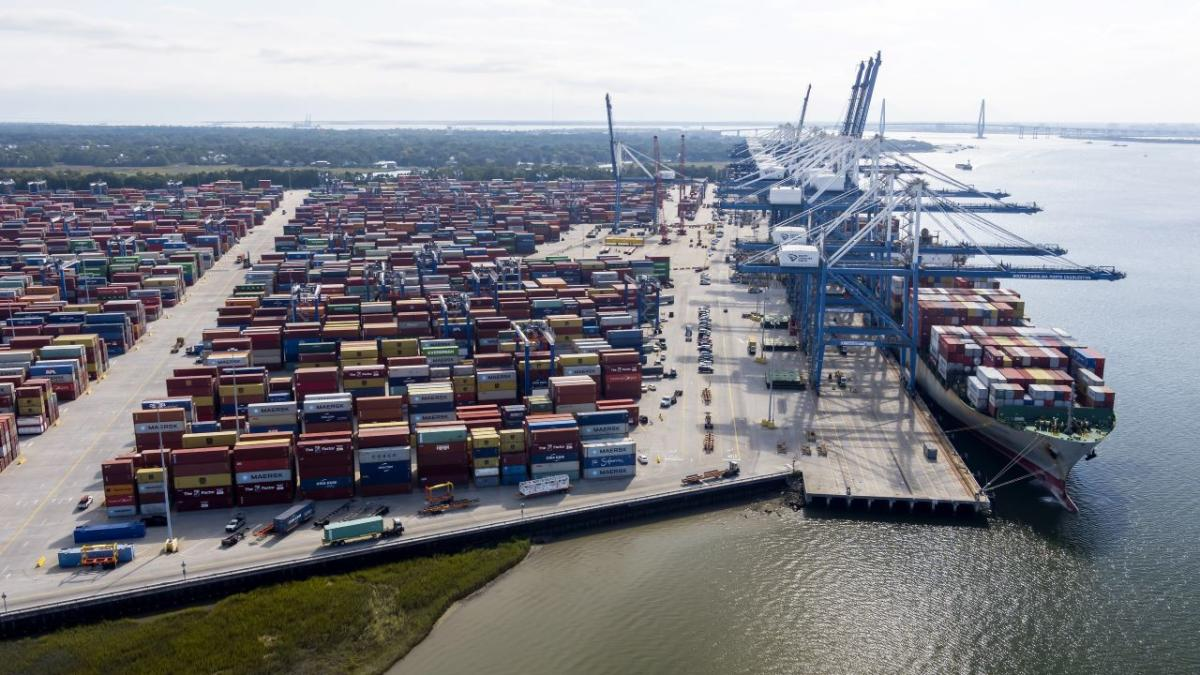
East and Gulf Coast Ports Strike Halts Billions in Trade

The U.S. East Coast and Gulf Coast ports were brought to a standstill on October 1 after members of the International Longshoremen’s Association (ILA) walked off the job at 14 major ports. The strike, involving around 50,000 ILA workers, follows the expiration of the union’s contract with the United States Maritime Alliance (USMX) and ongoing disputes over wage increases and automation usage. This labor action threatens to cost the U.S. economy billions, with industries relying on these ports already feeling the strain.

Despite last-minute efforts, including a nearly 50% wage increase offer from the USMX over six years, the ILA rejected the proposal, leading to widespread disruption. The affected ports include critical hubs such as New York/New Jersey, Boston, Baltimore, Savannah, and Houston. New York Governor Kathy Hochul acknowledged the severity of the situation, noting the first large-scale eastern dockworker strike in nearly five decades and the state’s preparedness to mitigate supply shortages.

ILA President Harold Daggett, who has been outspoken in his opposition to the USMX’s offers, rallied members by emphasizing the historical significance of the strike, stating, “They can’t survive too long.” The impact of the strike has already started to ripple through the U.S. economy, with experts warning of severe consequences depending on the duration of the work stoppage. Adam Kamins, an economist at Moody’s Analytics, noted that a short strike would cause backlogs, while a prolonged disruption could lead to supply shortages and increased prices, particularly affecting the food and automobile industries.

The strike has further complicated the recovery from Hurricane Helene, which recently caused port delays and power outages across Southeast and Gulf Coast regions. Supply chain experts like Shana Wray of FourKites highlighted that the strike worsens the congestion already caused by the hurricane, particularly for ports in Charleston and Savannah.

The pharmaceutical industry is among the sectors hardest hit by the strike. Noushin Shamsili, CEO of Nuco Logistics, emphasized the critical timing of the strike, which comes as pharmaceutical companies are replenishing inventories. The East Coast ports serve as vital entry points for active pharmaceutical ingredients (APIs) from India and Europe, essential for drug manufacturing in the U.S.

Retailers are also bracing for significant delays. Steve Lamar, CEO of the American Apparel and Footwear Association, expressed concern over the timing, noting that the strike could disrupt the holiday shopping season. Major importers like Walmart, Home Depot, and Ikea are scrambling to find alternative solutions, but options are limited, as the West Coast ports are unlikely to absorb the redirected cargo due to union solidarity with the ILA.

The last major ILA strike occurred in 1977, with West Coast dockworkers joining in solidarity. With the Teamsters already pledging support and refusing to cross picket lines, this strike has the potential to disrupt nearly half of all U.S. imports. The Biden administration, led by Transportation Secretary Pete Buttigieg and Acting Labor Secretary Julie Su, has been involved in attempts to bring both sides back to the negotiating table, but the ILA remains steadfast in its demands.

The Taft-Hartley Act, which grants the president power to suspend strikes for 80 days in cases of national emergency, has been brought up in discussions. However, the White House has repeatedly stated that it has no intention of invoking the act to force workers back to their jobs. With billions in trade hanging in the balance, pressure is mounting for a resolution, but both sides remain entrenched in their positions.


 

China’s Economic Struggles Impact Golden Week Holiday Spending

China is bracing for a bustling Golden Week travel season, with the Ministry of Transport estimating 1.94 billion inter-city trips during the National Day holiday. This figure slightly surpasses last year’s total, indicating a potential recovery in domestic travel. However, persistent economic challenges, including a real estate downturn and rising unemployment, are expected to dampen consumer spending during this traditionally high-spending period.

Shaun Rein, founder and managing director of China Market Research Group, notes that while travel volume might surpass 2019 levels, spending per traveler is expected to decline. Consumers are adopting a more cautious approach, cutting back on expenditures amid economic uncertainty. Rein attributes this frugality to concerns about unstable income levels, with many Chinese opting to save until they see consistent economic improvements.

Data from Trip.com supports this trend, with both hotel and flight prices falling below last year’s levels. Prices for domestic and international flights have dropped compared to 2022, reflecting a broader trend of travelers seeking more budget-friendly options. The National Railway Administration expects 175 million rail trips during the Golden Week, as more people turn to lower-cost transportation. This year’s rail passenger volume is predicted to peak at over 21 million on Tuesday, surpassing the previous record of 20.7 million set during the Labor Day holiday in May.

Despite lower spending per traveler, there are signs of a modest uptick in tourism overall. Alicia Garcia Herrero, chief economist at Natixis, suggests that this year’s slight rise in tourism spending should be viewed in the context of last year’s relatively low base. During last year’s Golden Week, domestic tourism revenue reached 753 billion yuan ($107.37 billion), a 1.5% increase from 2019. Although total spending is on the rise, frugality remains a theme for many travelers.

China’s tourism sector has seen some recovery in 2023. The Ministry of Culture and Tourism reports a 16.8% increase in domestic trips over the first three quarters of the year, with 4.29 billion trips taken. Tourism revenue has also risen by 17.1%, reaching 4.32 trillion yuan ($615.6 billion). Inbound passenger trips have grown by 55.4%, totaling 95 million for the year to date.

While these numbers reflect gradual improvement, the post-pandemic recovery has been uneven. For example, during the May Labor Day holiday, China saw more trips and higher total spending than in 2019, but the average spending per traveler remained lower than pre-pandemic levels. The effects of the COVID-19 pandemic, combined with broader economic uncertainty, continue to influence consumer behavior.

To address these economic challenges, Chinese officials recently introduced new stimulus measures, including a 50-basis-point reduction in banks’ reserve requirement ratio, aimed at boosting liquidity. Shaun Rein anticipates that these measures could lead to a significant rebound in consumer spending during the upcoming Chinese New Year once the latest round of economic support is fully absorbed.

Japan’s New Prime Minister Faces Uncertain Path as Political Outsider

Shigeru Ishiba, set to become Japan’s next prime minister, has long been known for his dissent from party orthodoxy, particularly as a critic of former Prime Minister Shinzo Abe’s economic policies. Despite his outsider status and differing views, experts question whether Ishiba will be able to govern in line with his past stances, especially in the face of entrenched party dynamics.

Ishiba, who won his fifth attempt to lead the ruling Liberal Democratic Party (LDP), has consistently opposed Abe’s “Abenomics,” which promoted loose monetary policies and economic stimulus. Instead, Ishiba has advocated for fiscal tightening and tax increases, opposing the Bank of Japan’s (BOJ) policy of negative interest rates. His victory in the recent runoff against Sanae Takaichi, a proponent of Abenomics, marks a shift in party leadership, but analysts are uncertain whether it will lead to significant policy changes.

Experts like Tobias Harris, founder of Japan Foresight, emphasize that Abe’s legacy remains influential, making it difficult for any new leader to break away from his policies. The central question is whether Japan is ready to “course correct” from Abenomics. Sayuri Shirai, an economist and professor at Keio University, believes Ishiba represents a fresh perspective but warns that his ability to implement outsider policies remains unclear.

Shortly after his election, Ishiba hinted at maintaining an accommodative monetary stance, signaling a potential softening of his previous views on interest rate hikes. His approach seems to align more closely with outgoing Prime Minister Fumio Kishida’s policies, which have focused on pulling Japan out of prolonged deflation. While Japan reported a 3% inflation rate in August, the country’s struggles with low domestic demand continue to weigh heavily on economic decision-making.

Japan’s stock markets reacted negatively to the leadership change, with the Nikkei 225 index logging its worst day since 1987 following the BOJ’s rate hike in July. Market experts have warned that economic uncertainty could complicate Ishiba’s plans for raising interest rates. According to a recent BOJ meeting summary, financial instability may delay further hikes, a view echoed by analysts like Steven Glass of Pella Funds, who argues that Japan’s current economic conditions do not support higher rates.

In addition to monetary policy challenges, Ishiba’s fiscal proposals, which aim to reduce Japan’s budget deficit and provide more support to rural and younger communities, may face resistance. Tax increases, a central part of his fiscal plan, are likely to be unpopular among certain factions within the LDP and broader Japanese society. Previous leaders, including Kishida, have backtracked on similar proposals due to market backlash and political opposition.

Political analysts, like Mio Kato of LightStream Research, caution that individual leaders in Japan’s LDP often struggle to significantly alter the party’s overall direction. Ishiba, despite his history of dissent, may be constrained by the same forces. Keio University’s Shirai notes that Ishiba will need to “sell” potentially unpopular policies, such as tax hikes, to the public, which remains a significant challenge.

Ultimately, Japan Foresight’s Harris remains skeptical that Japan is ready to fully abandon aspects of Abenomics, such as fiscal spending aimed at growing the economy. He argues that there is little appetite for drastic spending cuts or tax increases, suggesting that Ishiba may have to navigate carefully within the bounds of existing economic strategies, despite his critical stance on the policies of the past.