Dow and S&P 500 Reach New Record Highs, Driven by Netflix Earnings and Tech Stocks Surge

On Friday, both the Dow Jones Industrial Average and the S&P 500 closed at new record highs, bolstered by impressive earnings from Netflix and a rally in technology stocks. The Nasdaq also ended the day in positive territory, contributing to a sixth consecutive weekly gain for all three major Wall Street indices—their longest winning streaks since late 2023.

For the week, the S&P 500 advanced 0.9%, the Nasdaq Composite added 0.8%, and the Dow rose by 1%. A significant driver of Friday’s performance was Netflix, which surged 11.1% to a record closing high after exceeding Wall Street’s expectations for subscriber growth and projecting continued expansion through the end of the year.

Tech stocks, particularly the “Magnificent Seven,” continued to push the broader market upward. Apple saw a 1.2% increase, spurred by robust iPhone sales in China, while Nvidia climbed 0.8% following an optimistic price target increase from BofA Global Research. The rise in Netflix shares also helped lift the communication services sector, which gained 0.9%, the top performer among the 11 S&P 500 sectors. The information technology sector saw a 0.5% increase.

David Waddell, CEO of Waddell & Associates, summed up the market sentiment, describing it as a “what’s not to like” scenario, pointing to favorable economic data, lower inflation, and positive corporate earnings.

At the close of the session, the S&P 500 rose 23.20 points (0.40%) to 5,864.67, while the Nasdaq gained 115.94 points (0.63%) to end at 18,489.55. The Dow closed at 43,275.91, rising 36.86 points (0.09%). This marked the fifth record closing for the Dow in the past six sessions, though gains were tempered by a 3.1% decline in American Express, which missed quarterly revenue expectations.

Financial companies have largely enjoyed a successful earnings season, though the S&P Banks index slipped 0.1%, breaking a five-day winning streak. Despite this, positive earnings reports and solid economic data have continued to sustain the upward momentum in the market.

However, analysts have cautioned that stretched valuations could leave stocks vulnerable to a pullback, particularly with the S&P 500 trading at nearly 22 times forward earnings. The looming Nov. 5 U.S. presidential election could also introduce volatility. Despite these concerns, David Waddell expressed confidence that strong earnings could override any political uncertainty or valuation concerns.

“We’ve reached the limit of gains from multiple expansion, so the future trajectory depends on earnings. We are priced for very strong earnings, and any disappointment could cause market disruptions. However, barring a recession, the bull market remains intact,” Waddell stated.

Investors have also shown increased interest in small-cap stocks, with both the Russell 2000 and S&P Small Cap 600 outperforming the larger indices for the week, though both were slightly down on Friday.

The energy sector was the only S&P sector to decline on Friday, dropping 0.4%. Lower oil prices and a 4.7% drop in SLB, which missed earnings expectations, dragged down other oilfield service providers like Baker Hughes (-1.3%) and Halliburton (-2.1%). The energy sector ended the week as the worst performer, losing 2.6%, weighed down by a 7% decline in U.S. crude prices due to concerns over Chinese demand and the conflict in the Middle East.

In the healthcare sector, CVS Health dropped 5.2% after announcing the replacement of CEO Karen Lynch with veteran David Joyner and withdrawing its 2024 profit forecast. This news also impacted other health insurers, with Cigna and Elevance Health both seeing declines, the latter closing at its lowest level in nearly 15 months.

Trading volume on U.S. exchanges totaled 10.62 billion shares, below the 20-day average of 11.56 billion shares.
 

Cuba Begins Gradual Restoration of Power Following Island-Wide Blackout

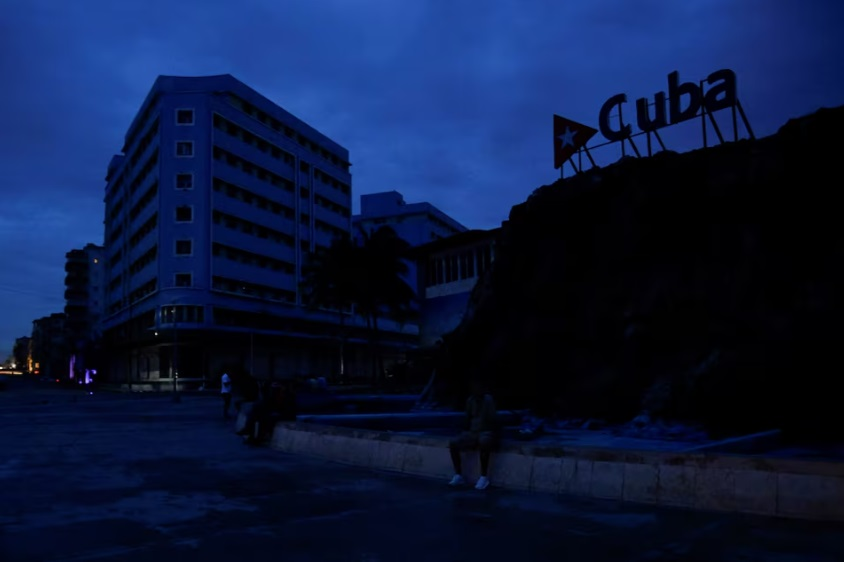
Cuba started restoring electricity on Friday evening after an island-wide blackout left most of the country in darkness for several hours. The power outage was triggered by the collapse of the Antonio Guiteras power plant, one of Cuba’s major oil-fired generation facilities. The blackout, which affected the vast majority of the country’s 10 million residents, left cities and towns in complete darkness, with Havana, the capital, among the hardest-hit areas.

As of mid-evening Friday, power had returned to some pockets of Havana, including critical infrastructure such as hospitals. However, the majority of the population was still without electricity, enduring another night of hardship. The state-run electricity provider UNE announced it aimed to restart at least five of its oil-powered generation plants overnight, which it hoped would gradually restore power to more regions across the country.

In a bid to prevent total grid failure, the Communist government had earlier in the day ordered schools and non-essential businesses to close and sent most state employees home. However, by midday, the Guiteras plant went offline, causing a complete blackout. Officials are working to repair the facility, although they have not provided specific details on what caused the failure.

The blackout is the latest blow to the country, where residents are already grappling with severe shortages of food, fuel, water, and medicine. Streets in Havana were eerily quiet as commerce came to a halt, with locals sitting on doorsteps to escape the stifling heat. Tourists in the city were left frustrated by the situation, unable to access internet services or find food in restaurants due to the lack of power.

“We went to a restaurant, and they had no food because there was no power. Now, we are also without internet,” said Brazilian tourist Carlos Roberto Julio, who had only recently arrived in Havana. “In two days, we have already had several problems.”

Picture background

Cuba’s Prime Minister Manuel Marrero blamed the worsening blackouts on the country’s deteriorating energy infrastructure, fuel shortages, and rising demand for electricity. In a televised address, Marrero highlighted that recent adverse weather conditions, including strong winds from Hurricane Milton, had made it difficult to transfer fuel from ships offshore to the power plants.

The government also attributed the island’s fuel shortages to the long-standing U.S. trade embargo and sanctions imposed under the Trump administration, which they argue have hindered their ability to acquire the necessary fuel and spare parts to keep the power plants running.

“The economic war and energy persecution by the United States are the primary causes of our complex energy situation,” Cuban President Miguel Díaz-Canel said in a message posted on X (formerly Twitter).

However, the U.S. government refuted the claim, stating that Cuba’s energy crisis was not a result of U.S. policies. A spokesperson from the National Security Council reiterated that the U.S. was not to blame for the blackout. The State Department noted it was monitoring the potential humanitarian impact of the outage, but added that the Cuban government had not requested any assistance.

For many Cubans, the nationwide blackout was yet another difficult night in a country used to enduring power outages. Carlos Manuel Pedre, a local resident, shrugged off the situation and turned to playing dominoes with friends to pass the time. “In the times we’re living in, with everything happening in our country, the most logical entertainment is dominoes,” Pedre said. “We’re in total crisis.”

Cuba’s power shortages have been exacerbated by a sharp reduction in fuel shipments from its largest supplier, Venezuela. According to shipping data, deliveries have halved in 2024 compared to the same period in 2023, as Venezuela struggles with its own energy issues. Other allies, such as Russia and Mexico, have also significantly reduced fuel shipments to Cuba, forcing the island to purchase fuel on the expensive global spot market, further straining its already fragile economy.


Pro-Trump PAC Funded by Elon Musk Faces Struggles in Battleground States Ahead of Election

The political action committee (PAC) funded by billionaire Elon Musk to help re-elect Donald Trump is facing significant challenges in key swing states, with reports of underperformance and claims of canvassers inflating voter contact numbers. The PAC, known as America PAC, is responsible for mobilizing voters in battleground states like Wisconsin and Nevada but is reportedly failing to meet its doorknocking goals, just weeks before the November 5 election.

Several individuals involved in the outreach efforts revealed that canvassers are being warned they are missing crucial voter contact targets. In Wisconsin, for instance, the group had set a goal of reaching 450,000 voters by Election Day, but field organizers recently admitted they are far behind. A recording of an October 8 meeting, reviewed by Reuters, captures a manager stating, “We’re not going to hit 450,000, not with what we’ve got now.”

Alysia McMillan, a former canvasser for the PAC in Wisconsin, voiced concerns that failing to meet these targets could cost Trump the election. McMillan, who was fired after a pay dispute but later rehired by another contractor, claimed, “If this isn’t looked into in a timely manner, this can result in a waste of time and money and risk President Trump winning the election.”

Similar issues have surfaced in other states. In Nevada, Chris Young, a close aide to Musk and a Republican operative, reportedly conducted an audit to investigate whether canvassers had inflated their reported doorknocking efforts. There are concerns that some workers had manipulated smartphone apps to falsify their locations, prompting firings.

Despite these challenges, a source close to the PAC’s operations disputed McMillan’s claims, stating that the group is on track to meet its targets. Audits and routine field checks are standard practice, they said, to ensure the canvassing efforts are progressing as planned.

America PAC’s outreach strategy centers on encouraging “low propensity voters”—those who are likely Trump supporters but may be reluctant to cast their votes—to turn out in large numbers. The group’s work is focused on key battleground states where even a slight shift in voter turnout could determine the outcome in a race that remains too close to call, with polls showing a tight contest between Trump and Democratic candidate Kamala Harris.

Musk, currently ranked as the world’s wealthiest individual, has provided at least $75 million to America PAC, according to federal filings. His financial backing is critical to Trump’s 2024 bid to return to the White House. Musk has publicly expressed his support for Trump, and Trump has indicated that he would appoint Musk to lead a government efficiency commission if re-elected.

However, the campaign has been plagued by operational issues, particularly with retaining canvassers. Some canvassers have complained about low pay—starting as low as $20 per hour in some instances—and long hours, often with no reimbursement for travel expenses in remote areas. As a result, retention has been a persistent problem.

In Nevada, the audit led by Young has not yet yielded a public report, and it is unclear if any changes have been made to the canvassing operation. Text messages from managers at Lone Mountain Strategies, one of the contractors hired by the PAC, revealed concerns over canvassers caught cheating by falsifying their doorknocking efforts. “We’ve fired two people today and auditors are going around checking doors for flyers,” one message read.

As Election Day draws nearer, America PAC has ramped up its efforts to recruit more canvassers, advertising pay rates starting at $30 per hour with performance bonuses on its website.