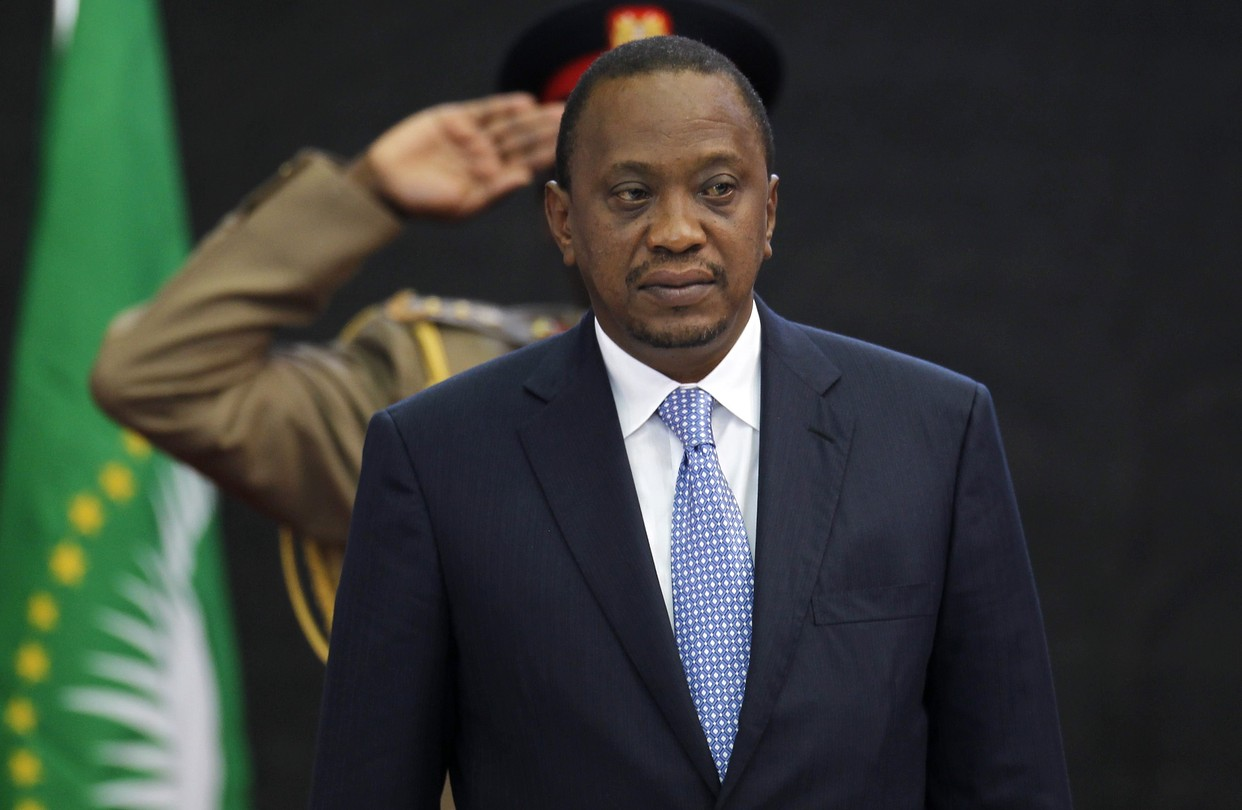
Kenya’s Deputy President Rigathi Gachagua Impeached While Hospitalized

Kenya’s Deputy President Rigathi Gachagua, commonly known as “Riggy G,” was removed from office by Kenyan senators during his impeachment trial, despite his absence due to hospitalization. Gachagua had been set to defend himself in the Senate after pleading not guilty to 11 charges the previous day. However, his lawyer informed the Senate that Gachagua was in The Karen Hospital suffering from chest pains, requesting a postponement of the proceedings.

The Senate, determined to proceed, voted to continue the trial without him. Gachagua’s defense team walked out in protest, leaving the proceedings to unfold in his absence. The Senate’s refusal to delay the trial until Saturday, the last legally permissible day, highlighted their resolve to finalize his impeachment, a move several months in the making after Gachagua fell out with President William Ruto.

Last week, the lower house of parliament, the National Assembly, voted overwhelmingly to impeach Gachagua, paving the way for his trial in the Senate. Gachagua, a prominent businessman from the influential Mount Kenya region, had attended the morning session but described the impeachment as a “political lynching.”

By Thursday evening, two-thirds of the Senate upheld five charges against Gachagua, including inciting ethnic divisions and violating his oath of office, effectively sealing his removal from office. He was cleared of six other charges, including corruption and money laundering. The historic impeachment means that Gachagua is now barred from holding any public office and will lose all exit benefits.

This decision comes just two years after Gachagua and President Ruto were elected on a joint ticket, and it marks the end of months of internal government strife. Tensions between the president and his deputy escalated in June when Gachagua publicly criticized the head of the intelligence agency for not properly informing Ruto about the scale of public protests against controversial tax hikes. Ruto was forced to withdraw the taxes and reshuffled his cabinet, bringing in members of the opposition.

Although Ruto has remained silent on his deputy’s impeachment, the move consolidates his control over the government. Gachagua had vowed to challenge the Senate’s decision before the vote took place.

Reports indicate that Gachagua, 59, is undergoing tests for heart-related issues, though he remains in stable condition according to a doctor cited by Reuters. Meanwhile, speculation has grown about who will replace him, with several high-profile names being floated, including Murang’a Governor Irungu Kang’ata, Kirinyaga Governor Anne Waiguru, Interior Minister Kithure Kindiki, and Foreign Affairs Minister Musalia Mudavadi.


 

Meta Fires Employees for Misuse of Meal Allowances on Personal Purchases

Meta has terminated around two dozen employees from its Los Angeles office for allegedly misusing company-provided meal credits, purchasing items such as acne treatment pads, wine glasses, and laundry detergent, according to a source familiar with the matter. The tech giant confirmed these dismissals after conducting an internal investigation, revealing that some employees used meal vouchers for personal items instead of food. Additionally, some workers reportedly had meals delivered to their homes rather than to the office, violating company policy.

Meta, known for its elaborate in-office dining services at its larger offices, offers meal vouchers to employees working in smaller locations without on-site food services. These credits—$20 for breakfast and $25 for both lunch and dinner—are intended to support staff working long hours at the office by covering meal costs. However, the investigation discovered that certain LA-based employees used the credits for non-food-related purchases or for meals consumed outside of work.

This news comes amid ongoing restructuring efforts at Meta. A Meta spokesperson, Tracy Clayton, acknowledged that the company has been making various organizational changes to align resources with long-term strategic goals. These changes have resulted in shifting some teams to different locations, reallocating employees to different roles, and eliminating positions when necessary. Meta did not disclose the total number of employees affected by these recent layoffs, which spanned across its divisions, including Instagram, WhatsApp, Facebook, and Reality Labs.

One of the more prominent individuals let go was Jane Manchun Wong, a well-known security researcher who had predicted upcoming social media features before joining Meta in June 2023 to work on Instagram and Threads. Wong’s layoff highlights the broader impact of Meta’s restructuring efforts, which follow the company’s more extensive layoffs last year.

In 2022, Meta laid off over 20,000 employees in multiple rounds of cuts, as part of an effort to reverse a period of revenue declines and stagnating user growth. CEO Mark Zuckerberg dubbed it the company’s “year of efficiency.” The company’s shares (META) have rebounded significantly, rising nearly 80% since last year.


Former Olympic Snowboarder Ryan Wedding Wanted in U.S. for Drug Trafficking and Murders

Former Canadian Olympic snowboarder Ryan James Wedding has been charged with leading a large drug trafficking organization responsible for shipping massive amounts of cocaine across the Americas, along with being involved in the murders of four people, according to U.S. authorities. The FBI has placed a $50,000 bounty for information leading to the capture and extradition of Wedding, who is currently considered a fugitive. The 43-year-old Canadian citizen, who had been residing in Mexico, is charged in the U.S. with running a criminal enterprise, murder, conspiracy to distribute cocaine, and other serious offenses.

Wedding’s drug trafficking operation reportedly moved significant amounts of cocaine from Colombia through Mexico and California to various destinations in Canada and the United States. U.S. prosecutors claim the organization used long-haul semi-trucks to transport the drugs. Wedding, along with 15 others, was implicated in the conspiracy, which allegedly smuggled up to 60 tons of cocaine per year. Four of the accused, including Wedding, remain at large, stated U.S. Attorney Martin Estrada at a press conference in Los Angeles. “He chose to become a major drug trafficker and he chose to become a killer,” Estrada emphasized.

FBI Special Agent Krysti Hawkins revealed that 12 individuals have already been arrested in various locations, including Florida, Michigan, Canada, Colombia, and Mexico. Authorities allege that Wedding’s criminal group was involved in the deaths of two family members in Canada, which they believe stemmed from a stolen drug shipment. The incident, described as a case of mistaken identity, also involved the killings of two additional people. Federal filings mention that law enforcement seized cocaine, firearms, ammunition, cash, and over $3 million in cryptocurrency during the investigation.

Wedding’s criminal history is not new. He competed for Canada at the 2002 Winter Olympics in Salt Lake City but was later convicted in the United States of conspiracy to distribute cocaine in 2010, for which he served a prison sentence. After his release, U.S. officials suspect that Wedding returned to drug trafficking, allegedly under the protection of the notorious Sinaloa Cartel in Mexico.

Apart from the U.S. charges, Wedding faces unresolved drug trafficking charges in Canada dating back to 2015. Chris Leather, Chief Superintendent of the Royal Canadian Mounted Police (RCMP), confirmed that these charges are still pending, underscoring the seriousness of Wedding’s involvement in cross-border criminal activity.