Intel Seeks Billions for Minority Stake in Altera Business, Sources Say

Intel is reportedly exploring the sale of a minority stake in its Altera business, aiming to raise several billion dollars in much-needed cash as it seeks to stabilize its financial position. According to sources familiar with the discussions, Intel is pursuing a deal that values Altera at around $17 billion, close to the $16.7 billion it paid to acquire the company in 2015.

This potential sale marks a significant strategic shift for Intel, especially since CEO Pat Gelsinger had recently stated that Altera was considered a core part of the company’s future. However, after experiencing a sharp decline in stock price and a prolonged period of losing market share, Intel has been forced to consider dramatic actions to turn things around.

The company has approached private equity firms and other strategic investors about a possible stake in Altera, with some investors being offered the opportunity to acquire a majority interest, according to the sources. Intel’s representatives have declined to comment on the reports.

Intel had previously hinted at plans to monetize the Altera unit through an initial public offering (IPO), potentially in 2026. However, these recent developments suggest that the company may accelerate those plans in order to raise capital more quickly. A sale of this magnitude could provide Intel with the resources to focus on its broader ambitions, particularly in semiconductor manufacturing, and demonstrate to investors that it can remain competitive as an independent entity.

The potential sale comes amid heightened competition within the semiconductor industry. Rival companies such as Qualcomm have reportedly expressed interest in acquiring Intel, although such a deal would likely face significant regulatory scrutiny and could reshape the landscape of the semiconductor market.

Intel has faced numerous challenges in recent years, including a 50% drop in its stock price this year alone. The company has struggled to keep pace with competitors like Nvidia, which has gained significant ground in the artificial intelligence (AI) chip market, and Advanced Micro Devices (AMD), which continues to erode Intel’s market share in both the PC and data center sectors.

As Intel seeks to reestablish its position in the industry, the potential sale of a stake in Altera could represent a pivotal move in its broader recovery strategy.


Netflix Tops Subscriber Targets as Ad-Tier Signups Surge

Netflix added 5.1 million new streaming subscribers in the third quarter of 2024, surpassing Wall Street expectations by over 1 million. This growth came largely from its ad-supported tier, which contributed to more than half of the new signups in countries where it is available. As a result, Netflix shares jumped 4.8% in after-hours trading, continuing their 47% rise for the year.

Despite the success in subscriber growth, Netflix is focusing more on revenue growth and profit margins. The company plans to stop reporting subscriber data next year, reflecting its shift toward emphasizing other financial metrics. Revenue for the quarter reached $9.825 billion, slightly ahead of projections, and Netflix’s earnings per share hit $5.40, exceeding the forecast of $5.12. Operating margins also saw significant growth, reaching 30% compared to 22% a year ago.

While the 5.1 million subscriber gain outpaced expectations, it was still a drop from the 8.76 million added in the same quarter last year. This has raised some concerns, particularly about Netflix’s domestic market, which some analysts believe may be nearing saturation. Forrester analyst Mike Proulx noted that while international growth opportunities remain, the U.S. market seems “tapped out.”

Looking ahead, Netflix is optimistic about the holiday season, anticipating even higher subscriber growth in the final quarter, driven by the much-anticipated return of the hit Korean drama Squid Game in late December. Co-CEO Ted Sarandos expressed confidence, stating, “We had a plan to re-accelerate the business, and we delivered on that plan.”

In addition to programming, Netflix has been expanding its live-event offerings, which are a key draw for advertisers. Upcoming events include a fight between YouTube star Jake Paul and boxing legend Mike Tyson, along with two NFL games scheduled for Christmas Day. These live events are part of a broader strategy to diversify its content and attract advertisers, though the company doesn’t expect advertising to be a major revenue driver until 2026.

Despite its success with the ad-supported tier, Netflix is maintaining its standalone approach in the streaming market. Sarandos reaffirmed that the company has no intention of bundling its service with other platforms like Disney+ or Warner Bros Discovery, preferring to focus on building its own value proposition.

Meanwhile, Netflix continues to adjust pricing strategies in key international markets. After raising prices in several European countries and Japan earlier this month, it will further increase prices in Spain and Italy this week.


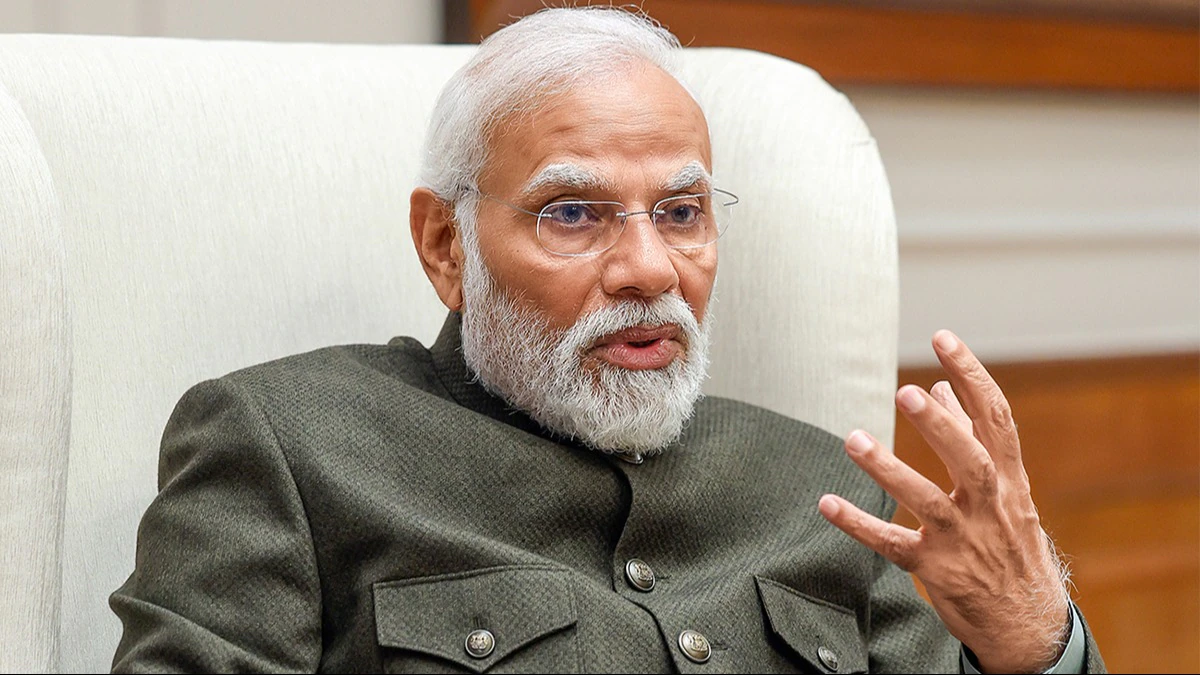
In Modi’s Delhi, Indian Muslims Segregate to Seek Security

In February 2020, Nasreen and her husband Tofik were living in Shiv Vihar, a northeastern New Delhi neighborhood. That month, anti-Muslim riots erupted, and Tofik was thrown from a building by a mob, according to his police report. Though he survived, he now walks with a permanent limp and only returned to work selling clothes on the street after three years of recovery. The couple moved to Loni, a more remote area with fewer job prospects but a significant Muslim population. Tofik expressed that he no longer feels safe in areas with a Hindu majority, preferring to live among fellow Muslims.

Nasreen and Tofik’s experience is part of a broader pattern emerging in Delhi. Many Muslims, in the wake of the 2020 riots and increasing anti-Muslim rhetoric, have begun moving into Muslim-majority enclaves. This phenomenon, which has led to overcrowding in some areas, particularly in Jamia Nagar, had not been widely reported before. There is no official data on the extent of segregation, but anecdotal evidence suggests a significant increase in Muslim populations in specific neighborhoods over the past decade. Muslims make up about 14% of India’s population of 1.4 billion.

In areas like Jamia Nagar, demand for housing has soared as Muslims from other parts of Delhi seek safety in numbers. Despite a surge in construction, the area is overcrowded. Raes Khan, a real estate agent, explained that many Muslim clients now insist on living in Muslim-majority areas. “No matter how brave a Muslim might be, they feel they have to move because if a mob comes, how brave can you really be?” he remarked.

The segregation trend aligns with rising Islamophobia, which many attribute to Prime Minister Narendra Modi’s Bharatiya Janata Party (BJP). Since the BJP came to power in 2014, Muslims have increasingly sought refuge in enclaves, fearing for their safety. Political anthropologist Raphael Susewind of the London School of Economics identifies this rise in anti-Muslim sentiment as a key driver of the segregation. Local leaders echo these concerns, with some noting that mosque attendance in Jamia Nagar has doubled over the last few years.

The BJP, however, downplays these concerns. Jamal Siddiqui, a senior BJP official, suggested that poorer Muslims may be choosing these enclaves because they are more affordable. He noted that wealthier and educated Muslims often move to mixed-population areas. Still, Syed Sayeed Hasan, a Congress Party worker, believes that the 2020 riots played a significant role in Muslims seeking safety in numbers. The riot, which left over 50 dead—mostly Muslims—was sparked by protests against a citizenship law introduced by Modi’s government that many saw as discriminatory against Muslims.

A report by the Delhi government blamed BJP leaders for inciting the violence with hate-filled speeches. While the BJP denied these accusations, many Muslims, like Nasreen, feel they can no longer trust their non-Muslim neighbors. Nasreen moved to Loni after the riots, cutting ties with her old community. Her family’s income has halved since the move, and her daughter Muskan, unable to cope with the under-resourced school in their new neighborhood, dropped out. Despite these hardships, Nasreen does not regret leaving her old home, saying, “I will never go back. I have lost faith in them.”

Malika, another Muslim woman whose husband was killed in the 2020 riots, also moved to the outskirts of Delhi. Unable to find a stable job, she now splits her time between two neighborhoods—one Muslim-majority area, where she lives with her children, and a Hindu-majority one where she takes on construction work. “Here I am afflicted with poverty, there I’m afflicted with insecurity,” she lamented.

The movement of Muslims into enclaves is not limited to the poor. Upper-middle-class Muslims, who previously lived comfortably in mixed communities, are also moving into Muslim-majority areas, feeling that segregation offers more security. Mujaheed Nafees, a Muslim leader from Gujarat, Modi’s home state, noted that “people feel it is better to live in separate areas rather than having a constant threat to life and property.”

India’s National Crime Records Bureau does not track data on targeted violence, but studies suggest that anti-Muslim sentiment has grown significantly in recent years. Independent experts documented a sharp rise in anti-Muslim hate speech in 2023, with 413 incidents recorded in the second half of the year, up from 255 in the first half. The Center for the Study of Organized Hate, a Washington-based think tank, identified BJP politicians and affiliated groups as key contributors to this rise.

In response to these pressures, Muslims in Delhi and across India continue to seek safety in enclaves. However, this trend raises concerns about deepening divisions within the country. Some Hindu residents of riot-affected areas, like Sam Sundar, acknowledge that the exodus of Muslims is worrying, stating, “Very few Muslims now live in the area. This is not a good thing.”