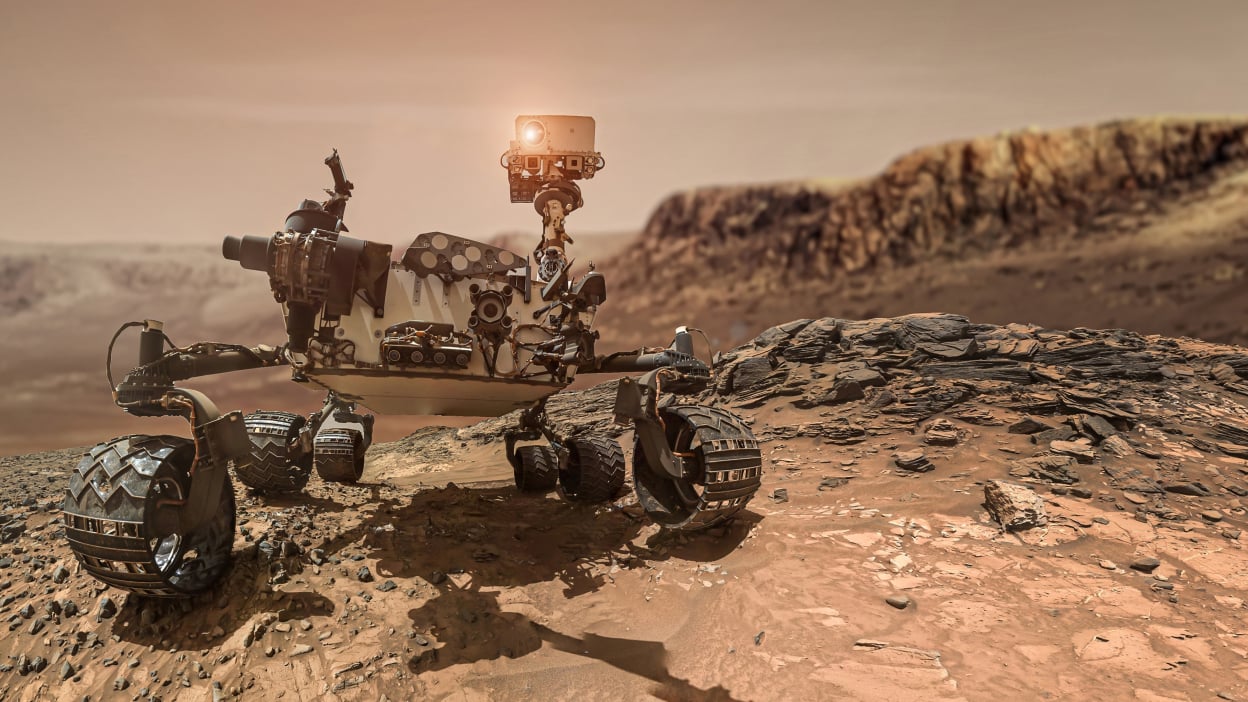
NASA’s Perseverance Rover Captures ‘Googly Eye’ Eclipse on Mars

NASA’s Perseverance rover, stationed in Mars’ Jezero Crater, recently captured a stunning celestial event as the Martian moon Phobos passed across the Sun. This moment, observed on September 30, provided a rare glimpse into the Martian sky and featured an intriguing “googly eye” effect, which was recorded by the rover’s Mastcam-Z camera. The eclipse offered a unique visual of Phobos’ orbit and helped scientists gain valuable data about the moon’s trajectory as it continues to slowly move closer to Mars. The footage released by NASA showcases the intricate dance of Mars’ moons and the dynamic nature of the Martian system.

The event unfolded as Perseverance observed Phobos casting its shadow across the Sun, creating a brief and distinctive visual effect. This “googly eye” effect occurred when Phobos partially blocked the sunlight, leaving a silhouette that was especially noticeable against the Martian backdrop. The eclipse, occurring on the 1,285th Martian day (sol) of the Perseverance mission, highlighted the moon’s rapid orbit around Mars. Phobos takes just 7.6 hours to complete one orbit, a much faster motion compared to Earth’s moon, which results in quick transits across the sky that last only about 30 seconds. This provides a fleeting but beautiful spectacle that is rarely visible from Earth.

Phobos, the larger of Mars’ two moons, follows an increasingly tight orbit around the Red Planet. Measuring around 27 kilometers at its widest point, Phobos appears much smaller in the Martian sky compared to Earth’s moon, and its proximity to Mars means that it crosses the sky more frequently. However, this close orbit comes at a cost: Phobos is gradually moving closer to Mars over time, and scientists predict that within the next 50 million years, it will either crash into the Martian surface or break apart, forming a ring around the planet. The periodic eclipses caused by Phobos’ orbit, including those recorded by Perseverance and previous rovers like Curiosity and Opportunity, have provided crucial insights into the moon’s orbit and its eventual fate.

This recent observation of Phobos’ eclipse adds to a growing body of knowledge about Mars and its moons. Each eclipse captured by rovers helps scientists refine their understanding of Phobos’ path, and in turn, offers important clues about the evolution of Mars’ natural satellites. As Perseverance continues its mission on Mars, more such events are expected, providing scientists with deeper insights into the Martian system and the behavior of its moons. These observations not only enrich our understanding of Mars’ present but also offer a glimpse into the future of the Red Planet and its celestial companions
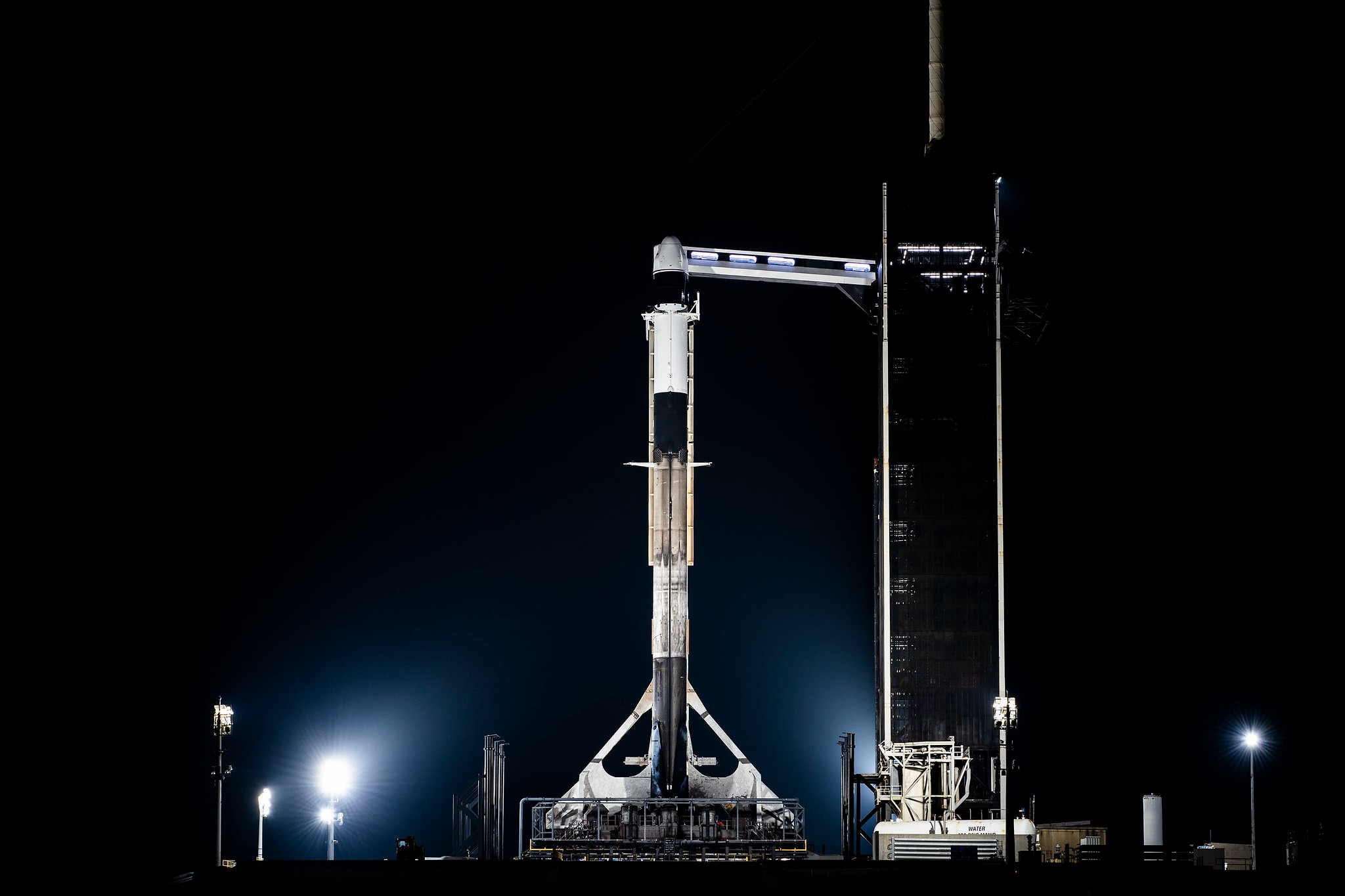

South Korea’s KASA and NASA Collaborate on Launch of CODEX Solar Coronagraph to ISS

South Korea’s space agency, the Korea Aerospace Research Institute (KASA), has announced a groundbreaking collaboration with NASA to launch a solar coronagraph to the International Space Station (ISS). The instrument, developed as part of the Coronal Diagnostic Experiment (CODEX), is designed to study the Sun’s corona and the solar wind, which consists of charged particles emitted from the Sun’s outer atmosphere. This crucial mission, which aims to expand our understanding of solar phenomena, will be launched aboard SpaceX’s Falcon 9 rocket from Florida’s Kennedy Space Center, scheduled for Monday, according to Yonhap News Agency.

The CODEX project represents a major achievement in space science, as it will be the first coronagraph capable of measuring key solar wind parameters such as temperature, velocity, and density. This groundbreaking technology is expected to provide valuable data about the Sun’s outer atmosphere and the solar wind, which can have significant effects on space weather. Once aboard the ISS, CODEX will be mounted on the station’s express logistics carrier, offering approximately 55 minutes of solar observation during each 90-minute orbit around Earth. The mission’s findings could play a critical role in improving space weather forecasting and enhancing our ability to predict solar storms.

The collaboration between KASA and NASA on CODEX is part of a broader expansion of South Korea’s role in space exploration. This partnership also extends to the Artemis lunar exploration program, with KASA contributing to research on sustainable lunar exploration and future Mars mission preparations. South Korea’s involvement in the Artemis program marks an important milestone, as the country becomes the fifth nation to officially cooperate with NASA on lunar and interplanetary exploration. This strengthened partnership highlights the growing significance of international cooperation in advancing space science and exploration.

Through this mission and the broader space cooperation initiatives, South Korea and NASA aim to make significant strides in understanding space weather, solar dynamics, and the broader challenges of space exploration. As both countries continue to expand their partnership in space, the CODEX project serves as a symbol of their commitment to advancing scientific knowledge and enhancing global space exploration capabilities. The mission not only represents a technological breakthrough but also reinforces the importance of international collaboration in addressing the challenges of space science.

SWOT Satellite Captures Seismic Tsunami Event in Greenland’s Dickson Fjord

In September 2023, the Surface Water and Ocean Topography (SWOT) satellite, a collaborative mission between NASA and France’s Centre National d’Études Spatiales (CNES), recorded an extraordinary seismic tsunami event in Greenland’s Dickson Fjord. This unprecedented event, caused by a massive rockslide, led to a nine-day sequence of waves reverberating throughout the fjord. The event is notable for being one of the few instances where satellite technology captured such a prolonged natural phenomenon with remarkable precision, providing valuable data that could aid in understanding similar events in the future.

The rockslide, which unleashed over 25 million cubic meters of rock and ice into the fjord, displaced vast amounts of water, creating a series of massive waves. These waves, which oscillated between the fjord’s steep walls every 90 seconds, continued for nearly a week, making this a rare and unique event. According to NASA’s Jet Propulsion Laboratory scientist Josh Willis, SWOT’s advanced technology allowed researchers to observe the wave contours in unprecedented detail. The wave height variation between the northern and southern sides of the fjord, with water levels rising by as much as 1.2 meters, demonstrated the immense force of the rockslide’s impact.

What makes SWOT’s detection particularly groundbreaking is its use of cutting-edge radar technology. Orbiting approximately 900 kilometers above Earth, the satellite employs a Ka-band Radar Interferometer (KaRIn) to measure water surface heights with exceptional accuracy. This technology proved crucial in capturing the dynamic effects of the tsunami in the remote, narrow fjord, where conventional altimeters with larger measurement footprints would have struggled. The satellite’s precision allowed scientists to observe the tsunami’s full duration and track its rhythmic movement, which was not possible with previous methods.

SWOT’s ability to detect and monitor such an event emphasizes the growing importance of advanced satellite technology in global hazard monitoring. According to Nadya Vinogradova Shiffer, a NASA scientist, SWOT’s precise measurements could significantly improve preparedness for natural disasters by providing real-time data that enhances risk assessment and management. This event highlights the satellite’s potential to monitor not just oceanic phenomena but also smaller, more localized natural events, contributing to a broader understanding of Earth’s dynamic systems and aiding in disaster risk reduction.