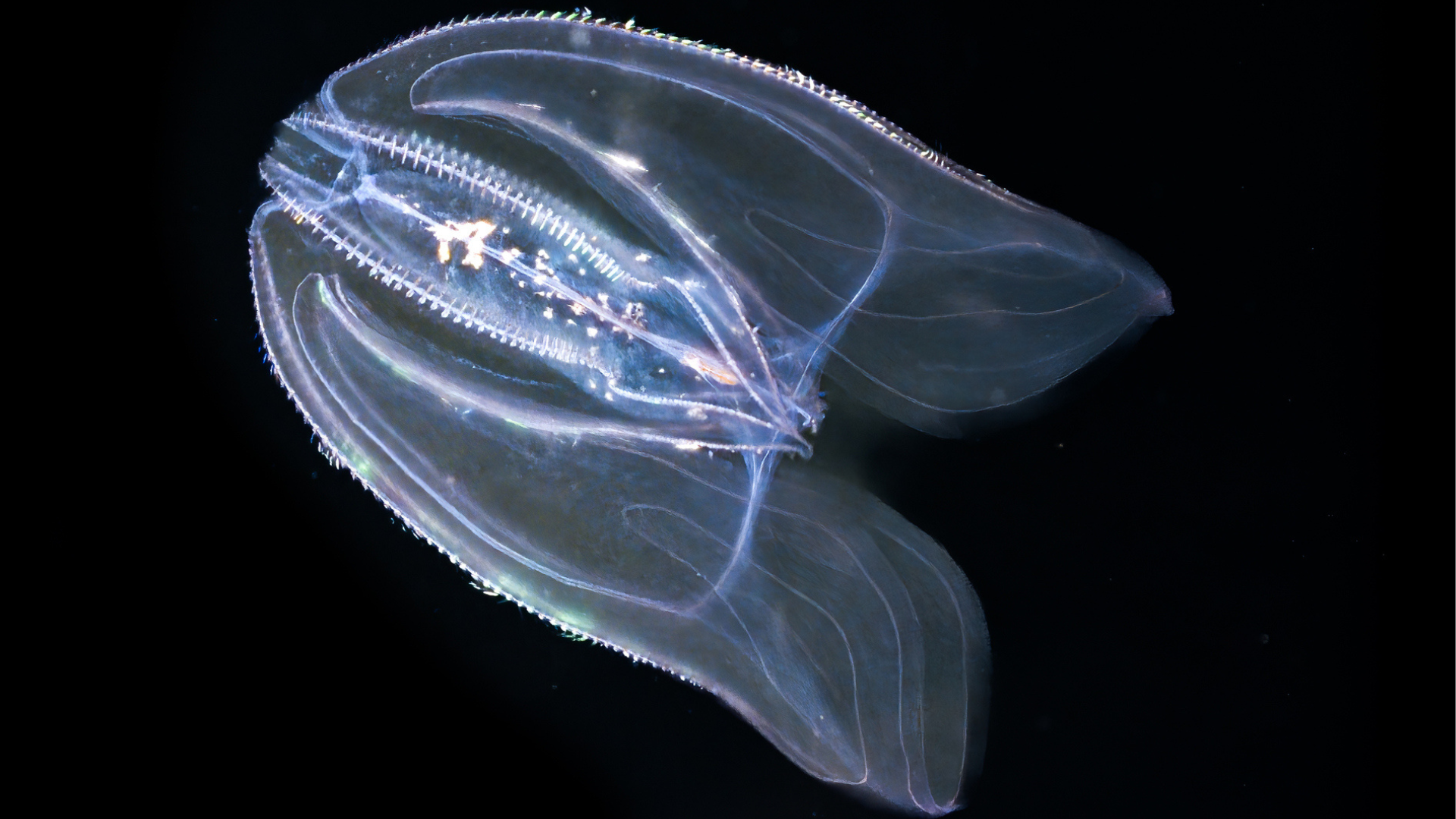
Comb Jellies Display Extraordinary Ability to Reverse Aging and Return to Juvenile Form

Researchers at the University of Bergen have uncovered an extraordinary survival mechanism in Mnemiopsis leidyi, a species of comb jelly, which has the rare ability to reverse its growth process. When exposed to environmental stress, such as food scarcity or injury, these animals can revert from an adult state back to a juvenile form. This remarkable discovery challenges previous assumptions about the rigidity of developmental cycles and opens up new avenues of research in the fields of regenerative biology and developmental science.

The groundbreaking finding was made by Dr. Joan J. Soto-Angel and his team during routine lab monitoring. Initially, it was a chance observation when they noticed an adult comb jelly transforming back into its larval form. Intrigued by this phenomenon, Dr. Soto-Angel, alongside Dr. Pawel Burkhardt of the Michael Sars Centre, began investigating further. Their research revealed that this reversal is triggered under specific stress conditions, including food shortages or injury, with the comb jelly adjusting both its physical structure and behavior to match that of its younger, larval self.

This ability to “reverse age” is not only a fascinating biological phenomenon but could have significant implications for the study of regenerative biology. If similar mechanisms are discovered in other species, it may challenge our understanding of aging and development. The potential for creatures to reset their biological clocks could revolutionize the way scientists approach aging, regeneration, and healing processes. The team suggests that this trait might be more widespread than previously thought, especially since ctenophores like Mnemiopsis leidyi belong to an ancient evolutionary lineage, possibly inheriting this survival tactic from early organisms.

This discovery raises exciting possibilities for future research into how other animals, or even humans, might harness similar regenerative capabilities. It also opens up important questions about the evolutionary origins of such mechanisms. Understanding how and why certain species developed the ability to revert to earlier life stages could shed light on the broader principles of development, aging, and survival across the animal kingdom. As scientists continue to study these fascinating creatures, the implications for regenerative medicine and biology could be profound
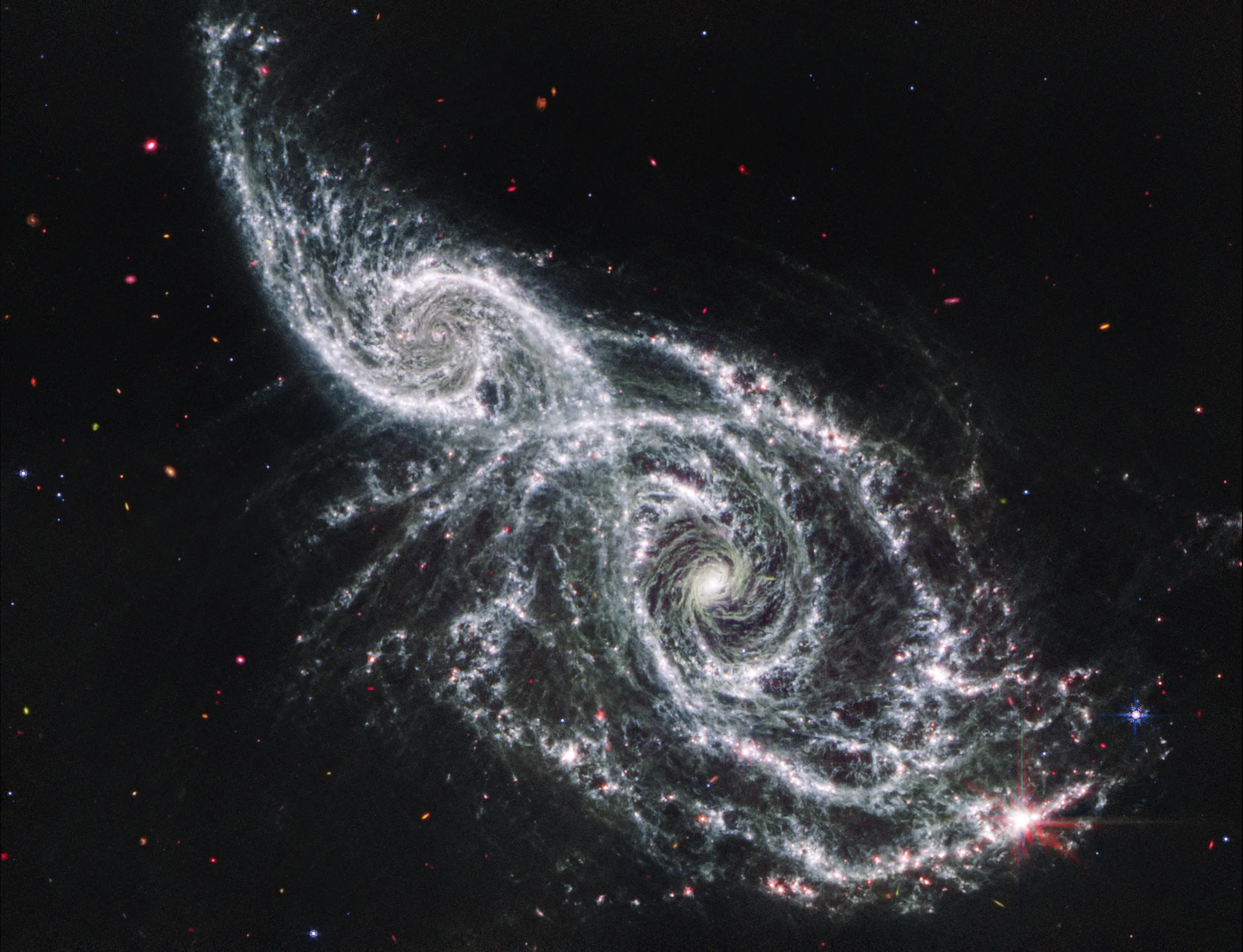
NASA’s Webb and Hubble Telescopes Capture Haunting, ‘Blood-Red Eye’ Galaxies IC 2163 and NGC 2207

NASA’s Hubble Space Telescope and the James Webb Space Telescope (JWST) have recently provided a breathtaking view of two merging galaxies, IC 2163 and NGC 2207, located in the Canis Major constellation, about 80 million light-years from Earth. These spiral galaxies are in the process of colliding and merging, a cosmic event that will take roughly a billion years to complete. The image, which has been released just in time for Halloween, has sparked excitement among astronomers and the public alike due to the galaxies’ eerie appearance, with scientists describing them as having a “blood-soaked” or “blood-red eye” look. This captivating view offers a glimpse into a dramatic transformation occurring far beyond our solar system.

The combined capabilities of the Hubble and Webb telescopes have allowed scientists to observe this galactic collision from different perspectives. Hubble’s visible and ultraviolet light sensors capture the intricate spiral arms of the galaxies, glowing in hues of blue, while their dense central cores emit a vivid orange. Meanwhile, JWST’s mid-infrared imagery provides a more ethereal view, highlighting the swirling gas and dust with ghostly white hues. This contrast between the two telescopes’ observations offers valuable insights into the complex interactions between the galaxies, particularly the turbulence caused by their gravitational forces and the burst of new star formation happening in the collision zone.

Over the course of their slow merger, IC 2163 and NGC 2207 are rapidly producing new stars, with an estimated 24 solar-sized stars being born each year. This rate of star formation is considerably higher than what we observe in our own Milky Way galaxy, which produces roughly one new star every year. The interaction between the two galaxies has also led to a strikingly high frequency of supernovae, with at least seven observed over recent decades. This is much higher than the one supernova every 50 years observed in the Milky Way. This heightened stellar activity provides a dynamic and volatile environment, as the galaxies continue their long, drawn-out collision.

IC 2163 and NGC 2207 first began their cosmic dance around 40 million years ago, and over time, their orbits have brought them into closer proximity, setting the stage for the ongoing merger. While this process will unfold over billions of years, the current observations show a galaxy pair that is already undergoing intense transformation. The Hubble and Webb telescopes’ joint observations offer a rare and detailed look into the chaotic yet beautiful forces that shape the evolution of galaxies and star systems. These images not only deepen our understanding of galactic collisions but also underscore the incredible power of modern space telescopes in unraveling the mysteries of the universe

Breakthrough Discovery: Scientists Reprogram Fat Cells to Reverse Type 1 Diabetes in Patients

In a groundbreaking study, researchers in China have achieved a remarkable milestone in diabetes treatment by reversing type 1 diabetes. The team, led by Dr. Hongkui Deng at the Peking-Tsinghua Center for Life Sciences, has developed a method to convert a patient’s fat cells into insulin-producing cells, effectively eliminating the need for insulin injections. This innovative approach, which has already shown promising results in a human patient, was published in the journal Cell, and is poised to revolutionize long-term diabetes care.

The process begins with extracting fat cells from the patient, which are then chemically reprogrammed into a stem cell-like state. Using advanced lab techniques, these reprogrammed cells are converted into insulin-producing islet cells—cells that are typically found in the pancreas and play a critical role in regulating blood sugar. The reprogrammed cells were subsequently implanted into the patient’s abdomen, where they began functioning as a new insulin source, stabilizing her blood sugar levels. Astonishingly, after just 75 days, the patient no longer required insulin injections, a significant breakthrough in diabetes treatment.

This approach offers a fresh alternative to traditional insulin therapies and current islet cell transplants. While islet transplants have demonstrated success in treating diabetes, they rely on donated organs, which are limited and often require lifelong immunosuppressant therapy. In contrast, the stem cell technique developed by the team provides a virtually unlimited supply of insulin-producing cells without the need for donor organs. This could potentially eliminate the reliance on organ donations and improve accessibility to treatment for diabetes patients worldwide.

Although still in its early stages, this study marks an important step forward in the development of a permanent solution for type 1 diabetes. Future research could further refine this method, enabling it to be applied to a wider range of patients and offering a new, sustainable treatment option for those suffering from the disease. As the team continues their work, the hope is that this innovative approach will lead to a cure for type 1 diabetes and a new era of personalized, regenerative medical treatments.