
Kamala Harris’ Michigan Loss Highlights Key Democratic Party Weaknesses

Kamala Harris’ recent loss in Michigan, where she trailed Donald Trump by over 80,000 votes, underscores challenges facing the Democratic Party as it seeks to connect with key voter groups. Despite Michigan’s status as a traditionally Democratic state, shifts in support from union workers, Black voters, and significant portions of the Arab American and Muslim communities contributed to the outcome. With only three months to campaign following Joe Biden’s withdrawal from the race, Harris faced a complex landscape marked by economic concerns and frustrations over national party strategy.

Michigan’s economic climate was a central issue, with voters deeply concerned about rising costs for food and housing. Although Democratic strategist Ameshia Cross noted Harris’ efforts in Michigan, including 11 visits and a large ground presence, she emphasized the importance of localized campaign efforts. Cross criticized the “consulting class” within the Democratic Party for relying too much on polls and projections over on-the-ground feedback, noting that Michigan needed even more direct engagement to address pressing voter concerns.

The Arab American and Muslim communities, influential in Michigan and especially in cities like Dearborn, became crucial battlegrounds. Traditionally Democratic, these groups shifted substantially this election, with many voters supporting Trump and third-party candidate Jill Stein. Harris faced criticism for insufficient outreach; Trump’s campaign targeted these communities with messages framing him as a “president of peace,” while associating Harris with unpopular U.S. foreign policies. Notably, Harris did not visit Dearborn directly, though she met with the city’s Mayor Abdullah Hammoud, who ultimately withheld his endorsement.

The broader Muslim community’s discontent was evident in Michigan and other states, as reported by the Council on American-Islamic Relations. An exit poll of verified Muslim voters indicated Stein received 53% of the vote, with Trump and Harris trailing at 21% and 20%, respectively. Harris’ affiliation with former Representative Liz Cheney in town hall events, given Cheney’s family’s involvement in Middle East conflicts, also alienated some voters, especially in light of local tensions surrounding U.S. support for Israel.

In Detroit, a city with a large Black population, voter turnout declined from the 2020 election despite recent state laws expanding early and absentee voting. Detroit canvasser and auto worker Hazen Turner noted that high costs and economic pressures made it difficult for many young Black voters to see meaningful benefits from the current political system. Former Michigan House representative Sherry Gay-Dagnogo highlighted frustration within Detroit’s Democratic organizers, sharing that she struggled to secure basic campaign materials like yard signs while Trump’s campaign flooded the city with outreach.

The campaign’s approach also alienated Michigan’s significant population of non-college-educated voters, who make up 62% of the electorate. Many union members, including United Auto Workers (UAW) members, expressed disillusionment, even as the Democratic administration had supported their recent strike. Isaiah Goddard, a white UAW member, met Trump during a visit to a non-union facility and shared his support, stating that he trusts Trump’s stance on job security and immigration.

The Democratic Party faces a challenging path forward, with lessons from Michigan suggesting that economic messaging, strong local engagement, and careful consideration of foreign policy concerns among key voter groups will be essential for future campaigns.

 

Oppo Find X8 Ultra Rumored to Feature Quad Rear Camera Setup with Dual Periscope Telephoto Sensors

The Oppo Find X8 Ultra is expected to be the next flagship device in Oppo’s Find X series, following the recently launched Oppo Find X8 and Find X8 Pro. While Oppo has not officially confirmed the launch of the Find X8 Ultra, rumors about its specifications have been circulating online. It is anticipated to launch sometime next year alongside the Oppo Find N5, with several details about the device already emerging. A recent leak suggests that the Oppo Find X8 Ultra will feature an upgraded quad rear camera setup, designed to offer exceptional photography performance.

According to a tip from well-known leaker Digital Chat Station on Weibo, the Oppo Find X8 Ultra will sport a four-camera array, each equipped with a 50-megapixel sensor. The main sensor is said to be a 1-inch 50-megapixel shooter, providing superior light capture and clarity. Alongside it, there will be an ultra-wide-angle lens paired with another 50-megapixel sensor, allowing for expansive landscape shots and better versatility. What sets the Find X8 Ultra apart from its predecessors is its inclusion of two periscope telephoto lenses. One will feature a 3x optical zoom, while the other will support 6x optical zoom, enabling impressive telephoto capabilities. This camera setup promises to offer a significant leap in zoom functionality and overall imaging performance.

The Oppo Find X8 Ultra is expected to be powered by the Snapdragon 8 Elite chipset, which should provide top-tier performance for gaming, multitasking, and AI-driven tasks. This chipset would make the device a strong competitor in the flagship smartphone market, alongside other high-end devices from major manufacturers. While the camera setup is clearly a highlight, the rest of the device is also expected to feature cutting-edge technology, including a high-resolution display, fast charging, and potentially even more advanced AI features.

If the rumors hold true, the Oppo Find X8 Ultra will be a substantial upgrade over its predecessor, the Oppo Find X7 Ultra. The Find X7 Ultra, powered by the Snapdragon 8 Gen 3 chipset, also came with a quad-camera setup, including a 50-megapixel main sensor and two periscope lenses with 3x and 6x optical zoom. The Find X8 Ultra could improve upon this formula by refining the lenses and sensors, offering better image quality and more precise zoom capabilities. As Oppo continues to push the envelope in smartphone photography, the Find X8 Ultra could become a key player in the high-end market

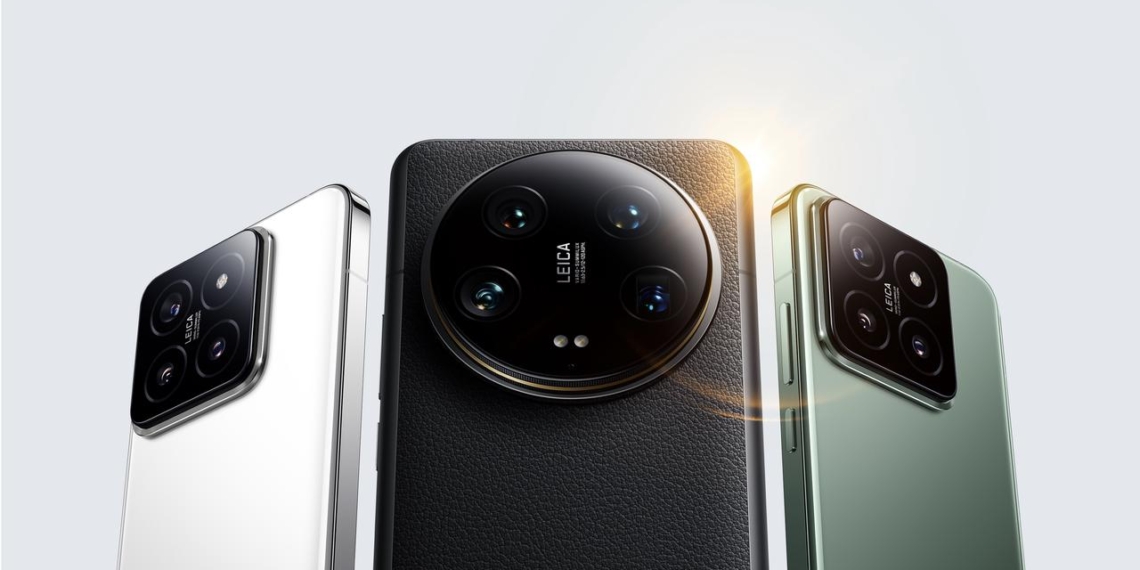
Xiaomi 15 and Xiaomi 15 Pro Unveiled with Snapdragon 8 Elite SoC, Triple Rear Cameras: Pricing and Features Revealed

The Xiaomi 15 and Xiaomi 15 Pro were officially launched in China on October 29, marking the debut of the latest additions to the Xiaomi smartphone lineup. These devices serve as successors to last year’s Xiaomi 14 series, offering significant upgrades in both design and performance. Powered by the latest Snapdragon 8 Elite SoC, the Xiaomi 15 series promises impressive speed and efficiency. The standard Xiaomi 15 comes with a 6.36-inch 1.5K OLED display that supports a peak brightness of 3,200 nits, while the Pro model upgrades to a 2K resolution for even sharper visuals. Both models run on Xiaomi’s HyperOS 2, bringing enhanced software features and improved user experience.

One of the standout features of the Xiaomi 15 series is its Leica-tuned triple rear camera setup. The primary sensor is a 50-megapixel shooter, designed to capture stunning detail in a variety of lighting conditions. In addition to its impressive camera array, the Xiaomi 15 and Xiaomi 15 Pro maintain an IP68 rating, making them resistant to both dust and water. This makes them durable options for users who demand top-tier specifications along with reliable protection against the elements, similar to their predecessors.

As for pricing, the Xiaomi 15 offers a range of configurations to suit different needs and budgets. The base model, with 12GB of RAM and 256GB of storage, is priced at CNY 4,499 (approximately Rs. 52,000). For those requiring more storage, the 12GB + 512GB version is priced at CNY 4,799 (around Rs. 56,000), while the 16GB + 512GB model costs CNY 4,999 (about Rs. 58,000). The high-end version, featuring 16GB of RAM and 1TB of storage, is priced at CNY 5,499 (approximately Rs. 65,000). The Xiaomi 15 comes in several color options, including Asakusa Green, Bright Silver Edition, Black, Lilac, and White.

Additionally, Xiaomi has released a limited edition of the Xiaomi 15, priced at CNY 5,999 for the 16GB + 1TB model. With its premium features and sleek design, the Xiaomi 15 series is set to appeal to both tech enthusiasts and casual users alike. Its powerful performance, stunning display, and high-quality camera system make it a strong contender in the competitive smartphone market, especially in its price range