
Officials Warn Against Relying on AI Chatbots for Voting Information Ahead of U.S. Presidential Election

With just four days until the U.S. presidential election, government officials are urging voters to avoid relying on artificial intelligence chatbots for election-related information. The New York Attorney General’s office, led by Letitia James, issued a consumer alert on Friday, cautioning that AI-powered chatbots frequently provide incorrect voting information, which could mislead voters.

Testing conducted by the Attorney General’s office on multiple AI chatbots revealed that they often gave inaccurate responses to questions about voting processes, raising concerns that voters could lose their chance to vote if they follow misleading information. The alert emphasized the importance of using official sources to verify voting details as Election Day approaches, with the presidential race between Republican candidate Donald Trump and Democratic Vice President Kamala Harris showing a tight competition.

The increase in generative AI use has amplified fears about election misinformation, with AI-generated content and deepfakes on the rise. Clarity, a machine learning firm, reported a 900% increase in deepfake content over the past year. U.S. intelligence officials warn that some of this content is created or funded by foreign actors, including Russia, in attempts to influence the election.

Experts are particularly wary of misinformation risks associated with generative AI, a technology that rapidly gained popularity after OpenAI’s release of ChatGPT in late 2022. Large language models (LLMs) are known to produce unreliable information, often “hallucinating” or inventing details about critical voting-related topics like polling locations and voting methods. Alexandra Reeve Givens, CEO of the Center for Democracy & Technology, cautioned, “Voters categorically should not look to AI chatbots for information about voting or the election.”

A study conducted by the Center for Democracy & Technology in July examined responses from major AI chatbots to 77 election-related questions, finding that more than one-third of the answers contained inaccuracies. Chatbots from companies like Mistral, Google, OpenAI, Anthropic, and Meta were included in the study. In response, an Anthropic spokesperson stated, “For specific election and voting information, we direct users to authoritative sources,” emphasizing that their chatbot, Claude, does not provide real-time updates on election details.

OpenAI announced it will begin prompting users who ask ChatGPT about election results to consult reliable news outlets like the Associated Press and Reuters, or to contact local election boards for accurate information. In a recent report, OpenAI disclosed efforts to counter misinformation, disrupting over 20 deceptive networks attempting to misuse their models for disinformation, though none of the election-related activities managed to gain significant traction.

Meanwhile, state legislators are taking steps to counteract AI-based election disinformation. Voting Rights Lab reported that as of November 1, there are 129 bills across 43 states that aim to regulate the spread of AI-generated misinformation related to elections.

 

Botswana Voters Oust Ruling Party After Nearly 60 Years, Electing Duma Boko

In a historic shift, Botswana’s voters have ousted the ruling Botswana Democratic Party (BDP), ending nearly six decades of uninterrupted governance and electing opposition leader Duma Boko of the Umbrella for Democratic Change (UDC) coalition as the new president. This marks the first time the BDP has lost its majority since Botswana gained independence in 1966. President Mokgweetsi Masisi, in a public phone call, graciously conceded, signaling a smooth transition of power and expressing his commitment to handover duties.

President-elect Boko, 54, addressed the nation with a message of humility and dedication, pledging to fulfill the “enormous responsibility” entrusted to him by the people of Botswana. His victory is widely seen as a reaction to growing economic frustrations among citizens, particularly the youth, in response to rising unemployment and sluggish growth due to a downturn in the diamond trade. Botswana, though largely dependent on diamonds, has historically used its mineral wealth responsibly, channeling funds into health, education, and social services. However, this year’s economic growth plummeted to an expected 1%, with unemployment soaring to 28%.

As the world’s leading diamond producer by value, Botswana relies heavily on its stake in De Beers, a subsidiary of Anglo American, to sustain its economy. Boko has expressed urgency in strengthening Botswana’s partnership with De Beers, given potential signs that the company may reconsider its longstanding agreements. He emphasized the need to protect Botswana’s diamond trade as an essential economic “golden egg” for the country’s short-term future.

The UDC won a decisive 35 out of 61 parliamentary seats, securing its majority. In contrast, the BDP fell to last place among four major parties, securing only four seats. Political analysts point to the UDC’s ambitious policies, such as more than doubling the minimum wage, expanding social services, and reforming the judiciary, as key reasons for their victory. Public celebrations erupted in the capital, Gaborone, as residents welcomed the change.

This dramatic shift follows a broader regional trend, with long-ruling parties across southern Africa, including South Africa’s ANC, facing significant losses in 2023. The outcome is a stark reminder, as analysts note, of the vulnerability of long-standing parties when economic challenges and unemployment go unaddressed.

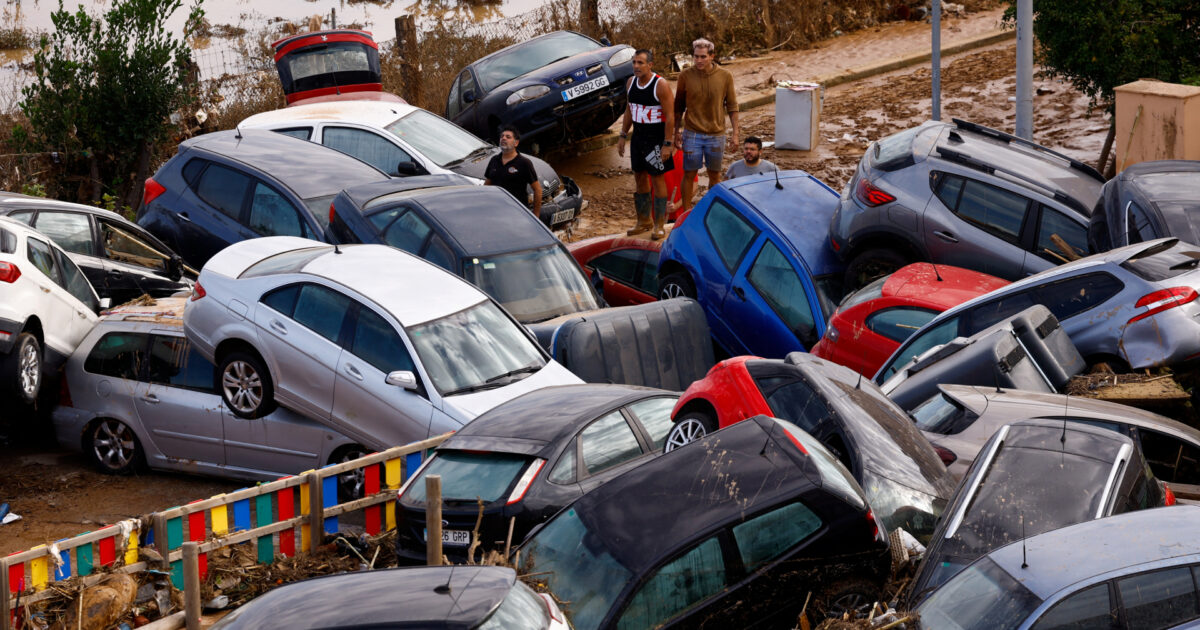
Thousands of Volunteers Mobilize for Massive Cleanup After Devastating Spanish Floods

Following catastrophic floods in eastern Spain that have claimed over 200 lives, thousands of volunteers have joined the cleanup efforts, with Valencia’s City of Arts and Sciences repurposed as the central hub for coordination. This iconic venue, typically used for opera, hosted the first organized cleanup on Saturday, managed by local authorities in response to Friday’s uncontrolled volunteer influx, which had hindered access for professional emergency teams.

Carlos Mazon, president of the Valencian region, announced the establishment of a volunteer center to streamline assistance efforts, with operations kicking off Saturday morning. In his post on X (formerly Twitter), Mazon shared, “Tomorrow, Saturday, at 7 in the morning, together with the Volunteer Platform, we will launch the volunteer center to better organize and transport the help of those who are assisting from the City of Arts and Sciences in Valencia.”

Prime Minister Pedro Sanchez was scheduled to address the nation on Saturday, offering updates on relief measures and acknowledging the severity of the disaster. Local police reported that, due to scarce food and water, some affected residents resorted to looting, leading to the arrest of 27 individuals involved in thefts from stores and offices in Valencia.

Electricity has been restored to over 90% of Valencia’s households, according to utility company Iberdrola, though thousands in isolated areas remain without power, challenging rescue teams attempting to reach them. Meanwhile, around 2,000 soldiers have been mobilized to assist in locating missing individuals and supporting survivors. As further storms approach the Balearic Islands, Catalonia, and Valencia, weather alerts remain active, and additional rainfall is anticipated over the weekend.

Authorities fear the death toll may continue to rise, marking this as Spain’s deadliest flood disaster in over fifty years and Europe’s worst flood-related tragedy since the 1970s.