Austria Ends Half-Century Gas Relationship with Gazprom After Seizure Incident

Austria’s OMV has severed ties with Gazprom, ending a partnership spanning over five decades, after seizing Russian gas as payment for an arbitration award. The move, described by industry insiders as unprecedented, signals a pivotal shift in Austria’s energy strategy amidst the broader European pivot away from Russian gas dependency.

On November 13, OMV announced its victory in a German arbitration case against Gazprom, securing €230 million ($239 million) due to irregular supplies. To enforce the ruling, OMV withheld an equivalent amount of gas from Gazprom’s October deliveries. This action marked the first instance of a European Union customer seizing Gazprom’s gas as compensation, sources familiar with the matter disclosed.

Three days after the seizure, Gazprom suspended supplies to OMV, citing the non-payment as a breach of contract. OMV’s decision was reportedly influenced by the looming threat of Ukraine ceasing Russian gas transit by early 2024. With its contracts with Gazprom running until 2040, OMV’s move to confiscate the gas is seen as a strategic step to argue for a breach on Gazprom’s part, potentially paving the way for a complete withdrawal from Russian gas reliance.

OMV had been one of the last European buyers of Russian gas following Moscow’s invasion of Ukraine in 2022. Before the war, Russia was Europe’s primary natural gas supplier. Austria’s loyalty to Gazprom had remained steadfast, even as other EU nations diversified energy imports from sources like Norway, the U.S., and Qatar. However, OMV’s shift marks a significant departure from this stance, aligning with efforts to reduce reliance on Russian energy.

Impact of the Break

Gazprom’s influence in Central Europe, particularly in Austria, had been bolstered by its competitive pricing and Austria’s extensive gas storage facilities. During 2022, Austria benefited from significantly lower prices, paying $300-$400 per 1,000 cubic meters compared to the market peak of over $1,000 per 1,000 cubic meters. Despite the cutoff, Russian gas continues to reach Austrian buyers indirectly through Slovakian intermediaries, illustrating the complexities of Europe’s energy network.

OMV’s CEO Alfred Stern has been actively working to diversify the company’s energy sources since assuming leadership in 2021. OMV has already launched additional arbitration cases against Gazprom and written down €2.46 billion in Russian investments following Moscow’s seizure of its stakes in the Yuzhno Russkoye gas field.

Political and Regional Context

Austria’s neutral political stance has not shielded it from the fallout of its energy ties with Russia. Although supporting EU sanctions against Moscow, Austria faces internal political challenges, including managing its government structure post-elections and balancing relations with Russia-friendly entities such as the Freedom Party (FPO).

Austria’s energy minister Leonore Gewessler emphasized OMV’s autonomy in deciding the future of its Gazprom contracts. She noted that the government’s role was to establish conditions that facilitate Austria’s transition away from Russian gas dependency.

The abrupt end of Austria’s longstanding relationship with Gazprom underscores the broader geopolitical and economic recalibrations reshaping Europe’s energy landscape.

 

Astronauts of the Underworld: Exploring Earth’s Hidden Depths

Deep beneath the Earth’s surface lies a mysterious world of untapped secrets. From undiscovered species to insights into climate change and even extraterrestrial life, caves are one of the last frontiers for exploration on our planet. Scientists and adventurers alike venture into these dark, uncharted realms, unlocking revelations that bridge the past, present, and future.

Caves are dynamic environments, often described as “alive.” Phil Short, a renowned cave explorer and underwater mission lead at Deep Research Labs, likens them to breathing organisms. They inhale and exhale based on atmospheric pressure differences between the surface and underground. This interplay between external weather and internal cave systems creates unique conditions that preserve the secrets of human evolution, biodiversity, and climate history.

At Wookey Hole in Somerset, UK, Short finds his “spiritual home” among the stone tunnels and caverns. In complete darkness, caving guide Becca Burne demonstrates the calm isolation of subterranean life. “Caving is a slow, controlled activity,” says Short. Unlike adrenaline sports, exploration here involves meticulous planning, with cavers carefully navigating narrow passages and vast chambers that often remain untouched by human hands.

Globally, tens of thousands of caves are known, yet many remain unexplored. For Short, caving represents the last frontier of pure exploration, where technology has yet to reach. “When you enter an unexplored cave, you’re stepping into a part of the planet where nothing – no drone or modern technology – has been before,” he explains. Such untouched environments hold treasures ranging from new species to potential cures for diseases, and some caves are so vast they even have their own weather systems.

In the Cyclops Mountains of Papua, Indonesia, entomologist Leonidas-Romanos Davranoglou and his team encountered such a treasure trove of discoveries. Braving leeches, venomous creatures, and earthquakes, the expedition uncovered a hidden cave system, blind spiders, and a whip scorpion – all new to science. They also documented the survival of the Attenborough Echidna and rediscovered a bird species lost for over 15 years. For Davranoglou, each new species is a key to understanding evolutionary processes, ecological dynamics, and potential impacts of future environmental changes.

Meanwhile, in the Sierra Juárez mountains of Mexico, Phil Short spent months exploring the J2 cave system, a 12km-long maze hidden beneath the jungle. After hauling equipment through dense rainforest and abseiling 700m underground, Short and his dive partner, Marcine Gala, discovered an enormous chamber with a waterfall and multicolored calcite formations. Though their mission was focused on exploration rather than science, mapping such caves lays the groundwork for future research.

Caves also offer insights into microbial life and the origins of life itself. Hazel Barton, a geomicrobiologist at the University of Alabama, studies microbes thriving in extreme underground environments. Her work on photosynthesis in near-infrared wavelengths – conditions similar to those on distant stars – suggests that caves could help us understand how life might exist on other planets. Barton describes caving as the closest experience to being an astronaut, where each footprint in untouched caves could last for millennia.

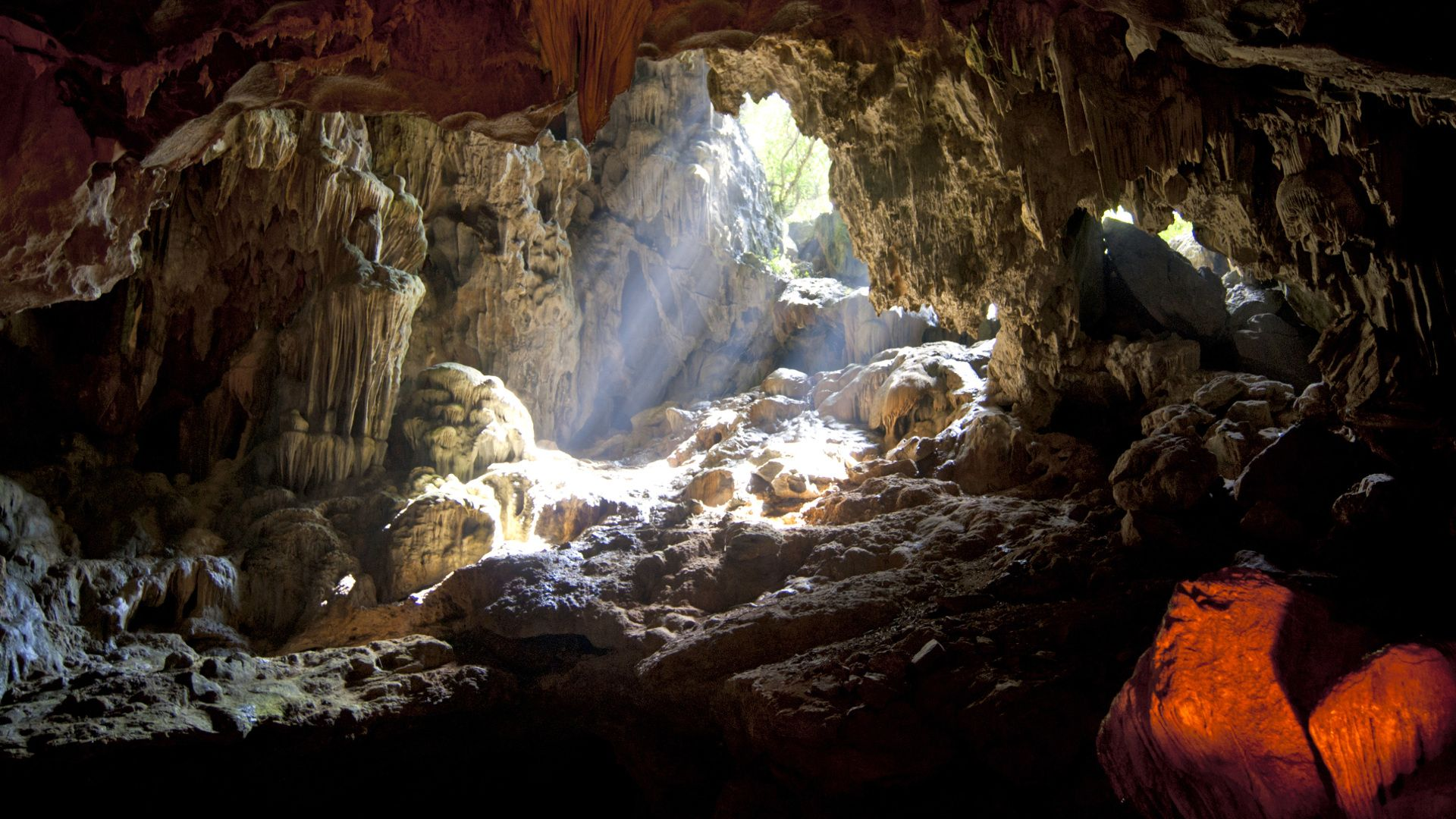
Emerging from the depths of Wookey Hole, the return to sunlight feels like waking from a dream. The sensory contrast underscores the allure of the underworld. As Short notes, “You can come here and see something different every time.” With hundreds of unexplored cave entrances on Earth, the Moon, and even Mars, the darkness beneath the surface continues to invite humanity to explore its depths.

The ZX Spectrum: How a 1980s Icon Sparked the Home Computing Revolution

The ZX Spectrum, launched in 1982, quickly became a household name and an essential part of the 1980s tech revolution, ushering home computing into the lives of many. With its distinct rainbow stripe, rubber keys, and the iconic screech of game downloads from cassette tapes, the Spectrum captured the imagination of a generation.

Created by Sir Clive Sinclair and his team, the ZX Spectrum followed Sinclair’s earlier, less powerful ZX81, bringing color to home computing for the first time. It was a breakthrough for affordability—costing £175 for the 48k model and £125 for the 16k version—making it accessible to the masses. By the time it was discontinued in 1992, more than five million units had been sold, giving people the opportunity to explore programming and enjoy games like Manic Miner and Jet Set Willy.

For many, the Spectrum was not just a computer, but a gateway to creativity and gaming. “The Spectrum brought the arcade to your home,” said Mark Ettle, now head of Dundee-based Cobra Mobile. It offered access to both popular arcade games and original creations, encouraging experimentation with computer programming and rudimentary graphics. The success of the Spectrum also spurred a thriving black market in copied games, where fans would trade pirated versions on cassette tapes.

Manufactured in Dundee at the Timex factory, the Spectrum was more than just a product—it was part of a community. Local access to the computer helped spark a gaming industry in Dundee, with developers like Mike Dailly, co-founder of DMA Design (the company behind Lemmings and Grand Theft Auto), attributing his career to the early exposure to the Spectrum. “The whole of the original DMA Design pretty much started on Spectrums,” Dailly said, noting how the Spectrum inspired a whole generation of game designers.

The legacy of the ZX Spectrum is explored in The Rubber-Keyed Wonder, a documentary by Anthony and Nicola Caulfield. The film recounts how the Spectrum, for many, became a cultural touchstone. “For many born in the 1970s or early 1980s, the microchip revolution was our rock’n’roll,” said Caulfield. The Spectrum was a pivotal device, marking a time when home computing seemed both revolutionary and personal.

Despite its success, later models of the Spectrum failed to match the original’s popularity, and Sinclair’s other ventures, like the Sinclair C5, floundered. By 1986, Sinclair sold most of his company to Alan Sugar’s Amstrad, and the Spectrum was discontinued by 1992. However, the ZX Spectrum’s influence lives on, particularly through retro gaming events and fan-made projects, such as the Spectrum Next. These fan-based versions keep the spirit of the original alive, ensuring the Spectrum’s place in history as a defining moment in the digital age.