
Redmi Note 14 Series India Launch Teased, Ahead of Redmi A4 5G Debut: What to Expect

The highly anticipated Redmi Note 14 series, which debuted in China back in September, is now set to launch in India. The lineup, which includes three models—the base variant, a Pro model, and the Pro+ variant—will serve as the successor to the popular Redmi Note 13 series. Xiaomi India has begun teasing the series’ upcoming arrival through social media posts, stirring excitement among consumers. This comes right before the launch of the Redmi A4 5G, an entry-level 5G smartphone, which is expected to debut in India tomorrow with a Snapdragon chipset.

Xiaomi India recently teased the launch of a new smartphone on its social media platform X (formerly known as Twitter), with an image captioned “Ready for a Noteworthy Rival?” While the teaser doesn’t directly name the device, many speculators believe it hints at the Redmi Note 14 series, which was confirmed to be launching in India this December. The excitement surrounding the Redmi Note 14’s potential entry into the Indian market is palpable, given the series’ success in China and the brand’s strong presence in India.

The Redmi Note 14 series is expected to offer significant upgrades over its predecessor, the Redmi Note 13 series, particularly in terms of design, performance, and camera capabilities. The Pro and Pro+ variants, in particular, are likely to pack more powerful processors, better displays, and enhanced camera setups aimed at competing in the mid-range segment, where the competition is fierce. Xiaomi has consistently focused on delivering value-for-money devices, and the Note 14 series is expected to follow suit, offering a blend of premium features at affordable prices.

While the focus on the Redmi Note 14 series continues to build, Xiaomi is also preparing for the release of the Redmi A4 5G, which will be a more budget-friendly option aimed at consumers looking to experience 5G connectivity without breaking the bank. Powered by a Snapdragon chipset, the A4 5G will likely offer a solid entry into the affordable 5G smartphone market in India. With both the A4 5G and the Note 14 series, Xiaomi is positioning itself to cater to a wide range of customers across different price segments.

Conservation Specialist Sounds Alarm on Earth’s Sixth Mass Extinction, Urges Immediate Action

Dr. Jane Goodall, the renowned primatologist and conservationist, has issued a stark warning about the current state of global biodiversity, describing it as the “sixth great extinction.” In a series of interviews during her latest environmental awareness tour in Europe, the 90-year-old conservationist urged for immediate action to address the escalating environmental crisis. Her focus is on key issues such as deforestation, habitat destruction, and the urgent need to move away from fossil fuels, all of which are contributing to the alarming loss of species around the world.

During an interview with the BBC, Dr. Goodall underscored the devastating effects of habitat destruction, particularly in Uganda, which is home to several species of great apes, including chimpanzees. She highlighted that deforestation, driven by both agriculture and logging, is accelerating the loss of biodiversity, making it harder for ecosystems to function. In response to this crisis, Dr. Goodall’s foundation, in collaboration with the tech company Ecosia, has planted nearly two million trees over the last five years. The project, which aims to restore vital habitats for chimpanzees, also serves as a powerful tool in the fight against climate change by absorbing carbon dioxide through growing forests.

Dr. Goodall’s warnings come at a critical time, coinciding with the COP29 summit in Baku, Azerbaijan, where world leaders gathered to discuss strategies to combat climate change. The timing of her message highlights the urgency with which action needs to be taken, as the window for meaningful change continues to shrink. She pointed out the direct connection between deforestation and the changing climate, explaining how the destruction of forests leads to altered rainfall patterns that disrupt local ecosystems and threaten the survival of species. Dr. Goodall recalled her research in Tanzania more than six decades ago, when she observed the regularity of rainfall. Now, those predictable patterns have been replaced by unpredictable weather, contributing to widespread ecological imbalance.

As the planet faces unprecedented levels of biodiversity loss, Dr. Goodall is calling for an immediate global response. Her advocacy emphasizes that the time for action is now, before the damage to our ecosystems becomes irreversible. Restoring habitats, protecting wildlife, and curbing climate change are not only moral imperatives but necessary for the survival of our planet’s delicate ecological balance. The sixth great extinction is already underway, and the decisions made in the coming years will determine the future of life on Earth.

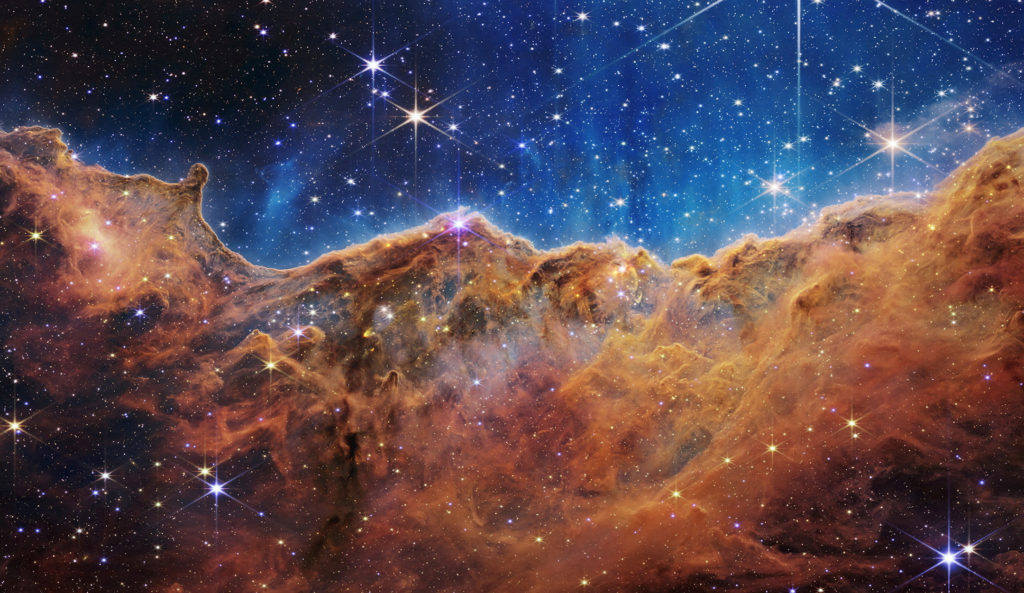
How the James Webb Space Telescope Allows Us to See the Past

The ability to observe space allows scientists to essentially look back in time, thanks to the way light travels across vast distances in the universe. Telescopes like the James Webb Space Telescope enable us to capture light from distant celestial bodies, acting as time machines that reveal what the universe looked like in the past. This phenomenon is rooted in the fact that light, despite traveling at incredible speeds, still requires time to travel across the vast expanses of space.

Light travels at approximately 186,000 miles (300,000 kilometers) per second, which is incredibly fast in human terms. However, even at this speed, the immense distances between objects in space mean that the light we see today actually left those objects millions or even billions of years ago. For example, light from the Moon takes just 1.3 seconds to reach Earth, while light from Neptune, the furthest planet in our solar system, takes about four hours. This delay in light’s arrival means that when we observe these objects, we are seeing them as they were in the past, not as they are right now.

When we look beyond our solar system, the distances become even more staggering. Within our galaxy, the Milky Way, distances are often measured in light-years—the distance that light travels in one year. For instance, Proxima Centauri, the closest star to Earth after the Sun, is over four light-years away. That means when we observe Proxima Centauri, we are actually seeing it as it was over four years ago. The light that reaches us today from that star began its journey back in time, traveling through space at a constant speed.

The James Webb Space Telescope, with its advanced instruments and capabilities, is able to observe objects that are far further away than ever before. By studying the light emitted from galaxies, stars, and other celestial bodies billions of light-years away, Webb allows scientists to peer into the distant past of the universe. The further the light travels, the further back in time we are able to see, offering a glimpse into the early stages of the universe, helping us understand its origins and evolution over time.